
Leaf Blower
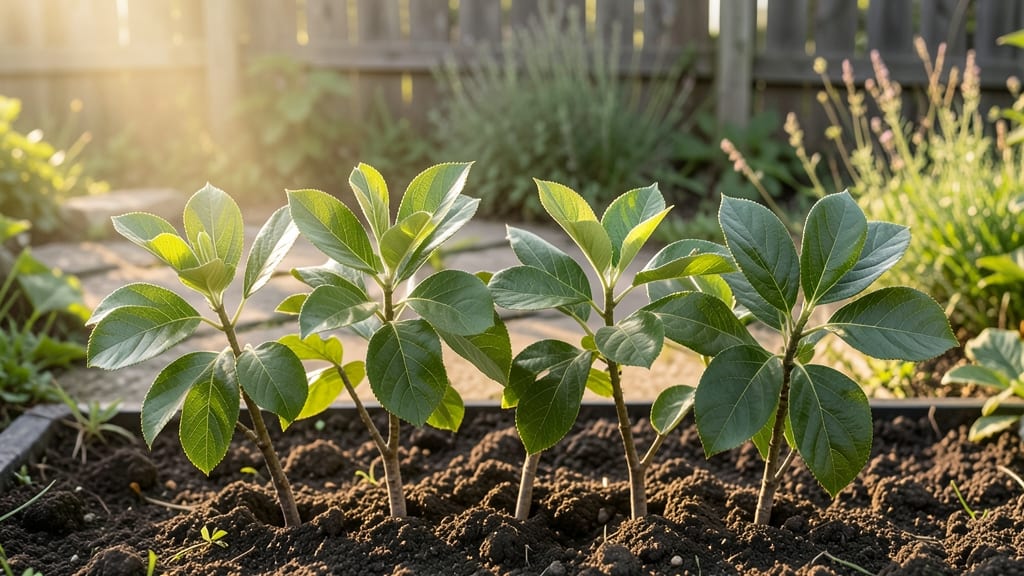
Mastering fruit tree identification by leaf saves you from guessing—and a wrong guess means years of disappointment. 🌳 I’ve spent years studying leaf shapes, edges, and veins to tell apart apple, peach, and cherry trees at a glance, and I’m sharing the exact visual clues that make it foolproof. The secret lies in three key details: leaf shape (oval? lobed?), edge texture (smooth? serrated?), and vein pattern (prominent? feathered?). A single leaf can tell you if that tree will bear sweet cherries or tart crabapples, and I’ll show you how to spot the differences even when the tree isn’t in bloom. By the end, you’ll confidently match leaves to trees, plan your orchard layout, and avoid buying the wrong variety. No more second-guessing—just clear, visual identification that works in any season. Grab a notebook and a sunny afternoon; we’ll break down the 15 most common fruit trees and their telltale leaf traits.
Nature’s Leaf Design Code
Identifying fruit trees by leaf isn’t just a gardener’s trick—it’s a fascinating glimpse into evolutionary biology, plant genetics, and ecological adaptation. Leaves develop specific shapes, textures, and arrangements due to a mix of genetic programming, environmental pressures, and survival strategies.
Here’s why your fruit tree’s leaves look the way they do—and how those traits help you spot them.
Every fruit tree species carries a genetic code that dictates leaf morphology (shape, size, venation) long before the tree even sprouts. These traits are passed down through generations like a family heirloom:
- Hereditary Traits: Just as humans inherit eye color, fruit trees inherit leaf characteristics from their parents. For example, Prunus persica (peach trees) consistently produce serrated, elliptical leaves because their ancestors did.
- Species-Specific Genes: Genes like _KNAT1_ and _CUC_ regulate leaf shape. Mutations in these genes can lead to variations—like the lobed leaves of a Malus domestica (apple tree) vs. the smooth edges of a Pyrus communis (pear tree).
- Hybrid Vigilance: Grafted or hybrid trees (e.g., Citrus × tangerine) may show intermediate leaf traits—a mix of parent species. This is why some "orange" trees have leaves that look more like grapefruit or tangerine.
💡 Pro Tip: If you’re cross-referencing leaves with a guide, note whether the tree is grafted (common in citrus or stone fruits). Grafted leaves might not match the rootstock’s natural form!
Leaves aren’t just decorative—they’re multipurpose tools shaped by climate, sunlight, and predators. Here’s how nature sculpts them:
☀️ Sunlight & Temperature Zones
| Climate Factor | Leaf Adaptation | Example Trees |
|---|---|---|
| Tropical Heat | Thick, leathery, evergreen leaves (reduces water loss) | Mangifera indica (mango), Anacardium occidentale (cashew) |
| Dry/Arid Regions | Small, needle-like or silver-gray leaves (reflects sunlight) | Punica granatum (pomegranate), some citrus varieties |
| Cool Temperate Zones | Large, broad, deciduous leaves (maximizes photosynthesis in short growing seasons) | Malus (apple), Pyrus (pear) |
🌡️ Why It Matters: A tree’s leaf texture can hint at its native climate. For instance, Citrus trees (native to Southeast Asia) often have waxy coatings to retain moisture—unlike temperate apples, which shed leaves annually to conserve energy in winter.
🐛 Pest & Disease Defense
Leaves evolve physical and chemical defenses against herbivores and pathogens:
- Spines/Serrations: Sawtooth edges (e.g., peach or plum leaves) make it harder for insects to chew through tissue.
- Toxic Compounds: Some leaves contain alkaloids or tannins (e.g., Prunus species like cherries) that deter pests.
- Hairy or Sticky Surfaces: Trees like Actinidia deliciosa (kiwi) have glandular hairs that trap mites or fungi.
- Variable Leaf Arrangement: Alternate vs. opposite leaves (e.g., Citrus vs. Ficus carica (fig)) can reduce disease spread by improving airflow.
✨ Fun Fact: The bitter almond taste in some Prunus leaves (like cherry) comes from cyanogenic glycosides—a natural insect repellent!
A single tree’s leaves can change dramatically over its lifetime, making age a critical factor in identification:
- Seedling Phase: Young trees often have simpler, smaller leaves (e.g., a sapling apple tree might start with lobed but less defined leaves than an adult).
- Mature Trees: Full-grown leaves reach their species-specific shape. For example, a Juglans regia (walnut) tree’s compound leaves develop 11–23 leaflets as it ages.
- Stress or Damage: Environmental stress (drought, disease) can cause abnormal leaf shapes. A heat-stressed peach tree might produce smaller, curled leaves that resemble a different species.
🔍 Actionable Tip: When identifying, compare leaves from multiple branches and different ages of the tree. A single outlier leaf might not represent the whole species!
Understanding these why’s turns leaf identification from guesswork into a science-backed skill. Next time you’re holding a mystery leaf, ask: “What’s this tree’s story?” The answer might be written right there in its veins.
Easy Leaf-Based Tree ID Fixes
Mastering fruit tree identification by leaf isn’t just about memorizing shapes—it’s about solving the puzzle step by step. Whether you’re stumped by similar-looking leaves or struggling to distinguish between species, these practical solutions will sharpen your skills and turn you into a leaf-sleuthing pro.
If two trees’ leaves seem identical at first glance, don’t panic—focus on the details that matter. Start by comparing these key features:
🌿 Step 1: Check the Leaf Margin (Edge Shape)
- Serrated (toothed): Like a saw blade (e.g., apple, pear).
- Lobed: Deep indentations (e.g., persimmon).
- Smooth: Entire edges (e.g., fig, olive).
- 💡 Pro Tip: Use a magnifying glass for tiny serrations—some leaves (like cherry) have fine, gland-tipped teeth.
🍃 Step 2: Count and Compare Leaflets
- Simple leaves (one blade, e.g., peach, plum) vs. compound leaves (multiple leaflets, e.g., mulberry, hawthorn).
- 🔥 Quick Fix: Snap a clear photo and overlay it with a ruler (via an app like Measure) to compare sizes.
🍂 Step 3: Examine the Stem and Arrangement
- Alternate vs. opposite: Are leaves staggered (alternate, like apple) or paired at nodes (opposite, like citrus)?
- 👨🍳 Look for hairs or glands: Rub the stem—some leaves (like cherry) have sticky or hairy stems.
If you’re still stuck, combine visuals with science:
- 📊 Create a cheat sheet: Print a diagram of 15 common fruit trees (like the one in this guide) and check off traits as you go.
- 🌡️ Time your observations: Leaves change with seasons—note if they’re young (soft, light green) or mature (dark, leathery).
- ✨ Tech hack: Use apps like LeafSnap or PictureThis to upload photos and get instant ID matches.
Equip yourself for on-the-spot ID:
- 🔪 A small pruning shear: Safely snip a leaf (or two) for closer inspection.
- 📸 A camera with a macro lens: Zoom in on leaf veins, hairs, or undersides.
- 📝 A notebook: Sketch oddities (e.g., “leaf has white hairs” or “stem exudes milky sap”).
- ❌ Don’t rely on color alone: Young leaves can be red or purple (e.g., Japanese maple vs. fruit trees).
- ❌ Ignore the tree’s fruit (if present): A single apple or pear can confirm an ID faster than leaves alone.
- ❌ Assume all fruit trees have edible leaves: Some (like yew or box elder) are toxic—double-check before touching!
Turn ID into a game:
- Pick a tree in your area (or a photo online).
- List 5 traits (margin, leaflet count, stem type, etc.).
- Cross-reference with your cheat sheet or app.
- 🏆 Reward yourself when you crack the case—knowledge is sweeter with a little fun!
Remember: Every leaf tells a story. The more you observe, the easier it gets. Now grab your tools and start sleuthing! 🕵️♂️🍎
Frequently asked questions
Can I identify fruit trees by leaf in winter when they're bare?
Yes! Look for bud shapes and branch patterns—they’re just as telling as leaves. Apple buds are oval with a pointed tip, while peach buds are more rounded. Also check bark texture (smooth for young trees, rough for mature ones) and any lingering leaf scars or twig arrangements.
What’s the best time of day to examine leaves for identification?
Morning is ideal—leaves are fully hydrated and show their natural color. Avoid midday when heat can cause wilting or color shifts. Early morning light also highlights subtle vein patterns and serrations more clearly than harsh afternoon sun.
How do I tell apart apple and pear trees when their leaves look similar?
Apple leaves are more deeply serrated with 10-16 teeth per side, while pear leaves have fewer, shallower teeth (5-9). Also, apple leaves are alternate and slightly hairy on the underside, while pear leaves are smoother. Check the fruit shape if available—apples are rounder, pears more elongated.
Are there any toxic fruit tree leaves I should avoid handling?
Yes! Yew (Taxus) and box elder (Acer negundo) leaves are toxic if ingested. Also avoid cherry laurel (Prunus laurocerasus)—its leaves contain cyanide. Always wash hands after handling unfamiliar leaves and never eat them unless you’re certain of the species.
Can I use a smartphone app to confirm my leaf ID?
Apps like LeafSnap or PictureThis use AI to analyze leaf shapes, veins, and edges. For best results, take clear photos in good light and include both the leaf’s top and bottom. Always cross-check with a physical guide—apps can sometimes misidentify hybrid or stressed trees.