
Pruning
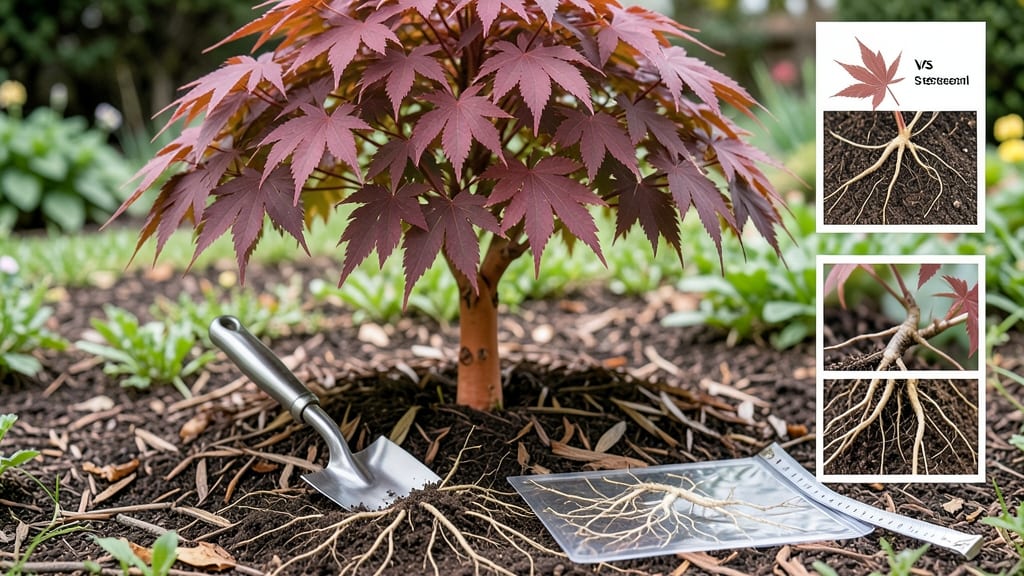
The Japanese Maple Tree 🌿 root system is shallow yet expansive—spreading far wider than its canopy and staying close to the surface, which is why planting and pruning decisions can make or break its health.
Picture this: You’ve spent months nurturing your Japanese Maple Tree, only to watch it wilt after a heavy rain or struggle to stay upright in strong winds. That’s often a sign its delicate roots aren’t getting the support they need.
Understanding how these roots behave—how deep they grow, how they spread, and what they crave in terms of soil—is the key to keeping your tree thriving for decades. Too much water, compacted soil, or even improper planting can stunt growth or invite disease.
In this guide, I’ll break down everything you need to know about maintaining a healthy Japanese Maple Tree root system, from planting depth to pruning tips that preserve both beauty and stability.
How deep Japanese maple tree roots grow and their unique structure
When planting a Japanese maple tree, most gardeners focus on the stunning foliage and graceful branches—but the real foundation lies underground. These trees develop a shallow yet expansive root system that dictates stability, water absorption, and long-term health.
Unlike deep-rooted oaks, Japanese maples typically spread 3 to 5 times wider than their canopy, making root structure a critical factor in placement and care.
The root depth of a mature Japanese maple usually reaches only 12 to 18 inches below the soil surface. This shallow system means they’re sensitive to soil compaction, drought, and improper planting techniques.
Their roots also lack a dominant taproot—instead, they form a dense network of fibrous roots that spread horizontally, absorbing moisture and nutrients efficiently in their preferred well-draining, slightly acidic soil.
Understanding this structure helps avoid common mistakes like planting too deep or disturbing roots during landscaping. A shallow root system also means these trees are less drought-tolerant than deeper-rooted species, requiring consistent moisture to thrive.
Their lateral spread means you’ll need ample space—10 to 20 feet from sidewalks, foundations, or other plants—to prevent root competition or damage.
| Root Feature | Details | Garden Impact |
|---|---|---|
| Root Depth | 12–18 inches | Sensitive to compaction; avoid heavy foot traffic near base. |
| Lateral Spread | 3–5x canopy width | Plant 10+ feet from structures; prune roots if encroaching. |
| Root Type | Fibrous (no taproot) | Absorbs water/nutrients efficiently but needs loose soil. |
| Soil Preference | Well-draining, acidic (pH 6.1–7.5) | Amend clay soil with compost; avoid waterlogged areas. |
| Stability Risk | Shallow roots = wind-prone | Stake young trees; mulch to protect roots in storms. |
The fibrous root system of Japanese maples is a double-edged sword. On one hand, it allows them to thrive in partial shade where deeper roots might struggle. On the other, it makes them vulnerable to soil erosion and root suffocation if planted in dense or compacted soil.
I’ve seen many gardeners accidentally smother these roots with thick mulch layers, leading to rot or poor growth. The key is to use 2–3 inches of organic mulch—never directly against the trunk—to retain moisture without suffocating the roots.
Another critical factor is the root-to-soil interface. Japanese maples rely on a thin layer of topsoil for most of their nutrient uptake. If you’re planting in urban areas with compacted soil, consider amending the top 12 inches with compost or peat moss before installing the tree.
This mimics their natural forest-floor habitat and ensures the roots can spread freely without resistance.
For container-grown Japanese maples, the root structure changes slightly. Roots grow in a circular pattern within the pot, which can become root-bound if not repotted every 2–3 years. When transplanting, gently tease out any circular roots to encourage outward growth.
Never prune more than 25% of the root ball at once, as this can shock the tree and delay recovery.
If you’re pruning the above-ground branches, remember that root health directly impacts the tree’s ability to recover. Heavy pruning in late summer or fall stresses the shallow roots, making the tree more susceptible to winter dieback.
Always prune in early spring when new root growth begins, and pair it with a balanced fertilizer (like 10-10-10) to support recovery.
One common misconception is that Japanese maples can handle wet soil like willows. In reality, their shallow roots rot quickly in waterlogged conditions. If your garden has poor drainage, plant on a mound or raised bed to keep roots elevated.
I’ve had to dig up several maples from low-lying areas where the roots turned mushy—always a heartbreaking sight for a tree with such delicate beauty.
To monitor root health, watch for yellowing leaves or stunted growth, which often signal compacted or waterlogged roots. If you suspect root issues, gently loosen the soil around the drip line (the edge of the canopy) with a fork to aerate without damaging the roots.
This simple step can revive a struggling tree by improving oxygen flow to the fibrous network.
In summary, the shallow yet expansive root system of Japanese maples is both their strength and their vulnerability. By respecting their natural growth habits—planting in loose, well-draining soil, avoiding compaction, and spacing them properly—you’ll give your tree the best chance to thrive for decades.
Their roots may not run deep, but with the right care, they’ll support a tree that’s as resilient as it is beautiful. 🌿
Critical factors affecting Japanese maple root health and growth
Your Japanese maple tree relies on a healthy root system to support its stunning foliage and elegant form. The soil composition and environmental conditions play pivotal roles in determining whether your tree thrives or declines.
Even the most beautiful Japanese maple varieties can suffer if their roots aren't properly cared for.
One of the most critical factors is soil drainage. Japanese maples despise soggy roots, which can lead to root rot and other fungal diseases. The ideal soil pH range of 6.1 to 7.5 ensures nutrient availability, while proper aeration prevents compaction that stunts root growth.
Let’s explore these essential factors to keep your tree’s roots happy and healthy.
⚠️ Warning: Root Stress Signs You Can't Ignore
Yellowing leaves or leaf drop often signal root stress. If your Japanese maple shows these signs, check for:
- Compacted soil (roots can’t breathe)
- Overwatering (soggy, anaerobic roots)
- Drought stress (wilting despite moist soil)
Act fast! Amend soil with compost or adjust watering immediately to prevent permanent damage.
Japanese maples thrive in well-draining, slightly acidic soil. If your garden soil is heavy clay or alkaline, amend it with organic matter like compost or peat moss.
This improves aeration and mimics their natural forest floor habitat. A simple soil test (available at garden centers) can reveal pH imbalances before they harm your tree.
Drought is another silent killer of Japanese maple roots. While these trees tolerate some dryness, prolonged drought causes roots to shrink and weaken. Mulching with wood chips or bark retains moisture and regulates soil temperature.
Water deeply but infrequently—1-2 inches per week—to encourage deep root growth rather than shallow, thirsty roots.
On the flip side, waterlogged soil is equally damaging. Japanese maples hate soggy feet, which lead to root rot and fungal infections. If your yard has poor drainage, consider planting your tree on a slight mound or in a raised bed.
This ensures excess water flows away, keeping roots oxygenated and healthy.
Finally, avoid mechanical root damage from foot traffic or heavy equipment. Their shallow, widespread roots are easily injured, leading to declining health and reduced vigor. Create a mulch ring around the base to protect roots while keeping them cool.
With the right care, your Japanese maple’s root system will support decades of beauty.