
How To
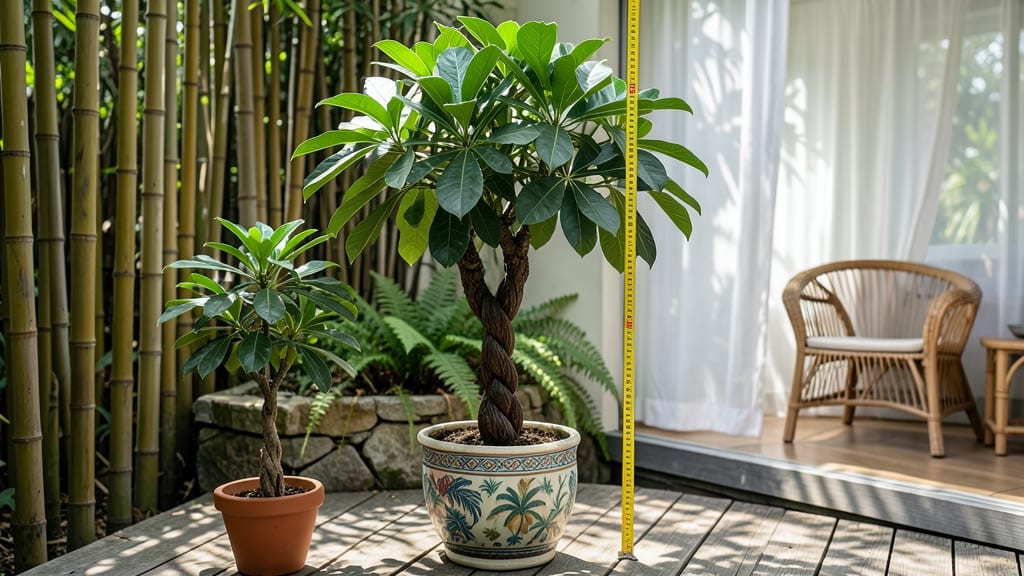
A money tree can grow between 6 and 10 feet tall—but whether it reaches that height depends entirely on where you grow it. If you’ve ever wondered whether your 🌱 Pachira aquatica will stretch toward the ceiling or stay compact, the answer lies in your care routine and environment.
Indoor money trees often max out at 3 to 6 feet because of limited space and controlled conditions, while outdoor varieties in warm climates can soar to 10 feet or more.
The key difference? Light exposure, pruning habits, and even the pot size you choose. Without proper management, even a dwarf variety can outgrow its welcome in no time.
Here’s the good news: you don’t have to let it grow wild. With the right pruning techniques and care adjustments, you can keep your money tree at your desired height—whether that’s a countertop-sized statement piece or a towering indoor tree.
Below, I’ll break down the exact factors that influence growth and how to control it without stressing the plant.
Ready to learn how to shape your money tree’s future? You’ll discover the fastest-growing varieties, the best pruning times, and even how to encourage bushier growth for a fuller look. Let’s get started!


Money tree height guide: indoor vs outdoor growth limits explained
Your money tree (Pachira aquatica) is a stunning tropical plant, but its maximum height can vary wildly depending on where you grow it. Indoors, these plants often stay compact—reaching 6 to 10 feet over years—while outdoors, they can soar to 20 feet or taller under ideal conditions.
The difference comes down to space, sunlight, and care, so let’s break down what to expect for your specific setup.
If you’re growing your money tree indoors, you’ll likely deal with slower growth due to limited light and controlled environments. Outdoors, however, these plants thrive in warm climates (USDA Zones 10-12) and can grow aggressively if given the right conditions.
Even dwarf varieties can outgrow expectations if not pruned regularly. Let’s compare the two scenarios in detail.
| Factor | Indoor Growth | Outdoor Growth |
|---|---|---|
| Maximum Height | 6–10 ft | 15–20+ ft |
| Growth Rate | 1–2 ft/year | 3–5 ft/year |
| Light Needs | Bright indirect | Full sun to partial shade |
| Humidity Requirements | Moderate (40–60%) | High (60–80%) |
| Pruning Needs | Frequent (to control size) | Regular (for shape & health) |
| Best Varieties | Pachira aquatica 'Money Tree' | Pachira glabra 'Golden Shower' |
For indoor money trees, the light conditions are the biggest limiting factor. These plants crave bright indirect light—think east-facing windows—but they’ll stretch and grow leggy in dim spaces.
If your tree isn’t getting enough light, it may only reach 3 to 5 feet in height, even after years of growth. To encourage a bushier, healthier plant, rotate it quarter-turns weekly so all sides get equal exposure.
Outdoors, your money tree’s height skyrockets because of unlimited space and sunlight. In tropical climates, these trees can grow 3 to 5 feet per year, easily surpassing 15 feet in just a few years.
If you’re in a cooler zone (like USDA Zone 9), expect slower growth—1 to 2 feet per year—but they’ll still outpace indoor counterparts. The key is protecting them from frost and ensuring well-draining soil.
Humidity plays a huge role in determining your money tree’s height. Indoors, dry air (common in winter) can stunt growth, while high humidity (like a bathroom or kitchen) encourages faster, healthier expansion.
Outdoors, these plants thrive in humid climates, but even in drier areas, they’ll grow taller if you mist them regularly or place them near a water feature. Aim for 50–70% humidity to keep your tree lush and growing steadily.
Temperature also affects height. Indoors, most homes stay within the money tree’s ideal range (65–85°F), but drafts or cold windowsills can slow growth. Outdoors, they need consistent warmth—below 50°F, growth stalls, and frost will kill the plant.
If you’re growing yours outdoors in a cooler zone, bring it inside before temperatures drop or plant it in a large container that you can move.
Pruning is your best tool for controlling height, whether indoors or outdoors. For indoor plants, pinch back new growth in early spring to encourage bushier growth. Outdoors, you can prune more aggressively—cutting back 1/3 of the plant in late winter to shape it and promote new branches.
Always use sterilized pruners and seal cuts with pruning wax to prevent disease.
If you’re worried about your money tree outgrowing its space, don’t despair—there are ways to keep it manageable. For indoor plants, dwarf varieties like Pachira aquatica 'Braided Money Tree' stay smaller (around 3–6 feet) with proper care.
Outdoors, regular pruning and container growing can also limit height. Just remember: even small money trees need space for roots—don’t crowd them in tight pots.
One common mistake is assuming that bigger pots = taller plants. While money trees need room to grow, oversized containers can actually slow growth because the roots take longer to fill the space.
Stick to a pot that’s 2–3 inches larger in diameter than the plant’s current root ball, and repot every 2–3 years to refresh the soil.
Ready to give your money tree the perfect conditions for its ideal height? Start by assessing your light, humidity, and space, then adjust your care routine accordingly.
With the right balance, you can enjoy a healthy, happy money tree—whether it’s a compact indoor centerpiece or a towering outdoor specimen. 🌿
5 Proven ways to control money tree height (without harming the plant)
Keeping your money tree (Pachira aquatica) at a manageable height doesn’t require drastic measures—just smart pruning techniques and consistent care. Many gardeners struggle with rapid vertical growth, especially when placed in bright indirect light.
The good news? You can shape its growth without stressing the plant, as long as you follow the right steps. Let’s explore five effective methods to control its height while promoting bushier, healthier growth.
Before you reach for the pruners, understand that money trees grow fastest during spring and summer when they’re actively photosynthesizing. Indoor plants typically grow 1-2 feet per year, while outdoor varieties can surge 3-5 feet annually with ideal conditions.
The key is to prune at the right time—never during dormancy (fall/winter)—to avoid stunting growth entirely.
- 1 Top Pruning: Cut 4-6 inches from the top stem in spring to slow vertical growth. This encourages lateral branching below the cut.
- 2 Pinching: Remove new growth tips (pinch with fingers) to redirect energy into side shoots. Do this every 2-3 weeks in growing season.
- 3 Root Pruning: Repot every 2-3 years and trim 1/3 of roots to slow top growth. Use well-draining soil to prevent root-bound stress.
- 4 Light Control: Move to lower light (e.g., north-facing window) to reduce growth speed. Avoid direct sunlight, which fuels rapid vertical stretches.
- 5 Fertilizer Adjustments: Use low-nitrogen fertilizer (e.g., 5-5-5) to limit leafy top growth. Skip fertilizing in fall/winter to encourage dormancy.
Start with top pruning if your money tree is already towering—this is the fastest way to curb height while encouraging a fuller shape. Use sterilized pruning shears to make clean cuts just above a leaf node (where new branches can sprout).
For a bushier look, aim to prune 1/3 of the plant’s height in one session, but never cut more than 25% at once to avoid shock.
Avoid the common mistake of pruning in winter, as this can delay spring growth. Instead, time your cuts in early spring (March-April) when the plant is waking up. Pair pruning with a balanced fertilizer (like 10-10-10) to support new growth.
If your money tree develops bare stems from over-pruning, reduce future cuts and focus on pinching new shoots to fill gaps.
For outdoor money trees, seasonal adjustments are key. In USDA Zone 10+, where these plants thrive year-round, prune twice a year: once in spring to shape growth and again in late summer to prepare for cooler months.
Always water deeply after pruning to help the plant recover, and avoid placing it in drafty areas that stress new cuts.
With these techniques, you’ll keep your money tree at your desired height—whether that’s countertop-friendly (3-4 feet) or a statement plant (6-8 feet)—without sacrificing its health or vibrancy. 🌿✂️🪴