
Pruning
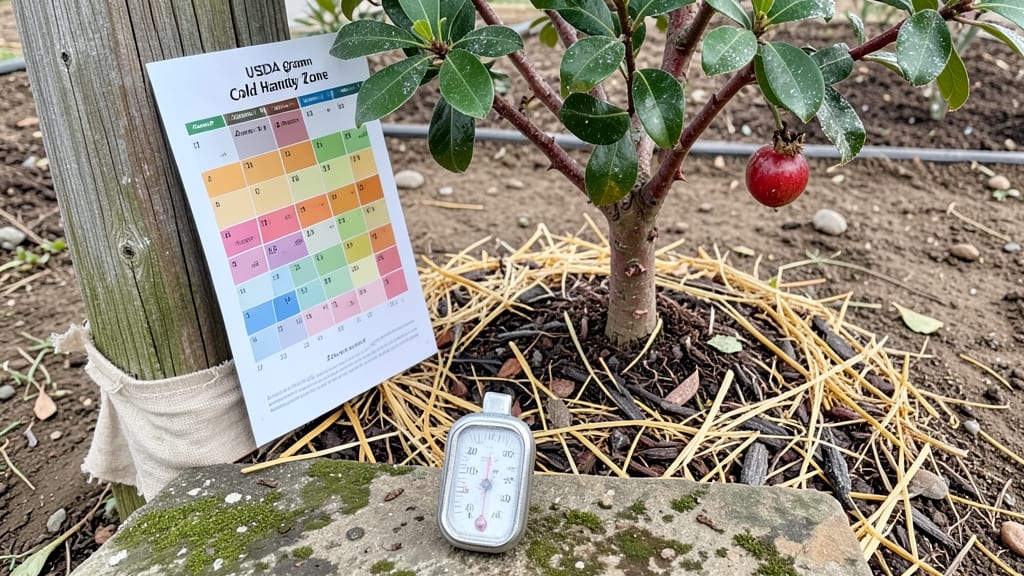
Understanding pomegranate tree cold hardiness reveals they typically survive in USDA Zones 7-11, enduring temperatures down to 15°F (-9°C) before damage occurs. Most varieties suffer below 20°F (-7°C), though hardier types like 'Eversweet' can tolerate 10°F (-12°C). Proper winter care extends their growing range.
Cold hardiness varies significantly between pomegranate cultivars, with some like 'Wonderful' being more sensitive to frost than others. 🍇 The key difference lies in their genetic makeup—rootstock plays a crucial role in determining how well a tree withstands winter temperatures.
For example, grafted trees often inherit cold resistance from their rootstock, which can push their tolerance limits lower than seed-grown varieties. Understanding these nuances helps gardeners choose the right variety for their climate zone and implement targeted protection strategies when needed.
In colder regions, proper winter preparation isn't just about survival—it's about maintaining fruit production. Mulching with straw or wood chips creates an insulating layer that protects roots, while wrapping the trunk with burlap or frost cloth shields against temperature swings.
Microclimates near buildings or south-facing walls can provide additional protection, sometimes allowing pomegranates to thrive one zone colder than officially recommended. The goal is to mimic the Mediterranean climate these trees evolved in, where they experience mild winters and hot, dry summers.
💡 In This Article
- Pomegranate Tree Cold Tolerance by Cultivar
- Winter Protection Strategies for Pomegranate Trees
Pomegranate tree cold tolerance by cultivar
Pomegranate trees exhibit dramatic hardiness variations between cultivars, primarily due to genetic differences in their ability to withstand cellular dehydration during freezing.
The 'Wonderful' variety, America's most popular, typically survives only down to 15°F (-9°C)—any colder and its leaves begin to blacken, while buds and flowers suffer irreversible damage at 20°F (-7°C).
This sensitivity stems from its thin bark and limited cold acclimation ability, making it more suited to Zones 8-11 where winter temperatures rarely drop below 25°F (-4°C).
In contrast, 'Eversweet' stands out as the cold-hardiest commercial variety, capable of enduring 10°F (-12°C) without significant damage, thanks to its thicker bark and deeper root system that stores more energy reserves.
This cultivar's tolerance makes it ideal for Zones 6-7 with proper winter care, though fruit production may still decline below 15°F (-9°C). Another standout is 'Crimson Jewel', which bridges the gap with 18°F (-8°C) tolerance—enough to survive most Zone 7 winters but requiring protection in colder microclimates.
Rootstock selection amplifies these differences, as grafted trees often inherit the hardiness of their understock.
The critical distinction lies in how different parts of the tree respond to cold: while the trunk may survive 10°F (-12°C), flowers and fruit often suffer at 25°F (-4°C) due to their higher moisture content.
This explains why gardeners in marginal zones sometimes see bare branches after winter—the tree lives, but reproductive structures die. The science behind this involves ice crystal formation in plant cells; hardier varieties produce more protective proteins that prevent membrane damage during freeze-thaw cycles.
For visual comparison, imagine 'Wonderful' as a delicate citrus tree that needs constant warmth, while 'Eversweet' resembles a tougher apple tree that shrugs off occasional cold snaps. The difference becomes apparent in spring when 'Eversweet' bursts into leaf while 'Wonderful' may still look dormant.
This cultivar contrast is why nurseries often recommend 'Eversweet' for northern gardeners, despite its slightly smaller fruit size compared to 'Wonderful'.
Temperature thresholds also vary by growth stage: young trees (under 3 years) are far more vulnerable than mature specimens, with damage occurring 5°F (3°C) warmer than established trees. This is why many growers advise against planting pomegranates in Zones 6-7 unless using cold-hardy rootstock and implementing aggressive winter protection.
The root system's depth—typically 3-5 feet—plays a crucial role in cold resistance, as deeper roots access warmer soil temperatures during winter.
What most gardeners overlook is how microclimates can push these thresholds even further. A south-facing wall can add 5-10°F (3-6°C) of protection, while a sheltered garden spot might extend hardiness by an entire zone.
This explains why some Zone 6 growers successfully cultivate pomegranates with careful site selection and winter prep, despite the official zone recommendations. The key is creating that Mediterranean-inspired microclimate where winter temperatures rarely drop below 20°F (-7°C) for extended periods.