
Watering
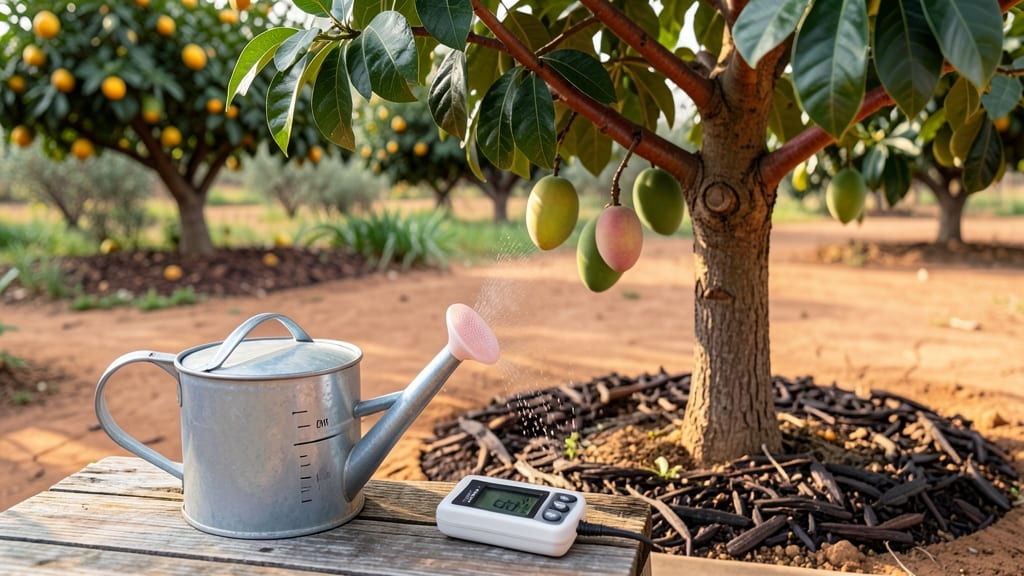
A mango tree needs deep, infrequent watering—about 10-15 gallons per session for young trees and 20-30 gallons for mature 🥭 ones—to thrive in General (Tropical/Subtropical) zones.
Struggling to keep your mango tree alive? Overwatering or underwatering can both kill it—so how do you strike the perfect balance for lush, fruitful growth?
Young trees need consistent moisture, while mature ones can handle drought once their roots are deep. The key is checking soil 2-3 inches down—if it’s dry, it’s time to water. Too much water leads to root rot, while too little stunts growth.
Below, I break down seasonal adjustments, signs of over/under-watering, and how to water for optimal fruit production—no guesswork, just science-backed tips.
Mango tree watering requirements by growth stage (seedling vs mature tree)
Watering a mango tree isn’t one-size-fits-all—its needs change dramatically as it grows. A seedling demands consistent moisture to develop strong roots, while a mature tree (5+ years) thrives on deep, infrequent watering to survive drought.
Understanding these stages is key to avoiding root rot or stunted growth. Let’s break down the exact watering rules for each phase, including root depth and seasonal tweaks.
For young mango trees (under 5 years), shallow roots mean frequent but shallow watering. Aim for 1-2 inches of soil moisture at all times—think of it like keeping a sponge damp, not soggy.
In contrast, established trees develop roots up to 3-5 feet deep, so they need deep watering every 2-3 weeks to reach those lower layers. Skipping this step can leave your tree thirsty even if the topsoil feels moist.
Here’s the critical difference: seedlings need water every 3-7 days, while mature trees can go 3-4 weeks without water in ideal conditions. The trick? Always water early morning to reduce evaporation and fungal risks. Avoid evening watering—wet foliage overnight invites bacterial infections.
Testing soil moisture is easier than you think. Stick your finger 2-4 inches deep—if it feels dry, it’s time to water. For mature trees, dig deeper (up to 6 inches) to check moisture levels.
Pro tip: Use a soil moisture meter for accuracy, especially in sandy soils where water drains fast. Overwatering here is just as deadly as underwatering.
Seasonal adjustments are non-negotiable. In summer, increase watering by 30% to combat heat stress, but reduce frequency in winter (Zone 9b) to monthly. Mulch with organic matter (like wood chips) to retain moisture and regulate soil temperature.
A 3-inch mulch ring around the trunk can cut water needs by up to 50%.
Watch for yellowing leaves or wilting branches—these are red flags. Yellow leaves often mean overwatering, while crispy edges signal underwatering. Adjust your schedule immediately.
For potted mango trees, water every 3-5 days since containers dry out faster. Always use pots with drainage holes to prevent root suffocation.
Mango trees in cooler climates (Zone 9b) need extra care. Reduce watering in fall and winter to mimic their natural drought tolerance. In spring, ramp up watering as new growth emerges—this is when roots expand rapidly.
Pair watering with a balanced fertilizer (6-6-6 NPK) to support root development during these critical months.
Remember: Deep watering beats frequent shallow watering. Use a soaker hose or drip irrigation to deliver water slowly to the root zone. This method mimics natural rainfall and encourages deeper root growth.
Avoid sprinklers—they waste water and promote fungal diseases. For container-grown mangoes, water until it runs out the drainage holes to ensure full saturation.
One final tip: Observe your tree’s natural cycle. Mature mango trees often enter a dormant phase in summer, needing less water despite the heat. Learn to read your tree’s signals—healthy leaves and steady growth mean you’re on the right track.
With the right watering routine, your mango tree will reward you with juicy fruit for decades.
Seasonal watering schedule for mango trees in different climates
Mango trees thrive with deep but infrequent watering, but their needs shift dramatically based on climate and season. In tropical zones, heavy rainfall often replaces manual watering, while subtropical areas require careful balancing during dry spells.
Even in temperate zones like Zone 9b, winter dormancy changes everything—watering too much can drown roots, while too little stresses the tree. Let’s break down the month-by-month schedule for each climate to keep your mango tree lush and fruitful.
First, soil drainage is non-negotiable. Mango trees hate soggy roots, so amend clay soil with compost or sand to prevent waterlogging. In monsoon climates, prioritize well-draining raised beds to avoid root rot during heavy rains.
For drought-prone areas, mulch heavily to retain moisture—3-4 inches of organic mulch reduces evaporation by up to 50%. Always water at the base of the tree, not the leaves, to prevent fungal diseases like anthracnose.
• Young Trees (1-5 yrs): Water 2-3x/week (10-15 gallons each time). Monitor soil—top 2 inches dry by touch.
• Summer (June-Aug): Weekly deep watering (20-30 gallons). Reduce to bi-weekly in fall as temps drop.
• Winter (Dec-Feb): Minimal watering—only if soil is bone-dry (monthly max). Resume spring watering in March.
• Rainy Season (June-Oct): Skip watering—let nature hydrate. Dry Season (Nov-May): Water every 10-14 days.
• Signs of Thirst: Wilting leaves, crispy leaf edges, or soil pulling away from pot walls. Fix: Soak roots deeply (30+ mins).
• Yellowing leaves, mushy stems, or fungal spots = root rot. Fix: Let soil dry completely between waterings; improve drainage.
Adjust your watering based on tree age and weather. A 5-year-old mango tree needs 20-30 gallons per watering, while a 10-year-old specimen can handle 30-50 gallons—but only if the soil is sandy or loamy.
In containers, mango trees dry out faster; water every 3-5 days in summer, even if the pot feels light. Pro tip: Use a moisture meter to check soil—3-4 inches deep is the sweet spot for most climates.
Watch for seasonal cues to fine-tune your schedule. In spring, increase watering as new leaves emerge—this is when roots expand rapidly. By late summer, reduce frequency to every 2 weeks to prepare for dormancy.
If your tree drops premature fruit, it’s often a sign of water stress—either too much or too little. Always prioritize consistency over quantity; mango trees prefer dry spells between deep waterings to develop strong root systems.
Remember, morning watering is key. Wet leaves in the evening can invite fungal diseases, while morning water lets foliage dry by nightfall. If you