
Trees
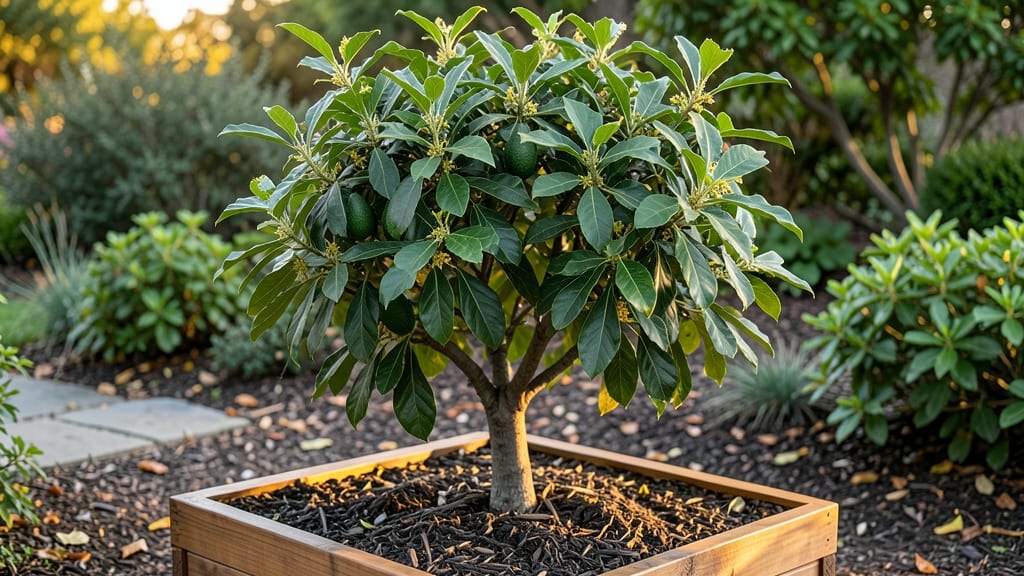
Cold hardy avocado trees for Zone 7 thrive best with winter protection, and varieties like 'Mexicola' and 'Wurtz' tolerate temperatures down to 15°F with proper care, including microclimate adjustments and mulching.
Growing avocado trees in Zone 7 is absolutely possible with the right cold-resistant varieties and preparation. 🌱 The key is understanding that while these trees can survive brief cold snaps, they need protection during prolonged freezes.
For example, 'Mexicola' and 'Wurtz' are proven performers, but even they'll benefit from windbreaks and thick mulch layers to shield roots from temperature swings.
I've seen gardeners in Zone 7 successfully overwinter their trees by combining these varieties with strategic placement—near south-facing walls or under patio covers—to create a warmer microclimate.
What sets these hardy varieties apart is their ability to enter dormancy when temperatures drop, though they still require careful monitoring. The 15°F threshold is critical—any colder, and you risk damage even to the most resilient trees.
That's why I recommend installing frost blankets or using bubble wrap around trunks during extreme cold events. The goal is to buy time until spring warmth returns, allowing the tree to recover without permanent stress.
💡 In This Article
- Understanding Avocado Tree Cold Tolerance Mechanics
- Zone 7 Avocado Tree Winter Care Checklist
Understanding avocado tree cold tolerance mechanics
Avocado trees evolved in tropical climates, so their cold tolerance relies on specialized biological responses. When temperatures drop below 40°F, these trees trigger dormancy—a survival mechanism where growth slows and metabolic processes shift to conserve energy.
The roots, which can tolerate slightly colder conditions than the canopy, act as the tree's anchor during winter, storing carbohydrates to fuel recovery in spring. This is why root protection through mulching becomes critical in Zone 7, where winter temperatures can fluctuate wildly between day and night.
The real damage occurs when cells freeze, and this happens at different thresholds for leaves (28°F) versus wood (23°F). Varieties like 'Mexicola' and 'Wurtz' have been selectively bred to delay cellular freezing by producing antifreeze proteins that lower the freezing point of their sap.
These proteins bind to ice crystals, preventing them from growing large enough to rupture cell walls—a process similar to how some fish survive Arctic winters. However, even with these adaptations, prolonged exposure below 15°F will overwhelm any natural protection, making winter preparation non-negotiable.
Zone 7 presents unique challenges because its winters often include brief but intense cold snaps rather than prolonged freezing. The tree's ability to handle these swings depends on how quickly it can recover between cold events.
For instance, a hardy variety might survive a 10°F night if followed by a 50°F day, but back-to-back freezing nights will push it beyond its limits.
This is why gardeners in Zone 7 often combine cold-hardy varieties with microclimate engineering, such as planting near heat-retaining structures or using windbreaks to moderate temperature extremes.
Another key factor is the tree's age—younger specimens are more vulnerable because their root systems haven't developed the extensive carbohydrate storage of mature trees. A 3-year-old 'Mexicola' might need an extra layer of frost cloth compared to a 10-year-old tree with established roots.
The bark also plays a role: thicker bark acts as insulation, which is why pruning should focus on removing only dead or diseased branches in winter, never healthy growth that could be protecting the tree's core from cold.
What most gardeners overlook is how soil temperature affects cold tolerance. Avocado roots prefer soil temps above 55°F for optimal function, and cold soil (40°F or below) can stress the tree even if air temps are mild.
This is why deep mulching (at least 4-6 inches of organic material) is essential—it creates an insulating blanket that moderates soil temperature fluctuations. In my own garden, I've seen mulched trees maintain root temps 5°F warmer than unmulched ones during winter cold snaps.
For those considering container-grown avocados in Zone 7, the mechanics change dramatically. Potted trees have limited root mass, so their cold tolerance drops significantly. The container itself becomes a heat sink, radiating cold more efficiently than in-ground soil.
This is why I recommend moving potted trees to sheltered locations (like garages or against south-facing walls) before the first frost, combined with wrapping the pot in bubble wrap to reduce heat loss through the sides.