
Pruning
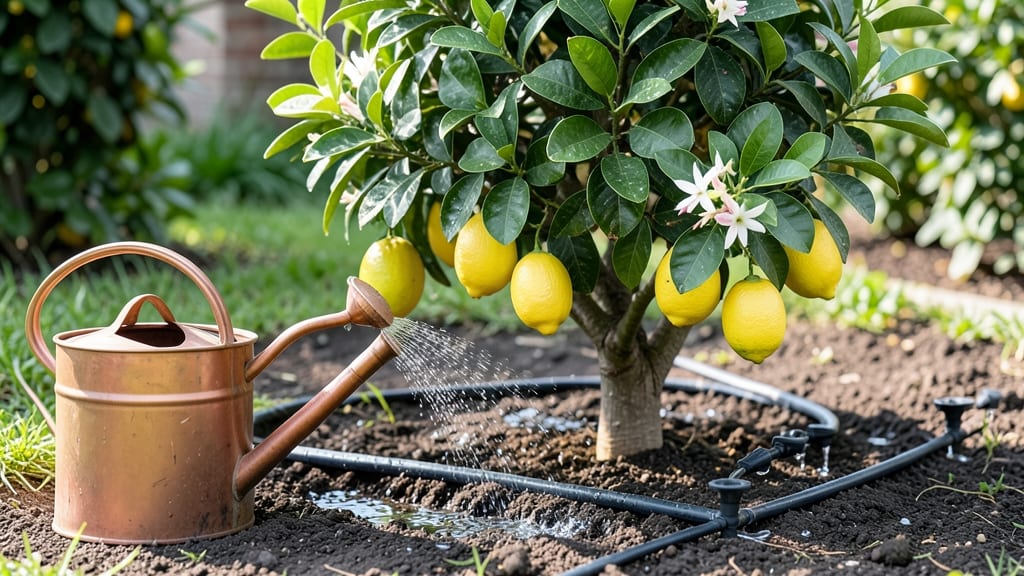
Citrus tree irrigation is the secret to sweet, abundant fruit and roots that stay healthy year-round 🍊—not too dry, not too soggy, just right.
Your citrus tree’s health—and that juicy harvest—depends on one often-overlooked factor: watering. Too much or too little can turn your fruit into bitter disappointment, but the right citrus tree irrigation schedule keeps roots thriving and branches heavy with sweet oranges, lemons, and limes.
Here’s the game-changer: citrus trees in USDA Zone 9b need a tailored approach, whether they’re potted or planted in the ground. Learn how to adjust watering based on season, soil type, and even your local climate to avoid root rot while maximizing fruit production.
From drip systems to mulch hacks, I’ll walk you through the best methods to keep your citrus tree hydrated—without wasting a drop. Ready to turn your tree into a fruit-bearing powerhouse?
Optimal citrus tree watering schedule by season (prevent root rot & overwatering)
Citrus trees thrive on consistency, but their water needs shift dramatically with the seasons. In spring, your tree wakes from dormancy and needs regular moisture to fuel new growth.
Summer demands deep, frequent watering to combat heat stress, while fall and winter require dramatic adjustments to prevent root rot or frost damage. The key? Understanding your tree’s unique needs based on its container vs. in-ground home.
I’ve learned the hard way—overwatering in winter killed my first Meyer lemon tree’s roots. Since then, I’ve perfected a seasonal watering rhythm that keeps my trees lush and productive.
Whether you’re growing a dwarf Meyer lemon in a pot or a full-size Valencia orange in your yard, these guidelines will save you from soggy soil or thirsty branches. Let’s dive into the perfect schedule for each season.
🚨 CRITICAL RULE: Always water at the base of the tree, never the leaves, to prevent fungal diseases like citrus scab. Use a soaker hose or drip irrigation for even moisture distribution—this is non-negotiable for container citrus.
| Season | In-Ground Tree | Container Tree | Soil Moisture Check | Drought Signs |
|---|---|---|---|---|
| Spring | Every 3-5 days 1-2 gallons per watering |
Every 2-3 days ½ gallon per 5 gallons of soil |
Top 2-3 inches dry | Leaf drop, yellowing new growth |
| Summer | Daily or every 2 days 2-3 gallons deep soak |
Every 1-2 days 1 gallon per 5 gallons of soil |
Top 3-4 inches dry | Wilting leaves, fruit drop, crisp edges |
| Fall | Every 5-7 days 1 gallon per watering |
Every 3-4 days ½ gallon per 5 gallons |
Top 3 inches dry | Slow growth, premature leaf color change |
| Winter | Bi-weekly ½ gallon only if no rain |
Every 10-14 days ¼ gallon if pot feels light |
Top 4 inches dry (minimal water) | Mushy roots, root rot smell, blackened bark |
Spring is all about revving up growth, so I start by increasing water in March as temperatures rise. My in-ground Valencia orange gets a deep soak every 3-5 days, while my potted Calamondin drinks more frequently.
The trick? Water until it flows from the drainage holes—this flushes out excess salts that build up in container soil.
Summer is the most critical season for citrus irrigation. Without proper watering, your tree will drop fruit and suffer heat stress. I schedule my drip irrigation system to run early mornings (5-7 AM) to minimize evaporation.
For container trees, I move them to shadier spots during peak heat and check soil moisture twice daily. If the top 3 inches are dry, it’s time to water.
Fall signals a gradual slowdown in watering as days shorten. I reduce frequency to every 5-7 days for in-ground trees and monitor for early leaf drop, a sign of overwatering.
Container trees still need attention—pots dry out faster, so I water every 3-4 days until November. Always mulch heavily (3-4 inches of wood chips) to retain moisture and regulate soil temperature.
Winter is where most gardeners go wrong. Many assume citrus trees need less water and cut back too much—or worse, keep watering like summer. The reality? Your tree’s roots are dormant and need barely any moisture.
I only water my in-ground trees if it hasn’t rained in 2-3 weeks, giving just enough to prevent complete dryness. For containers, I move them indoors (near a sunny window) or wrap the pot in bubble wrap to insulate roots.
One mistake I made was ignoring the container size. A 5-gallon pot dries out in 24 hours in summer, while a 15-gallon pot lasts 3 days.
Upgrade your pot if your citrus tree’s roots are circling the bottom—this is a suicide sign for container citrus. Pair larger pots with self-watering trays to maintain
5 Signs your citrus tree is overwatered or underwatered (and how to fix it)
Citrus trees are finicky about water—too much causes root rot, while too little stunts growth and fruit production. I’ve learned the hard way that yellowing leaves or drooping branches aren’t just random signs; they’re your tree’s SOS signals.
The key is spotting these early warning signs before they become irreversible damage.
Most gardeners (myself included) make the mistake of assuming citrus trees love water. In reality, they prefer consistent moisture without soggy roots. Overwatering smothers roots, while underwatering leads to leaf scorch and fruit drop. Let’s tackle the 5 most common symptoms and how to revive a struggling tree.
- 1 Yellowing leaves (starting at bottom) – Sign of overwatering or poor drainage. Check soil: if it’s soggy, roots are drowning.
- 2 Curling or crispy leaf edges – Classic underwatering sign. Stick your finger 2" deep; if dry, water immediately.
- 3 Fruit dropping prematurely – Either overwatering (roots can’t absorb nutrients) or underwatering (stress response). Check soil moisture first.
- 4 Mushy, black stems or trunk – Fungal root rot from overwatering. Emergency action: trim affected areas and improve drainage.
- 5 Stunted new growth – Roots aren’t getting enough oxygen (likely overwatered). Let soil dry slightly between waterings.
If you spot yellowing leaves or leaf curl, don’t panic—citrus trees are resilient when you act fast. For overwatered trees, I’ve had success with gravel trenches around the base to improve drainage.
Dig a shallow trench (6" deep) filled with pebbles, then water lightly to encourage roots to grow downward where oxygen is plentiful.
For underwatered trees, deep watering is critical. Use a soaker hose or drip irrigation to deliver 1-2 gallons directly to the root zone (not the foliage). Mulch with 3-4 inches of organic matter (like straw or wood chips) to retain moisture.
Pro tip: Water in the early morning to prevent fungal diseases from evening dampness.
Recovery takes time, but with the right adjustments, your citrus tree can bounce back. I once revived a lemon tree with mushy stems by pruning the rot, repotting in fresh cactus mix, and watering only when the top 2" of soil were bone dry.
Within 2 months, it was producing new leaves—and fruit!
Remember: consistency is key. Citrus trees thrive on routine. Stick to a seasonal watering schedule, monitor soil moisture with your finger (not guesswork), and your tree will reward you with juicy, sweet fruit for years to come. 🌱