
Pests and Diseases
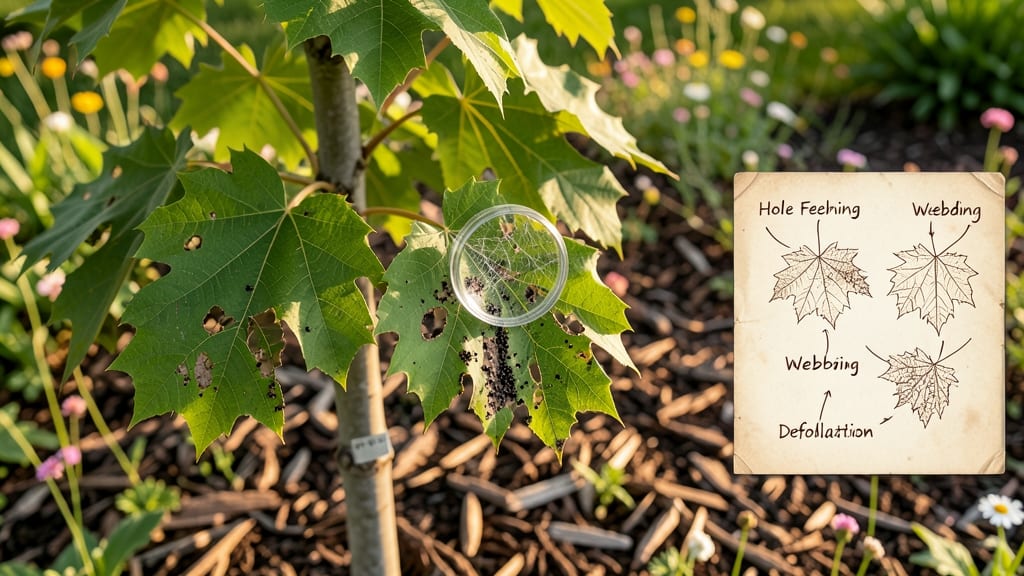
When your tree leaves are being eaten, the culprits are usually caterpillars, beetles, aphids, or deer, each leaving unique damage patterns. Look for specific bite marks, hole shapes, or chewed edges to pinpoint the pest and choose the right organic or chemical treatment.
Most leaf-eating pests leave behind telltale signs that reveal their identity. 🌿 Caterpillars typically create ragged edges or large, irregular holes, while beetles often leave skeletonized leaves with tiny holes. Deer, on the other hand, leave clean-cut edges, almost like a pair of scissors did the damage.
Understanding these patterns helps you target treatments effectively—like using neem oil for insects or fencing for deer—before the problem worsens.
Timing matters too. Many insects are most active during spring and summer, while deer browsing peaks in late fall and winter. If you catch the damage early, organic solutions like insecticidal soap or homemade sprays can work wonders.
For severe infestations, chemical controls might be necessary, but always follow label instructions to protect both your tree and the environment.
💡 In This Article
- Identifying Tree Leaf Damage by Common Pests
- Organic and Chemical Solutions for Leaf-Eating Pests
Identifying tree leaf damage by common pests
Caterpillars are the most common leaf-eaters, and their damage is unmistakable. They typically create irregular, jagged holes along the leaf edges or in the center, often leaving behind a silky webbing or frass (insect droppings). Look for these signs in spring and summer when caterpillars are most active.
For example, gypsy moth caterpillars leave behind skeletonized leaves with only the veins intact, while tent caterpillars create visible silk tents on branches.
Beetles, on the other hand, leave behind smaller, precise holes—often round or oval—scattered across the leaf surface. Japanese beetles, for instance, chew between leaf veins, creating a "windowpane" effect where only the veins remain. These pests are most active in late summer, and their damage can weaken trees over time.
Aphids, another common culprit, suck sap rather than chew leaves, leaving behind sticky residue called honeydew and curled or yellowed leaves.
Deer take a completely different approach, using their sharp teeth to create clean, straight edges along the leaf perimeter. Unlike insect damage, deer feeding often targets younger, more tender leaves and shoots. This type of damage is most noticeable in late fall and winter when other food sources are scarce.
The key difference? Deer leave no frass or webbing—just neatly trimmed foliage that looks like it was cut with scissors.
Seasonal patterns play a crucial role in identification. Insect activity peaks during warm months, while deer browsing intensifies in cooler seasons. For example, gypsy moth outbreaks typically occur every 8-10 years, creating widespread defoliation in their wake.
Understanding these cycles helps you predict when to expect damage and take preventive measures.
Another visual clue is the size of the damage. Large, irregular holes suggest caterpillars, while tiny punctures indicate beetles or mites. Deer damage often appears on multiple trees in an area, as they move through neighborhoods in search of food.
By combining these visual cues with seasonal knowledge, you can accurately identify the culprit and choose the most effective treatment.
For instance, if you spot ragged edges with webbing, neem oil or Bacillus thuringiensis (Bt) would be ideal for caterpillars. Japanese beetle traps or milky spore applications work best for beetle infestations, while deer-resistant plants or fencing can deter animal browsing. The right identification leads to the right solution!