
Pruning
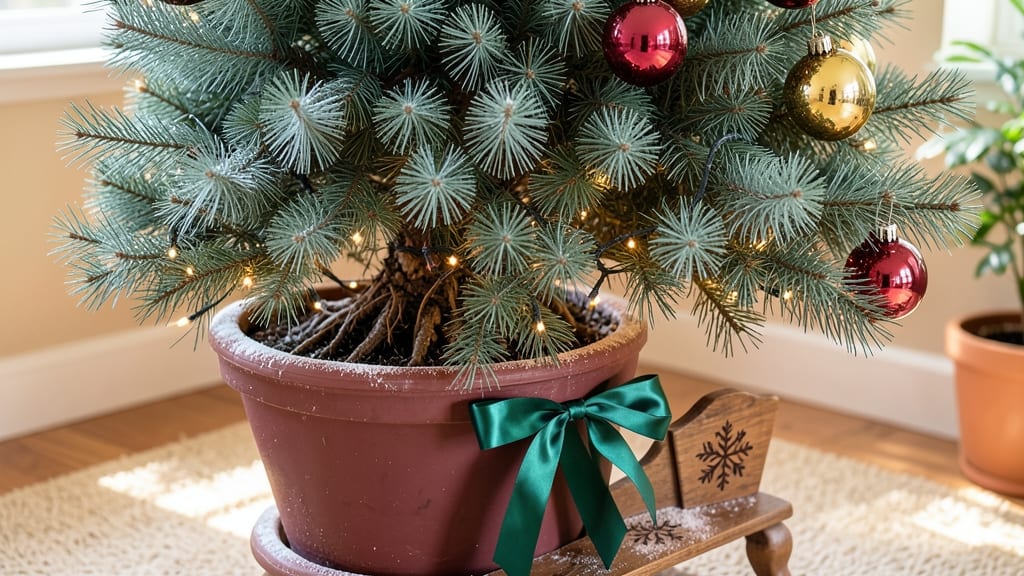
A potted Christmas tree brings holiday cheer year-round without the annual fuss. 🌲 I’ve kept the same dwarf Norway spruce in a planter for five years—it’s now a statement piece that doubles as a living centerpiece and never needs replacing.
The key is choosing the right tree and container setup from the start. You’ll need a 12-15 gallon pot with drainage holes, well-draining potting mix, and a tree with a mature height under 6 feet.
Dwarf varieties like Fraser firs or Colorado blue spruces thrive in containers and hold their needles beautifully. Place it where it gets 4-6 hours of morning sun to prevent needle drop, and water only when the top inch of soil feels dry.
By spring, your tree will be lush and full, ready for holiday decorations or simply enjoying its evergreen presence. The best part? You can move it indoors during winter for that fresh pine scent without worrying about dropping needles everywhere.
This works for patios, balconies, or even indoor spaces with proper light. The secret to longevity is minimal pruning—just remove any brown needles in early spring—and fertilizing lightly in early summer. Here’s how to get started!
📚 In This Guide
- What you need
- Instructions
- Tips and common mistakes
- Wrapping up and next steps
What you need
- ● Planter pot: A large, sturdy container (18"–24" diameter) with drainage holes. Terracotta or ceramic works best for aesthetics, but fabric grow bags are great for flexibility.
- ● Dwarf conifer tree: Choose a slow-growing variety like Norway spruce (Picea abies 'Nidiformis'), Dwarf Alberta spruce (Picea glauca 'Conica'), or Blue rug juniper (Juniperus horizontalis 'Blue Rug'). Height: 2–4 feet (mature size).
- ● Well-draining potting mix: A blend of peat moss, perlite, and pine bark (or a pre-mixed acidic evergreen soil). Quantity: Enough to fill the pot 2/3 full.
- ● Gravel or pumice: For the bottom layer (1–2 inches) to improve drainage.
- ● Slow-release fertilizer: 14-14-14 or 10-10-10 NPK (follow package instructions for dosage).
- ○ Mulch (optional but recommended): Pine bark or wood chips to retain moisture and suppress weeds.
- ● Garden gloves (to protect your hands from prickly branches).
- ● Trowel or shovel (for planting and mixing soil).
- ● Watering can or hose with a gentle spray nozzle (avoid overwatering!).
- ● Pruning shears (for shaping—keep it minimal!).
- ○ Decorative elements (optional): Miniature ornaments (plastic or lightweight)
- ● Fairy lights (solar-powered for safety)
- ● Small figurines or themed accents (e.g., snowmen, reindeer)
- ○ Support stake (optional): If your tree is top-heavy, a bamboo stake can help stabilize it.
- ● A sunny or partially shaded spot (most dwarf conifers thrive in 6+ hours of sunlight).
- ● Access to a water source (your tree will need consistent but not soggy moisture).
- ● Patience! Dwarf trees grow slowly—plan for 1–2 years to reach ideal holiday height.
Step-by-step guide to growing a Christmas tree in a planter pot
Here’s how to keep a lush, low-maintenance Christmas tree thriving in a container all year long.
🪴 Step 1: Select the Right Tree and Pot
Choose a dwarf variety like Fraser fir or Nordmann fir—these stay manageable in pots and hold their needles year-round. A 15-20 gallon container with drainage holes is ideal for a 4-6 foot tall tree. I always pick a pot slightly wider than the root ball to allow growth without crowding.
Fill the pot’s base with 2-3 inches of gravel for drainage. This prevents soggy roots, which can rot even in cold weather. Place the tree in the pot, then backfill with high-quality potting mix enriched with slow-release fertilizer. Press gently around the edges to eliminate air pockets but don’t compact the soil too firmly.
☀️ Step 2: Position for Year-Round Health
Place your potted tree in partial shade during summer to prevent needle scorch. A spot with morning sun and afternoon shade works best. In winter, move it to a sheltered area like a covered porch or against a north-facing wall to protect from harsh winds and salt spray if near roads.
Watch for needle browning—this signals too much sun or dryness. If you notice it, relocate the tree to a shadier spot or increase watering slightly. I’ve found that mulching the pot’s surface with 1-2 inches of bark mulch helps retain moisture and insulates roots in winter.
💧 Step 3: Water and Fertilize for Container Success
Water deeply once a week in summer, letting 1-2 inches of water drain out the bottom. In winter, reduce to every 2-3 weeks unless the soil feels bone-dry. Stick your finger 2 inches into the soil—if it’s dry, water; if damp, wait. Overwatering is the fastest way to kill a potted tree.
Fertilize twice a year: once in early spring with a balanced 10-10-10 fertilizer and again in early fall with a slow-release formula. I skip winter feeding—trees in pots go semi-dormant, and fertilizer can burn roots in cold soil. Always water the tree 24 hours before and after fertilizing to prevent root burn.
✂️ Step 4: Prune for Shape and Health
Prune only when necessary—these trees handle minimal trimming. Remove dead or broken branches in late winter or early spring using clean, sharp pruners. Cut just outside the branch collar (the swollen area where the branch meets the trunk) to promote faster healing.
If your tree grows too tall for its space, lightly trim the top in early summer to encourage bushier growth. Never remove more than 1/3 of the foliage in one season—this stresses the tree. I also dust the needles with neem oil once a year in early summer to prevent spider mites, which love dry indoor air.
⏰ Step 5: Winterize for Long-Term Survival
Before the first frost, wrap the pot in burlap and move it to a protected outdoor spot (like a garage or under an eave). This shields roots from freezing. If temperatures drop below 10°F, add a thick layer of straw mulch around the pot’s base for extra insulation.
Check the tree monthly in winter for dry soil—even dormant trees need occasional water. If the needles look dull or brittle, mist them lightly with water to boost humidity. With this care, your potted Christmas tree will stay vibrant for years, becoming a festive centerpiece every season.
Tips & tricks for perfect year-round Christmas tree care in pots
Here's what nobody tells you about keeping your potted Christmas tree thriving through all four seasons.
Tree Selection: When choosing your dwarf variety, inspect the root ball carefully. Look for roots growing in a circular pattern around the edges—this indicates the tree has been root-bound and needs repotting. If you find this, gently loosen the roots before planting in your container to encourage outward growth. I’ve seen trees with root-bound issues struggle to establish properly, so this step makes all the difference for long-term health.
Soil Preparation: The high-quality potting mix mentioned in Step 1 should contain perlite or vermiculite for aeration. If yours doesn't, mix in a handful of perlite yourself—this prevents compacted soil that can suffocate roots. I also recommend adding a slow-release fertilizer to the potting mix at planting time, rather than waiting for the spring feeding. This gives your tree a nutrient boost right when it needs it most after transplanting.
Seasonal Positioning: For trees in urban areas with road salt exposure, consider moving your tree to a sheltered spot during winter even if you're not experiencing extreme cold. Salt spray can burn needles, and the protection from wind helps maintain moisture in the soil. I’ve noticed trees near roads often develop brown tips by early spring if not protected properly.
Winter Care: When checking your tree monthly in winter, pay special attention to the soil temperature. If you're in a region with frequent freeze-thaw cycles, the sudden temperature changes can cause soil to expand and contract, damaging the pot. Place your tree on a layer of foam insulation or a thick rubber mat to protect against this. The 10°F threshold mentioned is a good guideline, but if you're in a windy area, even slightly warmer temperatures can stress the tree.
Pro Tips for Christmas Tree In Planter Pot
- Here's what nobody tells you about keeping your potted Christmas tree thriving through all four seasons.
- Tree Selection: When choosing your dwarf variety, inspect the root ball carefully.
- Soil Preparation: The high-quality potting mix mentioned in Step 1 should contain perlite or vermiculite for aeration.
Frequently asked questions
Got questions about keeping your Christmas tree alive in a planter pot?
Here are answers to the most common ones—from setup to seasonal care—so you can enjoy your festive greenery year-round!
Can I reuse a Christmas tree from a planter pot after the holidays?
With proper care, your tree can thrive for years. After removing decorations, trim any dried branches and move it to a sheltered spot (like a garage or patio) until spring. Water occasionally to prevent root drying. Once warm weather arrives, repot it in fresh soil and fertilize lightly to encourage new growth.
How often should I water a potted Christmas tree?
Watering needs depend on your climate, but aim for deep watering once a week during active growth (spring-fall). In winter, reduce frequency to every 2-3 weeks unless the soil feels bone-dry. Overwatering is common—always check the top 2 inches of soil before adding more. A well-draining pot with drainage holes is a must!
What’s the best soil mix for a potted Christmas tree?
Use a lightweight, well-draining mix like:
- 60% peat moss or coconut coir
- 30% perlite or pumice
- 10% compost or slow-release fertilizer
Will my tree grow too large for the pot over time?
Yes, but it’s easy to manage! Christmas trees (like Norfolk Pines or Leylandii) grow slowly in pots. Prune annually in late winter to control size—focus on shaping the top and thinning dense areas. Every 2–3 years, uproot and repot into a container just 2–3 inches larger in diameter. Root-bound trees may drop needles, so don’t skip this step!
How do I keep pests away from my potted Christmas tree?
Pests like spider mites or aphids love dry, stressed trees. Prevent issues by:
- Misting leaves regularly (especially in dry climates)
- Inspecting new plants before bringing them home
- Using neem oil or insecticidal soap if you spot pests
Can I bring my potted tree indoors during winter?
Indoor placement is tricky—most Christmas trees need bright, indirect light (like a sunroom or near a south-facing window). Avoid drafts, heat vents, or direct sunlight, which can scorch needles. If indoors, rotate the pot weekly for even growth. For short-term holiday displays, keep it in a cool, humid spot (like a basement) and water sparingly.
Wrapping up and next steps
Transforming your Christmas tree in a planter pot into a year-round centerpiece is simpler—and more rewarding—than you think! With the right variety, minimal pruning, and a little care, you’ll enjoy lush greenery that brings holiday cheer and seasonal charm.
Whether you’re a pruning pro or a beginner, this low-maintenance approach lets you focus on what matters most: creating a cozy, evergreen space you’ll love.
Ready to give it a try? Start small—pick a tree, gather your supplies, and plant with confidence! And if you’re feeling inspired, why not share your progress with fellow plant lovers? Your green thumb (or just a little holiday magic) could spark someone else’s next project! 🌲✨