
How To
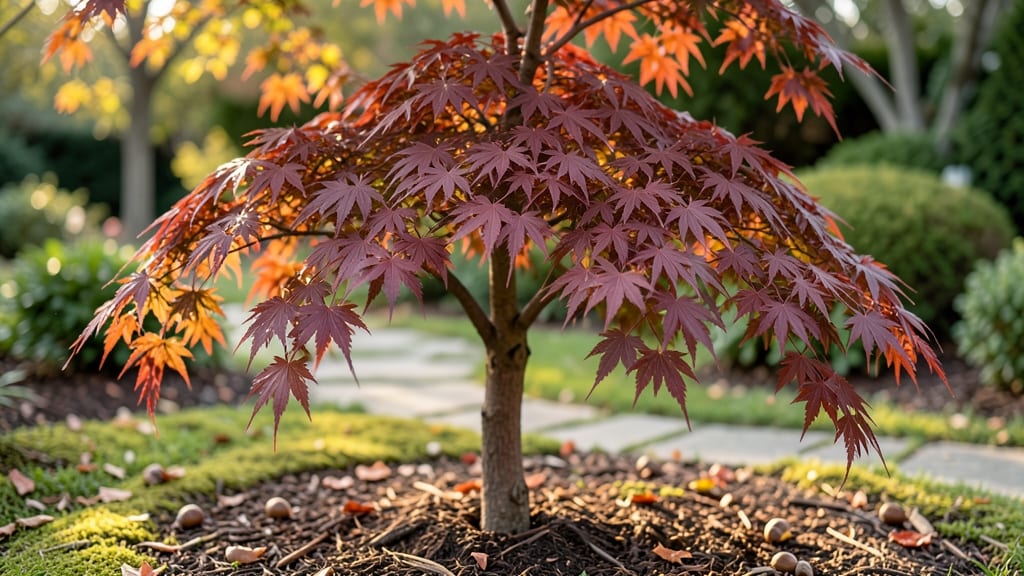
A Japanese Maple tree grows anywhere from 8 feet to towering 30 feet tall, depending on the variety you choose—so your yard’s size and style matter more than you might think.
Picture this: a dwarf 'Emperor I' at 8–12 feet fits snugly in a small garden or patio, while a standard 'Bloodgood' stretches up to 20–30 feet, casting dramatic shade like a living sculpture. The difference isn’t just height—it’s the entire vibe of your outdoor space.
But here’s the catch: even "dwarf" varieties need room to breathe, and fast-growing types can outpace expectations in just a few years.
I’ll break down the height ranges by cultivar, how to pick the right one for your space, and the pruning tricks to keep growth in check—so you avoid the "oops, it’s too big" moment.
Ready to find your perfect match? You’ll walk away knowing exactly which Japanese Maple will thrive in your yard, from compact patio gems to grand shade providers, without sacrificing beauty for size.


Japanese maple tree height ranges: from dwarf varieties to giant specimens
Japanese maple trees (Acer palmatum) are among the most prized ornamental trees for their stunning foliage and graceful forms. But one of the first questions gardeners ask is: how tall does a Japanese maple tree grow?
The answer varies dramatically—from compact patio dwarfs under 3 feet to towering shade giants reaching 30 feet. Choosing the right size for your space means understanding these height categories and growth patterns.
The Japanese maple's mature height depends entirely on its cultivar. Some varieties grow just a few feet tall, perfect for containers, while others become small trees that need careful placement.
Below, I’ve broken down the height ranges by category, including popular cultivars and their growth rates to help you visualize which might fit your garden.
| Category | Mature Height Range | Growth Rate (Per Year) | Popular Cultivars | Ideal For |
|---|---|---|---|---|
| Dwarf | 2–5 ft | 3–6 in | 'Tamukeyama', 'Koshihime', 'Sekkan Satsuki' | Containers, bonsai, small gardens |
| Small | 6–12 ft | 6–12 in | 'Bloodgood', 'Emperor I', 'Shishigashira' | Front yards, small landscapes |
| Medium | 12–20 ft | 12–18 in | 'Seiryu', 'Jacon', 'Viridis' | Medium yards, focal points |
| Large | 20–30+ ft | 18–24 in | 'Atropurpureum', 'Orange Dream', 'Dissectum' | Large properties, shade trees |
Dwarf Japanese maples like 'Tamukeyama' stay under 5 feet tall, making them ideal for containers or bonsai displays. These varieties grow slowly—just 3–6 inches per year—so they’re perfect if you want a low-maintenance, long-lived specimen.
Their compact size also makes them great for urban gardens or rooftop terraces where space is limited.
Small varieties, such as the classic 'Bloodgood', reach 6–12 feet at maturity and grow 6–12 inches annually. These are the most popular choices for front-yard planting because they offer striking color and structure without overwhelming smaller landscapes.
For example, a 6-foot 'Bloodgood' planted near a patio can provide seasonal interest for decades.
Medium-height Japanese maples, like 'Seiryu', grow 12–20 feet tall and are perfect for medium-sized yards or as focal points. Their faster growth rate (12–18 inches per year) means they’ll fill out your garden more quickly than dwarf varieties.
These trees work beautifully when planted near walkways or under power lines, provided they have enough space to spread.
Large Japanese maples, such as 'Atropurpureum', can reach 20–30 feet or more, making them suitable for large estates or as shade trees. Their rapid growth (18–24 inches per year) means they’ll quickly become a dominant feature in your landscape.
If you’re considering one of these varieties, plan for ample spacing (at least 15–20 feet from structures) to avoid future pruning headaches.
One common misconception is that all Japanese maples grow at the same rate. In reality, dwarf varieties grow slowly, while larger cultivars can shoot up quickly in their youth.
For instance, a 10-foot 'Emperor I' might take 10–15 years to mature, whereas a 25-foot 'Orange Dream' could reach that height in half the time. Understanding these growth rates helps you plan for long-term spacing and pruning needs.
If you’re unsure which size to choose, consider your garden’s scale and sunlight conditions. Dwarf and small varieties thrive in partial shade and tight spaces, while larger trees need more light and room to spread their roots.
For example, a 20-foot 'Viridis' planted under a 10-foot ceiling will eventually outgrow its space, leading to frustrating pruning or even tree
How Japanese maple tree height affects your garden design choices
Choosing a Japanese maple tree isn’t just about its stunning foliage—its mature height will dictate where you plant it, how you prune it, and even which varieties suit your space.
A 6-foot dwarf thrives in a container on your patio, while a 25-foot standard needs room to cast shade over your backyard. Let’s explore how height influences your garden design and how to work with it.
First, consider your available space. A dwarf variety like 'Tamukeyama' stays under 10 feet, perfect for small yards or urban gardens. Meanwhile, a large specimen like 'Bloodgood' can reach 25 feet, making it ideal for spacious landscapes or as a focal point near driveways.
Your tree’s height will also affect its sunlight requirements—taller varieties often need more light to support their canopy.
🌿
- 1 Spacing rules: Dwarf varieties need 6-8 feet of clearance, while standard types require 15-20 feet to avoid root competition with structures or other plants.
- 2 Sunlight placement: Taller trees (15+ ft) need full sun to partial shade, while dwarf varieties thrive in morning sun with afternoon shade to protect delicate leaves.
- 3 Pruning for control: Regular structural pruning in late winter can reduce height by 1-2 feet per year—ideal for keeping a medium variety in check.
- 4 Soil depth matters: Deeper-rooted varieties (like 'Emperor I') need well-draining, slightly acidic soil with at least 18 inches of depth to support their height.
- 5 Wind exposure: Tall, narrow varieties (e.g., 'Shishigashira') are wind-sensitive—plant them near a windbreak or in a sheltered spot to prevent branch damage.
Your tree’s height also influences its landscape role. A 10-foot specimen makes a perfect focal point in a courtyard or near a patio, while a 20-foot giant can serve as a privacy screen or shade provider for decks.
For example, 'Bloodgood' is often planted as a specimen tree in lawns, while 'Crimson Queen' (12-15 feet) works well as a border plant along walkways.
Pruning plays a crucial role in managing height. If you’ve chosen a variety that’s slightly too tall for your space, selective pruning in late winter or early spring can help. Focus on removing water sprouts and overlapping branches to maintain an open canopy.
Avoid heavy pruning in summer, as it can stress the tree and stunt its growth. For dwarf varieties, minimal pruning is usually enough—just remove dead or damaged branches to keep them compact.
Finally, think about long-term maintenance. Taller Japanese maples may require regular cleaning to remove fallen leaves and occasional fertilization to support their height. Dwarf varieties, on the other hand, are low-maintenance but still benefit from mulching to retain moisture and protect their shallow roots.
Whether you’re working with a petite patio tree or a towering shade provider, understanding these height-related factors will help you create a harmonious and thriving garden.
✂️