
Pests and Diseases
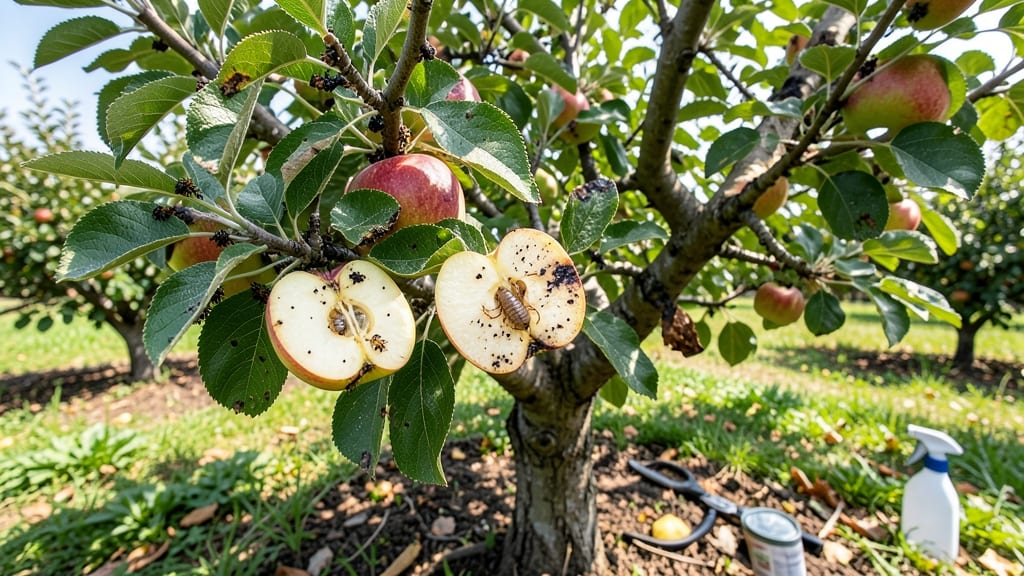
Apple tree pests and diseases turn your harvest dreams into a nightmare if you don’t act fast. 🍏 I’ve spent years watching my trees battle codling moths and apple scab—until I learned the early signs and organic fixes that actually work.
The key is catching problems before they ruin your fruit, and I’ll show you exactly how.
Most damage starts small: tiny holes in apples, black spots on leaves, or wilting branches. These are your warnings—codling moths hide inside fruit, while apple scab thrives in wet springs.
The good news? Simple organic sprays (neem oil, copper fungicide) and pruning diseased branches can save your harvest before it’s too late.
By mid-summer, your trees will look vibrant and productive, with fruit that stays fresh on the branch. You’ll spot pests before they multiply, and your apples will taste like the ones you remember from childhood—not bitter or wormy. The secret is consistency: check weekly, spray preventatively, and prune aggressively.
This works for backyard orchards, urban trees, and even container-grown apples. Whether you’re fighting fire blight or aphids, these methods keep your trees healthy year after year—no chemicals, no guesswork. Let’s get your apples back on track.
Root Causes Behind Tree Troubles
Understanding why apple trees fall victim to pests and diseases starts with recognizing the interplay of biology, environment, and human influence. These issues rarely occur in isolation—they’re often the result of a perfect storm of conditions.
Below, we break down the key factors that create the ideal environment for apple tree pests and diseases to thrive.
Apple trees, like all plants, rely on a complex immune system to fend off invaders. When this system weakens, pests and pathogens seize the opportunity. Here’s why it happens:
- Nutrient Deficiencies 🌡️ Trees deprived of essential nutrients (like nitrogen, phosphorus, or potassium) struggle to produce strong bark, leaves, and fruit. Weakened tissue becomes an easy target for borers, aphids, and fungal infections like apple scab (Venturia inaequalis).
For example, a magnesium deficiency (often seen as yellowing between leaf veins) can make trees more susceptible to fire blight (Erwinia amylovora).
- Water Stress 💧 Both overwatering (leading to root rot) and drought (causing wilting) stress trees. Stressed trees produce less resin and tannins, natural defenses against pests like codling moth larvae or woolly aphids.
Even slight dehydration can reduce a tree’s ability to secrete protective waxes on leaves, inviting fungal spores to land and infect.
- Physical Damage ⚔️ Pruning wounds, hail scars, or animal bites create entry points for bacteria and fungi. If cuts aren’t properly sealed (with a pruning sealant or by allowing them to heal naturally), pathogens like Nectria canker can invade. Even bird pecking (common in orchards) can introduce infections.
Pests and diseases thrive when temperature, humidity, and moisture align perfectly. Here’s how climate plays a role:
- Warm, Wet Springs 🌧️☀️ Spring is prime time for apple scab and powdery mildew because fungal spores germinate best in 50–70°F temperatures with high humidity. A single prolonged rain event (10+ hours) can trigger an epidemic, as spores splash from infected leaves to healthy ones.
- Hot, Dry Summers 🔥 While dry weather suppresses some fungi, it stresses trees and attracts sap-sucking pests like apple maggots or scale insects. Heat also weakens tree resilience, making them more vulnerable to sunburn (which cracks bark, inviting canker diseases).
- Cool, Damp Autumns 🍂💦 Fall is when fire blight and apple canker spread rapidly. Bacteria like Erwinia amylovora thrive in 60–80°F temperatures with dew or rain, oozing from infected blossoms or wounds. If autumn rains persist, the disease can overwinter in cankers, re-emerging the next spring.
Some pests don’t just find weak trees—they create the conditions for disease. Here’s how:
- Overwintering Survivors ❄️🐛 Many pests, like codling moths or woolly apple aphids, lay eggs in tree bark, leaf litter, or mummified fruit. If not removed, they emerge in spring as adults, ready to reproduce.
A single unpruned branch with last year’s eggs can hatch hundreds of larvae, defoliating the tree in weeks.
- Lack of Natural Predators 🦋🚫 Healthy orchards have a balance of predators (ladybugs, lacewings, birds) that keep pests in check. But if you’ve used broad-spectrum pesticides, these predators die off first, leading to pest outbreaks.
For example, spraying neonicotinoids can kill bees and parasitic wasps, allowing apple maggots to go unchecked.
- Monoculture Plantings 🌳🌳🌳 Planting only apple trees in a row removes biodiversity, which disrupts natural pest control. Without alternative food sources (like wildflowers for pollinators), pests specialize on apples and multiply uncontrollably. Even wind-pollinated varieties in tight clusters can spread disease faster.
Human habits—whether intentional or not—accelerate pest and disease cycles. Here’s how:
- Delayed Pruning or Sanitation ⏰✂️ Leaving dead wood, infected branches, or fallen fruit on the ground provides housing and food for pests.
For instance: - Mummified apples (from codling moths) can harbor blue mold (Penicillium) and reinfect the tree. - Sawdust from pruning (if contaminated) spreads silver leaf disease (Chondrostereum purpureum).
- Improper Watering Techniques 💦🚫 Overhead irrigation (like sprinklers) splashes fungal spores onto leaves, promoting apple scab and powdery mildew. Even watering at night keeps foliage damp longer, giving pathogens more time to infect.
- Ignoring Soil Health 🌱🔄 Compacted, poorly drained soil leads to root rot (Phytophthora), while excessive nitrogen (from fertilizers) produces lush, soft growth that pests like apple sawfly larvae love to munch. A lack of compost or mulch also reduces beneficial microbes that suppress soil-borne diseases.
Pro Tip: 💡 The best defense is prevention—monitor your tree’s health year-round, adjust care based on weather forecasts, and remove debris before pests even get a foothold!
Quick Fixes for Common Apple Tree Troubles
Once you’ve identified the culprit—whether it’s a hungry pest or a sneaky disease—tackling the problem doesn’t have to be complicated. Below, we’ve mapped out practical, organic solutions for each issue, along with prevention tips to keep your apple tree thriving.
Think of this as your go-to troubleshooting guide for a bountiful, pest-free harvest every season.
Cause: Venturia inaequalis thrives in wet, humid conditions, leaving your leaves and fruit covered in dark, velvety spots. Fix:
- 🔥 Prune for airflow: Remove crowded branches to reduce humidity. Aim for an open canopy so sunlight can dry out the foliage faster.
- 🍳 Homemade copper spray: Mix 1 tsp copper sulfate (or 2 tbsp baking soda + 1 tbsp horticultural oil) in a gallon of water. Spray every 7–10 days during wet seasons (spring and fall).
- 🌱 Mulch with straw: Apply a 3–4 inch layer of straw around the base (not touching the trunk) to prevent soil splashing onto leaves.
- 🌡️ Timing is key: Apply fungicides before rain, and avoid overhead watering in the evening.
💡 Pro Tip: Resistant apple varieties like Liberty or Enterprise can cut down on scab issues naturally.
Cause: Larvae burrow into apples, turning them into a mushy mess. Adult moths lay eggs on leaves and fruit in late spring/early summer. Fix:
- 👨🍳 Pheromone traps: Hang codling moth traps in the tree before moths emerge (check local bloom times). Replace lures every 2–4 weeks.
- 🥘 Kaolin clay barrier: Dust apples with kaolin clay (like Surround WP) to create a gritty layer that moths avoid laying eggs on. Reapply after rain.
- 🔪 Handpick & destroy: Check for entry holes in fruit. Squish larvae or drop infested apples into soapy water (never compost them!).
- ⏰ Strategic pruning: Thin fruit clusters so apples aren’t packed together—moths love tight spaces!
💡 Pro Tip: Neem oil (applied at dusk) can deter adult moths. Test a small branch first for sensitivity.
Cause: A fungal film coats leaves, stunting growth and reducing fruit quality. Loves shady, humid spots. Fix:
- 🌿 Baking soda spray: Mix 1 tbsp baking soda + 1 tsp dish soap + 1 quart water. Spray weekly until mildew disappears.
- 🔥 Improve sunlight: Thin out dense branches to let more light reach the lower canopy.
- 🌡️ Water wisely: Water at the base (not leaves) and early in the day so foliage dries quickly.
- 🌱 Companion planting: Surround your tree with garlic, chives, or thyme—their scents deter fungi.
💡 Pro Tip: Milk spray (1 part milk to 9 parts water) is a low-cost, effective organic remedy. Use every 10 days in humid weather.
Cause: These sap-suckers weaken trees, causing yellowing leaves, sticky honeydew (aphids), or webbing (mites). Fix:
- 💦 Blast ‘em off: Use a strong spray of water (from a hose nozzle) to knock them loose. Repeat every 3–4 days.
- 🌿 Neem oil or insecticidal soap: Mix 2 tbsp neem oil + 1 tsp soap per gallon of water. Spray under leaves where pests hide. Reapply after rain.
- 🐝 Encourage predators: Ladybugs, lacewings, and birds love aphids. Plant dill, fennel, or marigolds nearby to attract them.
- 🌡️ Reflect light: Place white reflective sheets around the tree to disorient mites (they hate bright surfaces).
💡 Pro Tip: Horticultural oil in late winter smothers overwintering eggs. Apply when temps are above 40°F.
Cause: Erwinia amylovora bacteria causes blackened, wilted branches (looks like fire damage). Spreads via rain splashes and pruning tools. Fix:
- 🔪 Prune aggressively: Cut 6–12 inches below infected branches (the bacteria hides in buds). Sterilize tools with rubbing alcohol between cuts.
- 🌿 Copper-based spray: Use copper fungicide (like Bordeaux mixture) before bloom and after pruning.
- 🚫 Avoid overhead watering: Water at the base to prevent splashing bacteria onto branches.
- 🌱 Remove infected fruit: Pick up and burn or trash (don’t compost!) any blossoms or fruit showing signs.
💡 Pro Tip: Resistant varieties like Liberty or Akane are your best bet if fire blight is rampant in your area.
| Task | When to Do It | How to Do It |
|---|---|---|
| Prune for airflow | Late winter/early spring | Remove dead or crossing branches |
| Apply copper spray | Before bud break | Mix copper sulfate + water, spray foliage |
| Set up traps | Early spring (moth season) | Hang pheromone traps in the canopy |
| Mulch properly | Early spring | Use straw or wood chips, keep 3–4" away from trunk |
| Monitor weekly | Throughout growing season | Check undersides of leaves for pests |
| Clean up debris | Fall | Rake and remove fallen fruit/leaves |
The key to long-term success? Stay one step ahead. Most pests and diseases follow a predictable pattern—so prune, spray, and monitor at the right times, and your apple tree will thank you with juicy, healthy fruit for years.
Need a customized plan for your climate? Drop a comment below—we’re happy to help! 🍏✨
Frequently asked questions
How do I tell if my apple tree has apple scab vs. powdery mildew?
Apple scab shows as dark, velvety spots on leaves and fruit, often with a yellow halo. Powdery mildew looks like a white, powdery coating on leaf undersides. Check for scab in wet springs and mildew in shady, humid spots. Both thrive in moisture but scab affects fruit while mildew stunts growth.
Can I use the same spray for codling moths and apple scab?
No—codling moths need pheromone traps or kaolin clay, while scab requires copper fungicide. Neem oil works for both but must be reapplied after rain. For a two-in-one solution, use organic horticultural oil in late winter to smother overwintering pests and fungal spores.
Why do my apples have holes but no visible worms?
Codling moth larvae often exit through tiny holes after feeding inside fruit. Look for frass (brown sawdust-like droppings) near entry points. Remove all infested fruit immediately and hang pheromone traps next season. Moths lay eggs on leaves, not fruit.
Is it too late to treat fire blight in summer?
Yes—fire blight spreads fastest in spring/fall. In summer, focus on pruning infected branches 6–12 inches below the blackened area and sterilizing tools. For next year, plant resistant varieties like Liberty and apply copper spray before bloom. Summer treatments won't stop the disease.
How often should I inspect my apple tree for pests?
Check weekly during growing season, focusing on leaf undersides (aphids, mites) and fruit clusters (codling moth eggs). In winter, inspect bark crevices for overwintering eggs. Use a hand lens for early detection—catching problems at the egg stage prevents outbreaks.