
Diseases
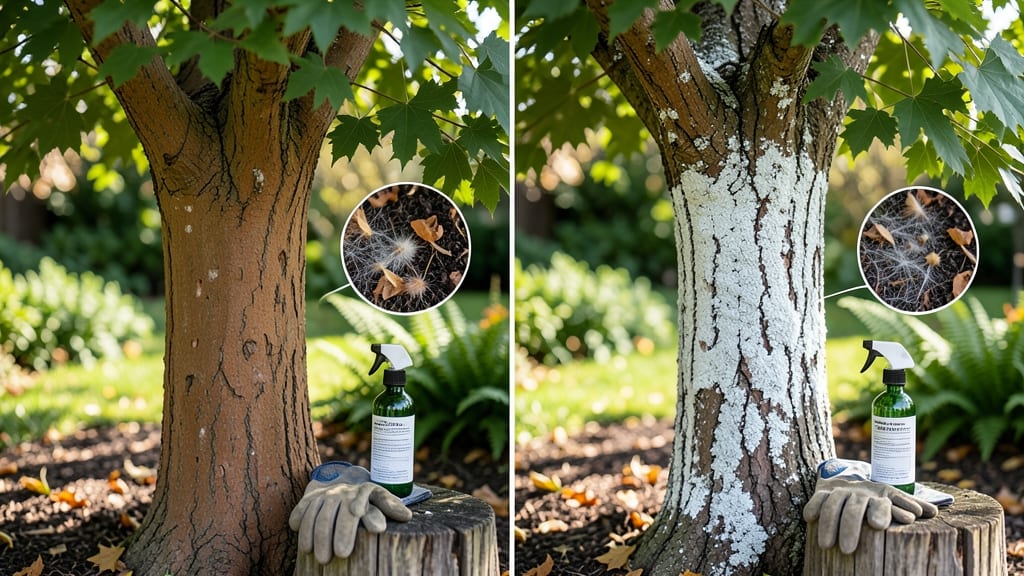
That white powder on your tree bark isn’t just dust—it’s powdery mildew, and it’s sucking the life out of your foliage. 🌿 I’ve battled this stubborn fungus on my apple trees, and the key isn’t harsh chemicals but smart, organic strategies that actually work.
The sooner you act, the faster your tree bounces back with vibrant green leaves instead of struggling yellow ones.
This fungus thrives in shady, humid spots where airflow gets trapped—think crowded branches or dense foliage that never dries. My first mistake? Waiting until the mildew spread to the leaves before treating the bark.
The real fix starts with pruning to open up the canopy and letting sunlight hit those problem areas. Once you’ve improved airflow, organic sprays like neem oil or baking soda mixtures become your secret weapons.
Within 2-3 weeks of consistent treatment, you’ll see new growth pushing through clean, mildew-free bark. The leaves stay lush, the tree regains its strength, and you avoid the dreaded fruit drop that comes when mildew takes over.
Best part? These methods work for fruit trees, shade trees, and even your prized ornamental specimens without harming bees or beneficial insects.
Here’s the game-changer: prevention is easier than cure. Spacing out young trees, choosing resistant varieties, and giving mature trees a mid-summer pruning keeps mildew from getting a foothold.
Once you’ve tackled the bark, the rest of your tree’s health falls into place—stronger roots, better fruit set, and foliage that stays green all season.
The Hidden Triggers Behind Fungal Growth
Powdery mildew clinging to tree bark isn’t just an eyesore—it’s a red flag from nature signaling that something’s off with your tree’s environment. Understanding the why behind this fungal invasion is the first step toward stopping it before it spreads.
Let’s break down the key factors that turn your tree’s bark into a mildew magnet.
Fungi like powdery mildew thrive in stagnant air, where moisture lingers and spores get trapped near the bark. Trees planted too closely together, or those with dense, overlapping branches, create the perfect greenhouse effect—high humidity and low airflow. Here’s how it plays out:
- Shady spots: Trees in deep shade (like under other trees or structures) dry out slower, keeping bark damp longer.
- Thick foliage: Leaves blocking sunlight and air from reaching the trunk trap moisture against the bark.
- Urban heat islands: Pavement and buildings can reflect heat, raising bark temperatures and increasing evaporation—then condensation—on cooler nights.
Pro Tip: 💡 Prune back overgrown branches to improve airflow, especially in the lower canopy where bark is most vulnerable. Aim for a 20–30% reduction in leaf density to let air and sunlight penetrate.
Powdery mildew spores need water to germinate, and tree bark is no exception. While trees absorb water through roots, the bark itself can stay soggy from:
- Overhead watering: Sprinklers or rain that soaks the trunk instead of the soil.
- Poor drainage: Compacted soil or clay-heavy ground prevents water from draining away, keeping bark wet.
- Frequent morning dew: In humid climates, dew can linger on bark for hours, giving fungi a head start.
Science Note: 🌡️ Fungal spores germinate best at 60–80°F (15–27°C) with high humidity (70%+). If your tree’s bark stays damp in this range for more than 6 hours, mildew will take hold.
Fix It: Water at the base of the tree (not the trunk) and avoid late-day watering. If your soil drains poorly, amend it with compost or sand to improve aeration.
A healthy tree’s bark has natural antifungal compounds and a protective cuticle layer that repels spores. But stress weakens these defenses, leaving bark vulnerable:
- Nutrient deficiencies: Low nitrogen or potassium starves the tree, making it harder to produce protective resins.
- Pests or prior damage: Bark beetles, scale insects, or even physical wounds create entry points for fungi.
- Drought or root stress: Trees struggling to absorb water divert energy away from bark maintenance.
Tell-Tale Sign: 🔍 Look for yellowing leaves, stunted growth, or oozing sap—these are signs your tree is already compromised.
Boost Defenses: ✨ Fertilize with a balanced, slow-release fertilizer (10-10-10 ratio) in early spring. For damaged bark, apply pruning sealant to wounds to prevent fungal invasion.
Powdery mildew spores are everywhere—they hitchhike on wind, tools, and even animals. If neighboring trees or plants already host mildew, your tree is at high risk of infection. Spores land on bark and germinate when conditions are right (see above).
Key Hotspots for Spores:
- Infected roses, lilacs, or fruit trees nearby.
- Old mulch or leaf litter piled against the trunk.
- Gardening tools or clothing that touched infected plants.
Prevent Spread: 🛡️ Remove fallen leaves and mulch from the trunk’s base. Sterilize pruners with rubbing alcohol (70%+) between uses, and avoid shaking trees during rainy weather (which spreads spores).
How to Treat and Prevent Fungal Foliage Foes
Powdery mildew on tree bark may seem stubborn, but with the right approach, you can restore your trees’ health—without harsh chemicals. Below, we map the most common causes to practical, fungicide-free fixes, plus prevention tips to keep mildew at bay for good.
Fix: Improve airflow and sunlight exposure to starve the fungus.
- 🔥 Prune strategically – Remove dense branches (especially those rubbing together) to open the canopy.
Focus on the lower third of the tree, where mildew thrives in shade. - 🍳 Thin out foliage – If your tree is a shrub (like lilac or rose), lightly shear to reduce humidity trapped in leaves. - 👨🍳 Space it out – If trees are planted too close, consider transplanting or adding a companion plant (like lavender or garlic) that deters fungi naturally.
💡 Pro Tip: Water trees early in the day so leaves dry quickly—wet foliage for extended periods is a mildew magnet.
Fix: Adjust watering habits and protect trees from prolonged dampness.
- ⏰ Water at the roots – Avoid overhead sprinkling.
Use soaker hoses or drip irrigation to keep bark and leaves dry. - 🌡️ Mulch correctly – Apply 2–4 inches of organic mulch (wood chips, straw) away from the trunk to prevent rot while retaining moisture in the soil. - 🔪 Create airflow – If trees are under eaves or near walls, install tree supports or lattice to redirect rain runoff.
✨ Prevention Hack: Plant drought-tolerant species (like oak, hickory, or pine) in shady, damp areas—they’re naturally more resistant.
Fix: Boost tree vitality so it fights mildew naturally.
- 📊 Soil test first – Check pH and nutrient levels. Mildew loves acidic, nitrogen-poor soil.
Amend with compost or lime if needed. - 💪 Feed smartly – Use a balanced, organic fertilizer (like fish emulsion or bone meal) in early spring to strengthen growth. - 🍎 Avoid over-fertilizing – Too much nitrogen = soft, mildew-prone new growth. Stick to slow-release formulas.
🎯 Long-Term Strategy: Plant resistant varieties (e.g., ‘Claret Ash’ for ash trees or ‘Elm Alliance’ for elms) if mildew is recurrent.
Fix: Seal wounds and protect bark from further stress.
- 🔪 Prune cuts properly – Use sterilized pruners and make cuts at a 45-degree angle just outside the branch collar.
- 🛡️ Apply wound dressing – Coat large wounds with pruning sealant (like Tanglefoot Tree Wound Pruning Seal) to prevent fungal entry.
- 🌿 Avoid bark stripping – If mildew is on young bark (common in fruit trees), reduce overhead irrigation and thin fruit clusters to reduce stress.
💡 Quick Fix: Wrap tree guards (made of cardboard or plastic) around trunks to shield bark from splashing water.
| Action | How to Do It | Best Time |
|---|---|---|
| Prune for airflow | Remove 10–20% of dense branches | Late winter/early spring |
| Test soil | Use a DIY kit or send to extension office | Fall or early spring |
| Mulch properly | 2–4" layer, kept 6" from trunk | Spring or fall |
| Monitor moisture | Water deeply but infrequently | Adjust seasonally |
| Plant resistant species | Choose native or hybrid varieties | Fall or early spring |
Final Thought: Consistency is key—one treatment won’t cure chronic mildew. Combine airflow, nutrition, and smart watering, and your trees will bounce back stronger. 🌳💪 For severe cases, repeat treatments every 2–3 weeks until new growth appears healthy.
Frequently asked questions
Can I scrape off powdery mildew from tree bark?
Yes, but do it carefully! Use a soft brush or cloth to gently remove the white powder, especially from smooth-barked trees like fruit trees. Avoid damaging the bark—this can create entry points for more infections. Do this on a dry day when the mildew is dry and brittle, not when it's damp.
Will pruning alone stop powdery mildew?
Pruning helps by improving airflow, but it won't eliminate mildew on its own. Combine it with organic sprays like neem oil (mix 1 tablespoon per quart of water) or a baking soda solution (1 teaspoon baking soda + 1 drop of dish soap per quart of water). Reapply every 7-10 days until new growth appears.
Is powdery mildew on bark contagious to other plants?
The spores spread easily through wind, water, and garden tools. Isolate infected trees immediately and sterilize pruners with rubbing alcohol (70%+) between uses. Remove fallen leaves and debris within a 3-foot radius of the tree to prevent spread to nearby plants.
How long does it take to see improvement after treatment?
With consistent care, you should see new growth pushing through within 2-3 weeks. Severe cases may take up to 6 weeks to fully recover. The key is persistence—keep treating until you see 100% clean bark and healthy leaves. Monitor for recurrence, especially after rain.
Are there any trees that never get powdery mildew?
No tree is completely immune, but some varieties are naturally more resistant. Consider planting pine, oak, or hickory trees—they handle humidity better. For fruit trees, choose mildew-resistant varieties like 'Claret Ash' or 'Elm Alliance'. Even these can get mildew, but they fight it better than susceptible species.