
Pruning
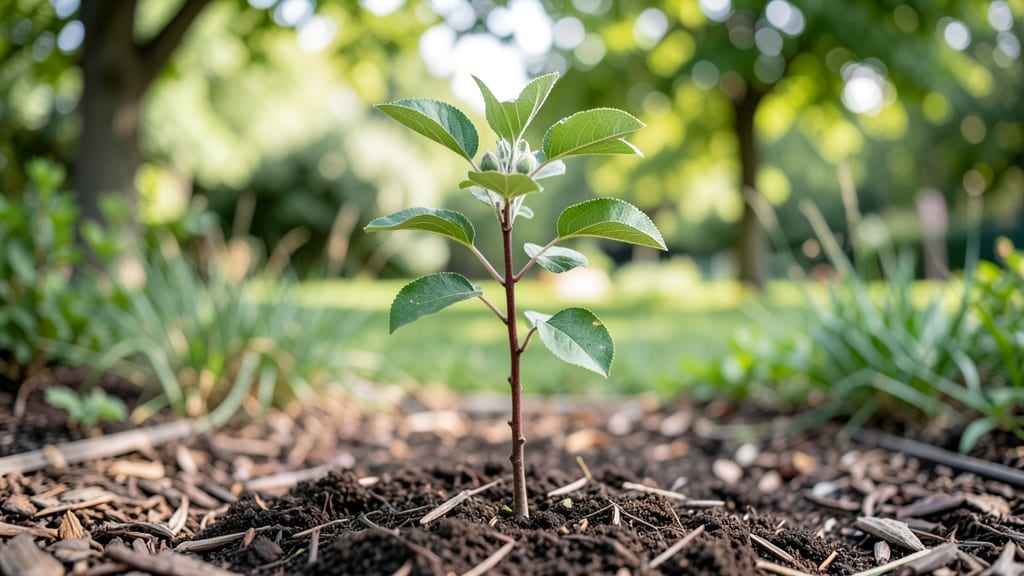
The identification of an apple tree seedling starts with those first leaves—serrated edges, rounded tips, and a slightly waxy surface that sets them apart from crabapples or hawthorns. 🍏 I’ve spent years sorting through seedlings, and the key is noticing how young leaves grow in clusters along the stem, with a faint reddish tint when they first unfurl.
This visual guide will help you spot the subtle differences that make all the difference in long-term care.
Most mistakes happen when comparing seedlings to mature trees—young branches are thinner, with a smoother bark that develops lenticels (tiny raised dots) as they age. Crabapples often have smaller, more oval leaves with fewer teeth, while hawthorns develop sharp thorns even as seedlings.
Grab a magnifying glass if you’re unsure—those details are what separates a future orchard tree from a wild volunteer.
By the end, you’ll confidently distinguish between common lookalikes, ensuring you’re nurturing the right variety for your climate and space. The payoff? A thriving tree that produces fruit matching your expectations—and no surprises down the road.
For regional specifics, local nurseries or plant databases can confirm your findings with local cultivars.
This method works whether you’re clearing a wild patch, restoring an old orchard, or just curious about that seedling popping up in your yard. Start with the leaves, then move to the branches—what you learn here will save you years of guesswork.
Root Causes Of Misidentification
When it comes to identifying apple tree seedlings, even experienced gardeners can stumble—especially if the plant doesn’t look like the classic apple tree you’re familiar with.
Misidentification often stems from a mix of biological quirks, environmental factors, and human error. Here’s why it happens, broken down into the most common culprits:
Seedlings from apple trees (especially those grown from seed rather than grafting) can look nothing like their mature counterparts for years. This is due to:
- Juvenile Phase Delay: Many apple tree species (like Malus domestica) enter a juvenile phase—a growth stage where leaves, stems, and even bark resemble wild crabapples or other Malus relatives. This phase can last 5–10 years before the tree develops true apple tree characteristics (e.g., serrated leaves, distinctive branching).
- Leaf Shape Shifts: Young seedlings often have rounder, smoother-edged leaves with fewer teeth, mimicking crabapple or hawthorn seedlings. Only as they mature do they develop the classic deeply serrated, elliptical leaves of an apple tree.
- False Branching Patterns: Apple seedlings may sprout spur shoots (short, stubby branches) early on, which are more common in mature fruit trees—but these can also appear in unrelated species like pear or plum seedlings.
Pro Tip: 🌡️ If your seedling’s leaves are glossy, lobed, or have a single terminal bud, it’s likely still in its juvenile phase. Wait before pruning or transplanting—patience pays off!
Apple trees are notorious for cross-pollinating with other Malus species (like crabapples, mountain ashes, or even ornamental fruit trees). This leads to seedlings that inherit a mix of traits, making identification tricky:
- Genetic Mix-Ups: A seed from a Malus × robusta (ornamental crabapple) might sprout a seedling with apple-like leaves but no fruit potential, or vice versa. These hybrids can have uneven leaf serration, varying bark textures, or even thorns—red flags for misidentification.
- False Fruit Promises: Some apple-crabapple hybrids produce small, inedible "apples" that look like tiny, tart crabapples. If your seedling has fruit but it’s hard, bitter, or under 1 inch in diameter, it’s likely a hybrid, not a true apple tree.
- Regional Varieties Throw Off Clues: Apple trees in wild or feral populations (e.g., abandoned orchards) often cross with local crabapples, resulting in seedlings that resemble neither parent perfectly.
Pro Tip: ✨ Check the parent tree’s fruit—if it’s a known apple cultivar (like Granny Smith or Fuji), the seedling has a higher chance of being true. But if the parent was a crabapple or unknown, assume hybrid traits until proven otherwise.
Drought, poor soil, or extreme temperatures can stunt growth or trigger survival adaptations that make seedlings look like entirely different species:
| Stress Factor | How It Changes the Seedling | Misidentification Risk |
|---|---|---|
| Drought or Poor Soil | Leaves turn smaller, thicker, and more leathery; growth slows dramatically. | May resemble dwarf apple varieties or even hazelnut seedlings. |
| Excess Moisture | Leaves develop yellowing (chlorosis) or fungal spots; stems may rot. | Could be mistaken for diseased apple seedlings or willow saplings. |
| Cold Damage (Late Frost) | New growth appears stunted, curled, or deformed; buds may fail to open. | May look like burned or chemically damaged seedlings of other fruit trees. |
Pro Tip: 💡 If your seedling’s appearance changes drastically after a weather event (e.g., sudden leaf curl after a heatwave), document its pre-stress traits—this can help reverse-engineer its true identity later.
Sometimes, the issue isn’t the seedling—it’s the observer. Common mistakes include:
- Focusing on Leaves Alone: While serrated edges are a hallmark of apple trees, other factors matter more:
- Bark texture: Apple seedlings have smooth, grayish bark that develops horizontal lenticels (tiny raised dots) as they age.
- Bud arrangement: True apple buds are alternate (spaced evenly along the stem), not opposite (like in crabapples).
- Root system: Apple seedlings develop a taproot early on, while many hybrids or related species (e.g., hawthorn) have fibrous roots.
- Ignoring the Seed Source: If the seed came from a store-bought apple (not a local orchard), it’s likely a hybrid (e.g., Malus × domestica crosses with Malus sylvestris). These often never produce true apples from seed.
- Pruning or Transplant Shock: Rough handling can stunt growth or cause abnormal branching, making the seedling resemble a stressed-out pear or plum tree.
Pro Tip: 🎯 Take photos of the seedling from multiple angles—front, back, and close-ups of leaves, buds, and bark. Compare them side-by-side with known apple tree traits (use guides like the USDA Plant Database) to spot discrepancies.
By understanding these root causes, you’ll be better equipped to distinguish a true apple tree seedling from an imposter—even when it’s still in its confusing early stages.
Fixing Common Apple Tree Seedling Issues
Once you’ve identified your apple tree seedling, the next step is ensuring it thrives. Below are practical, step-by-step solutions for the most common problems—from stunted growth to pest attacks—along with prevention tips to keep your seedling healthy long-term.
Cause: Poor soil nutrition, overwatering, or root damage during transplanting.
How to Fix It: 🔥 Boost Soil Fertility
- Test your soil’s pH (ideal: 6.0–7.0 for apples). Use a balanced fertilizer (10-10-10 or organic compost) in early spring.
- Mix well-rotted manure or worm castings into the top 6 inches of soil for slow-release nutrients.
🍳 Support Young Stems
- If stems bend easily, stake the seedling with a 3-foot bamboo or metal stake and tie it loosely with soft cloth or tree ties (avoid wire—it can cut into bark).
- Prune competing branches to redirect energy to the main trunk.
🌡️ Prevent Overwatering
- Water deeply 1–2 times per week (check soil moisture 2 inches down—it should be damp, not soggy).
- Mulch around the base (2–3 inches of wood chips or straw) to retain moisture and regulate temperature.
💡 Pro Tip: If growth is extremely slow, check for root rot (mushy, dark roots). Trim affected roots and repot in fresh, well-draining soil.
Cause: Aphids, spider mites, apple scab, or fire blight (common in young seedlings).
How to Treat It: 🔪 Mechanical Removal (Early Stage)
- Aphids/Mites: Spray seedlings with a strong stream of water to dislodge pests. Repeat every 3–4 days.
- Chewed Leaves (Caterpillars): Handpick larvae or use neem oil spray (1 tsp neem oil + 1 tsp mild soap per gallon of water).
👨🍳 Organic Sprays (Moderate Infestation)
| Pest/Disease | Solution | Frequency |
|---|---|---|
| Apple Scab | Copper fungicide (or baking soda spray: 1 tbsp baking soda + 1 tsp oil + gallon of water) | Every 7–10 days (wet seasons) |
| Fire Blight | Prune infected branches 6 inches below the lesion; sterilize tools with rubbing alcohol. | Immediately + preventative copper spray |
| Powdery Mildew | Sulfur spray or milk spray (1 part milk to 9 parts water). | Weekly until cleared |
⏰ Prevention Tips:
- Space seedlings 10–12 feet apart to improve airflow (reduces humidity-related diseases).
- Remove fallen leaves in autumn (they harbor fungal spores).
- Plant resistant varieties (e.g., ‘Liberty’ or ‘Enterprise’) if pests are recurrent in your area.
Cause: Nutrient deficiency, fungal infections, or environmental stress (sunburn, wind).
How to Fix It: 📊 Diagnose the Problem
- Yellow leaves (lower first)? → Nitrogen deficiency. Apply blood meal or fish emulsion.
- Yellow with brown spots? → Fungal disease (e.g., apple scab). Use copper fungicide as above.
- Curled/puckered leaves? → Spider mites or aphids. Spray with insecticidal soap (1.5 tbsp per gallon of water).
🌡️ Adjust Care for Environmental Stress
- Sunburn (scorched leaves)? Provide afternoon shade with a light cloth shade tent or plant near taller trees.
- Wind damage? Use windbreaks (burlap screens or evergreen hedges) to protect young seedlings.
✨ Pro Tip: Epsom salt (magnesium sulfate) can help with yellowing between leaf veins (magnesium deficiency). Dissolve 1 tbsp in a gallon of water and spray foliage monthly.
Cause: Waterlogged soil, compacted roots, or transplant shock.
How to Fix It: 🔥 Improve Drainage
- If soil stays soggy, raise the planting bed by 6–12 inches or add sand/perlite to heavy clay.
- Aerate roots gently with a fork if soil is compacted.
🍳 Encourage Root Growth
- Root stimulator (e.g., mycorrhizal fungi powder) mixed into planting holes can speed up establishment.
- Avoid fertilizing for 4–6 weeks post-transplant—let roots recover first.
💡 Prevention:
- Plant in early spring or fall (avoid extreme heat/cold).
- Water deeply before transplanting to reduce shock.
Final Note: Most seedling issues are preventable with consistent care. Monitor your tree weekly, and act at the first sign of trouble—young apple trees recover best when problems are caught early! 🍏🌿
Frequently asked questions
How can I tell if my seedling is a true apple tree or just a crabapple?
Look for these key differences: true apple seedlings have deeply serrated leaves with alternate branching (buds spaced evenly along the stem), while crabapples often have smaller, rounder leaves with opposite branching. Check the bark too—apple seedlings develop horizontal lenticels (tiny raised dots) as they mature, which crabapples lack.
Why does my seedling look nothing like the parent apple tree?
Apple seedlings often enter a 5–10 year juvenile phase where they resemble wild crabapples. The first true leaves (with deep serrations) may not appear until the seedling is 3–5 years old. If the parent was a hybrid (like a store-bought apple), the seedling might inherit mixed traits from both species.
Can I identify a seedling just from its leaves, or do I need to see the bark/branches too?
Leaves are a great starting point, but bark and branching patterns are crucial. Apple seedlings have smooth gray bark with alternate buds, while hawthorns develop sharp thorns early. Compare your seedling to known apple traits—use a magnifying glass for details like leaf serration depth and bud spacing.
What if my seedling has thorns—is it still an apple tree?
Thorns are a red flag—true apple trees rarely develop them. If your seedling has thorns, it’s more likely a hawthorn or apple-crabapple hybrid. Check the leaves: hawthorns have smaller, more oval leaves with fewer serrations than true apples. Cross-pollination can create confusing hybrids, so trace the seed source if possible.
How do I know if my seedling will produce edible apples?
Seed-grown apple trees rarely produce fruit matching the parent—most need grafting for consistent quality. If your seedling comes from a known apple cultivar (like Granny Smith), it might bear small, tart apples after 10+ years. For reliable fruit, consider grafting a known variety onto your seedling’s rootstock later.