
How To
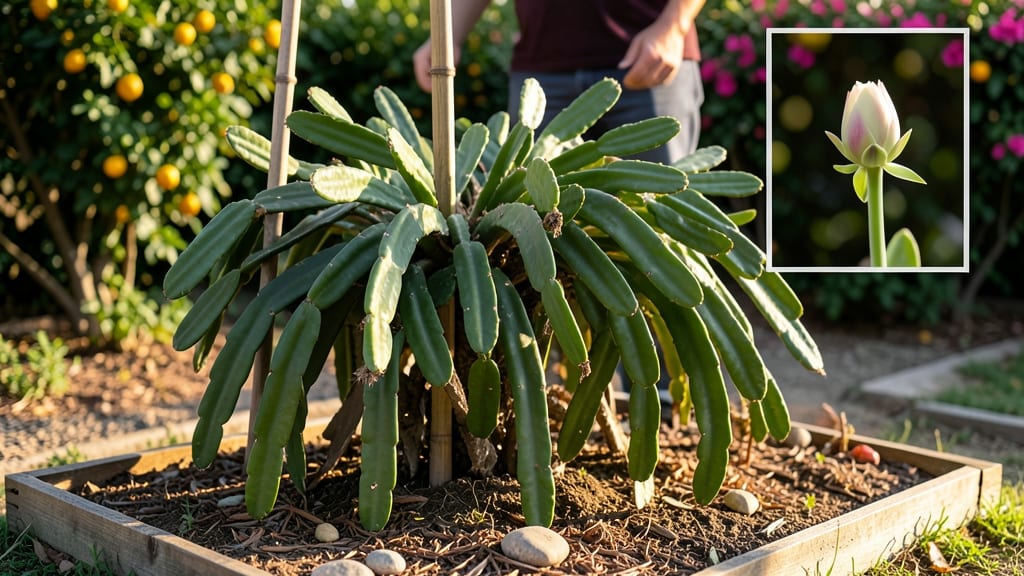
A dragon fruit tree can grow anywhere from 15 to 20 feet tall—taller than most backyard fences and nearly as tall as a two-story house!
If you’ve ever dreamed of growing tropical dragon fruit 🐉 in your backyard but worry about space, you’re not alone—these vines can reach surprising heights. But with the right variety and care, you can enjoy sweet, vibrant fruit even in small gardens or containers.
Most standard varieties (like the common Hylocereus undatus) climb aggressively, but their growth rate depends on pruning, trellising, and your climate. In cooler zones like USDA 9b, they may stay slightly shorter, while tropical regions see them stretch their full 20-foot potential.
Below, I’ll break down how to control their height, the best space-saving varieties for containers, and pruning tips to keep your dragon fruit tree manageable—no matter how much room you have.


Dragon fruit tree height: mature size by variety and growing conditions
Dragon fruit trees (Hylocereus spp.) are fast-growing vines that can become surprisingly tall—some varieties reaching heights of 15 to 20 feet in ideal conditions. But don’t let that intimidate you!
With the right variety selection and growing techniques, you can enjoy these tropical beauties even in small spaces or containers. The key lies in understanding how genetics, climate, and pruning influence their growth patterns.
Most dragon fruit vines are climbing cacti, meaning they need support to reach their full height. Without trellising or a sturdy structure, they’ll sprawl horizontally, taking up more ground space.
However, some compact varieties and strategic training can keep them manageable. Let’s break down the mature heights by variety and how to control their growth for your space.
📊 Summary of Dragon Fruit Tree Heights by Variety
| Variety | Common Name | Mature Height (ft) | Growth Habit | Best For |
|---|---|---|---|---|
| Hylocereus undatus | Pink Skin | 15–20 ft | Fast-climbing vine | Large gardens, trellises |
| Hylocereus costaricensis | Red Skin | 12–18 ft | Moderate climber | Balconies, small yards |
| Selenicereus megalanthus | Yellow Skin | 10–15 ft | Compact vine | Containers, patios |
| Hylocereus polyrhizus | White Skin | 18–22 ft | Aggressive climber | Large trellises, pergolas |
| Hylocereus megalanthus | Queen of Night | 12–16 ft | Moderate spread | Small gardens, urban areas |
The mature height of your dragon fruit tree depends heavily on its genetic variety and how you train it.
For example, Hylocereus polyrhizus (white-skinned dragon fruit) can grow taller than a two-story house if left unchecked, while Selenicereus megalanthus (yellow-skinned) stays more compact, making it ideal for containers or small patios. Always check the specific variety’s growth habits before planting to avoid surprises.
Climate plays a huge role in how tall your dragon fruit vine will grow. In tropical zones (USDA 10–11), these plants thrive year-round and can reach their full height quickly.
But in cooler climates (USDA 9b or lower), growth slows significantly, often capping at 8–12 feet unless you provide winter protection like a greenhouse or insulated container. Even in mild winters, pruning back the vines can encourage bushier, more manageable growth.
Trellising is non-negotiable if you want to control height and maximize space. A 6–10 foot trellis is perfect for most varieties, directing their growth upward instead of sprawling. Use a strong, sturdy structure like a metal cage, wooden lattice, or even a sturdy fence.
Without support, vines can spread 10–15 feet wide, turning your garden into a jungle! For container growing, a tall, narrow pot (at least 18–24 inches deep) paired with a small trellis works wonders.
Pruning isn’t just about keeping your dragon fruit vine in check—it’s also about boosting fruit production. Prune back overgrown branches in late winter or early spring to encourage new growth from the base. Remove any dead, diseased, or weak stems regularly to improve airflow and reduce pest risks.
If you’re growing in a container, prune more aggressively to prevent the vine from outgrowing its space. Just remember: never prune more than 1/3 of the plant at once, or you
Best space-saving dragon fruit varieties for containers and small gardens
If you love the idea of growing dragon fruit but lack yard space, don’t worry—there are compact varieties perfect for containers and small gardens. These space-saving dragon fruit varieties can thrive in 5-gallon pots or larger, producing delicious fruit without dominating your outdoor area.
The key is choosing the right dwarf or climbing types and training them vertically.
Most dragon fruit plants (Hylocereus spp.) grow 15–20 feet tall when left unchecked, but with the right techniques, you can keep them manageable. For example, the ‘Baby Dragon Fruit’ variety (Hylocereus undatus) stays shorter and produces smaller, sweeter fruits ideal for tight spaces.
Similarly, Selenicereus megalanthus is a climbing type that can be trained to stay under 6–8 feet tall with proper support.
Dragon Fruit Height Comparison
Standard Varieties
- Height: 15–20 ft
- Pros: High yield, classic flavor
- Cons: Needs trellis, large space
Compact Varieties
- Height: 3–8 ft (with training)
- Pros: Space-saving, great for containers
- Cons: Lower yield, slower growth
Height varies with pruning and support!
For containers, opt for ‘Baby Dragon Fruit’ or Selenicereus megalanthus, both of which thrive in 10–15 gallon pots. Use a well-draining cactus mix and place them in a sunny spot. These varieties produce fruit in 1–2 years when given proper care, making them ideal for balconies or patios.
Vertical training is your best friend for small spaces. Install a trellis, cage, or A-frame support to guide the vines upward. Prune regularly to encourage bushier growth and prevent overgrowth.
For example, pinching back the tips of new shoots will stimulate branching, creating more fruit-producing stems in a smaller footprint.
Another great option is Hylocereus costaricensis, known for its yellow-skinned fruit and slightly smaller size. This variety grows 6–10 feet tall but can be kept shorter with regular pruning. Pair it with a 5-foot tall trellis to maximize vertical space while keeping the plant contained.
Remember, even compact varieties need full sun (6+ hours daily) and consistent moisture to thrive. In containers, water every 2–3 days during hot weather and reduce frequency in cooler months. With the right variety and care, you’ll enjoy homegrown dragon fruit without sacrificing your garden’s limited space! 🌱