
Pruning
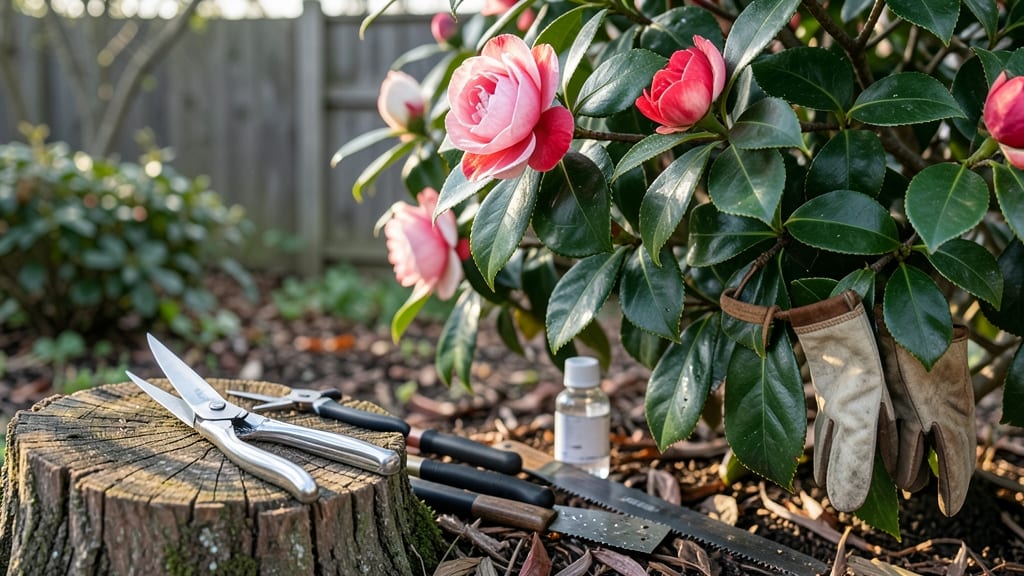
Pruning camellia trees should happen right after their blooms fade in late spring or early summer to promote vibrant new growth and next year's flowers, while protecting the buds that form for future blooming cycles. Always use clean, sharp tools and limit cuts to shaping, thinning, and removing only dead branches.
Timing is everything with camellias because their flower buds form on last year's growth. 🌸 If you prune at the wrong time—like in fall or winter—you risk cutting off next season's blooms before they even appear.
I've seen gardeners accidentally turn their camellias into leafy shrubs with no flowers by pruning too late. For late-blooming varieties, wait until after the first hard frost to avoid winter damage while still giving the plant time to recover before dormancy.
When it comes to technique, think of camellias as delicate artists—you want to sculpt rather than hack. Start by removing any dead or crossing branches, then thin out crowded areas to improve airflow.
Never cut more than one-third of the plant's foliage in a single session, as this can stress the tree. I always sterilize my tools with rubbing alcohol between cuts to prevent disease spread, especially when dealing with these moisture-loving shrubs.
💡 In This Article
- Best Camellia Pruning Timing for Healthy Blooms
- Step-by-Step Camellia Pruning Techniques for Gardeners
Best camellia pruning timing for healthy blooms
Camellias form their flower buds on the previous year's growth, which means timing your cuts is critical.
When you prune too late—like in fall or winter—you risk removing next season's blooms before they even appear. 🌸 The ideal window is immediately after flowering, typically between late May and early July for most varieties, when the plant has finished blooming but still has time to develop new growth before winter dormancy.
This timing aligns with the plant's natural growth cycle: after blooming, camellias enter a phase where they focus on producing new leaves and stems for next year's flowers. Pruning at this stage encourages this growth while preserving the buds that form on last year's wood.
For late-blooming varieties (like those that flower in winter), wait until after the first hard frost but before mid-December to avoid winter damage while still allowing recovery time.
What most gardeners don't realize is that camellias are sensitive to sudden temperature changes. Pruning too early in spring can expose tender new growth to late frosts, while fall pruning stresses the plant when it's preparing for dormancy.
The key is to let the plant complete its blooming cycle first—this ensures the energy it needs for recovery is already allocated to essential functions.
Consider these seasonal risks: Spring pruning (before blooming) removes potential flower buds, while fall pruning (after October 15th) can leave wounds open to fungal infections during the damp winter months.
The 30-60 day recovery period after pruning is crucial for wound sealing and new growth establishment, which is why timing matters so much.
For example, a Camellia japonica that blooms in early spring should be pruned by mid-June, while a Camellia sasanqua that flowers in late fall needs pruning by early December.
This variance explains why many gardeners accidentally turn their camellias into leafy shrubs with no flowers—they're pruning at the wrong time for their specific variety.
One visual cue to watch for is the presence of small, rounded buds along last year's branches. These are your future flowers, and they should never be cut. When pruning, always look for these buds before making any cuts—this simple check prevents many common pruning mistakes.