
How To
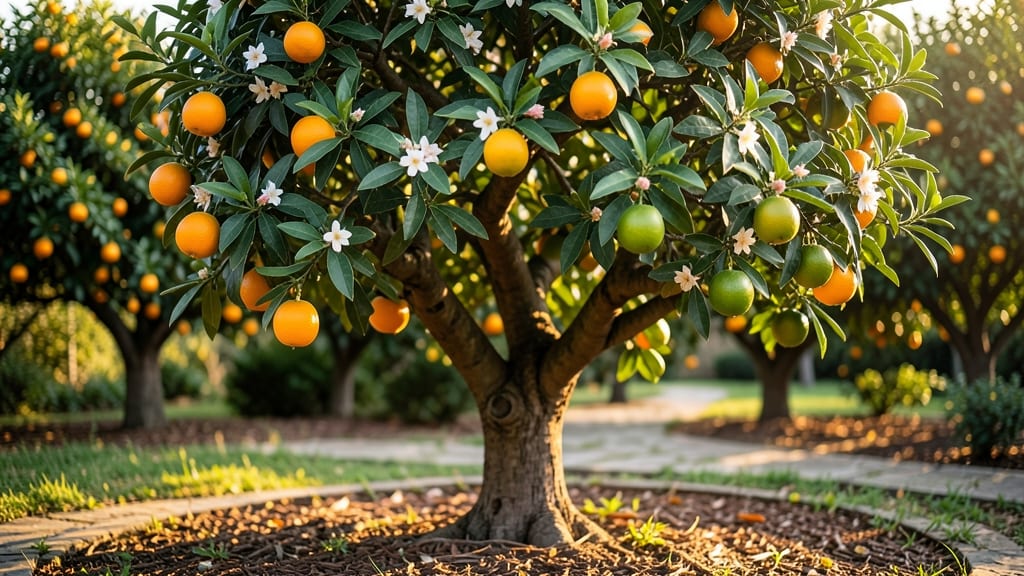
How tall does an orange tree grow? The answer varies dramatically—from a compact 6 feet to a towering 60 feet—depending on the variety you choose.
Picture this: a dwarf 🍊 tree fits neatly on your patio, while a standard variety stretches toward the sky—so which one suits your space? The answer depends on whether you’re dreaming of a backyard orchard or a container-friendly citrus tree.
In this guide, we’ll compare dwarf, semi-dwarf, and standard orange trees, so you can pick the perfect size for your garden—or even your indoor setup.
You’ll also discover how to control growth with pruning, spacing tips for small yards, and the surprising factors that speed up (or slow down) your tree’s height over time.


Orange tree height variations: dwarf, semi-dwarf, and standard sizes
Choosing an orange tree for your garden starts with understanding its mature height. The right size depends on your space—whether you have a small balcony, a backyard orchard, or a commercial grove.
Orange trees come in three primary height categories: dwarf, semi-dwarf, and standard, each with distinct growth patterns and care needs. Let’s explore how tall each type grows and what that means for your gardening plans.
Dwarf orange trees are the smallest option, typically reaching 6 to 12 feet at maturity. These varieties are perfect for containers, patios, or small urban gardens where space is limited.
Semi-dwarf trees grow taller, between 12 to 20 feet, making them ideal for backyard planting or larger containers. Standard orange trees, on the other hand, can tower 20 to 60 feet, requiring ample space and professional care for optimal growth.
| Type | Mature Height | Growth Rate | Best For |
|---|---|---|---|
| Dwarf | 6–12 ft | Slow to moderate | Containers, patios, small gardens |
| Semi-Dwarf | 12–20 ft | Moderate | Backyards, medium-sized gardens |
| Standard | 20–60 ft | Fast | Large landscapes, commercial farms |
One of the biggest factors influencing an orange tree’s height is its growth rate. Dwarf varieties grow more slowly, adding only 1 to 2 feet per year, while standard trees can shoot up 3 to 5 feet annually under ideal conditions.
Semi-dwarfs fall in between, growing 2 to 3 feet per year. This growth rate is influenced by climate, soil quality, and care practices, so even within a category, heights can vary.
If you’re growing orange trees in containers, dwarf or semi-dwarf varieties are your best bet. A 5-gallon pot can comfortably hold a dwarf tree, while semi-dwarfs may need 15-gallon containers or larger.
Standard trees, however, are best suited for ground planting in spacious yards or orchards, where their full height can be accommodated without crowding other plants.
Pruning plays a crucial role in managing an orange tree’s height, especially for standard varieties. Regular pruning can keep even a standard tree at a more manageable 15 to 20 feet, making it suitable for larger backyards.
For dwarf and semi-dwarf trees, pruning is less critical for height control but helps maintain shape and fruit production. Always prune in late winter or early spring to encourage healthy new growth.
Another key consideration is the rootstock used to grow the tree. Dwarf and semi-dwarf orange trees are often grafted onto dwarfing rootstocks like Citrange Carrizo or Swingle citrumelo, which naturally limit their height.
Standard trees, however, are grafted onto seedling rootstocks or more vigorous varieties, allowing them to reach their full potential height.
For those in colder climates, dwarf varieties are the most practical choice. Their smaller size makes them easier to protect during winter freezes, whether by moving containers indoors or wrapping the trunk.
Semi-dwarf and standard trees require more extensive winter care, such as mulching, wrapping, or even indoor overwintering in pots.
If you’re planning to grow orange trees for fruit production, consider that dwarf and semi-dwarf varieties often bear fruit 1 to 2 years earlier than standard trees. This makes them a great choice for impatient gardeners eager to enjoy homegrown oranges.
Standard trees, while slower to fruit, can produce larger yields over time, making them ideal for commercial growers or those with ample space.
No matter which height you choose, remember that proper care is essential for healthy growth. Provide full sun, well-draining soil, and consistent watering to encourage strong, vigorous growth.
With the right variety and care, your orange tree can thrive—whether it’s a compact patio tree or a towering backyard giant.
How to choose the right orange tree height for your space
Selecting the right orange tree height depends entirely on your available space and intended use. A standard orange tree can reach 20-40 feet, making it ideal for large backyards or farms, while dwarf varieties stay between 6-12 feet, perfect for containers or small patios.
My first recommendation is to measure your space carefully before choosing.
For container gardening, dwarf or semi-dwarf varieties are your best bet—they thrive in large pots (15+ gallons) and can be moved seasonally. If you’re planning a backyard orchard, semi-dwarf trees offer a balance between manageable height and fruit production.
Always consider your local climate—warmer regions allow for faster growth, while colder areas may require dwarf varieties or container growing.
🌱 Dwarf Varieties (6-12 ft)
- Best for: Containers, small patios, balconies
- Space needed: 3-5 ft diameter root zone
- Fruit yield: Smaller but consistent harvest
- Pruning: Minimal—just remove dead branches
Semi-Dwarf Varieties (12-20 ft)
- Best for: Backyard orchards, medium spaces
- Space needed: 8-10 ft diameter root zone
- Fruit yield: Larger harvests than dwarfs
- Pruning: Annual shaping to control height
Standard Varieties (20-60 ft)
- Best for: Farms, large estates, commercial orchards
- Space needed: 15-20 ft diameter root zone
- Fruit yield: Maximum production but needs space
- Pruning: Heavy annual pruning required
If you’re pruning to control height, focus on removing suckers and water sprouts—these fast-growing shoots can quickly turn a dwarf tree into a monster. I recommend spring pruning right after flowering to encourage fruit production while keeping the tree compact.
For container-grown trees, root pruning every 2-3 years helps maintain size and health.
For commercial farms, standard varieties dominate due to their high fruit yield, but even here, espalier training can reduce height while maximizing output. My pro tip: If you love fresh oranges but lack space, consider grafting dwarf scions onto semi-dwarf rootstock for a middle-ground solution.
Always research local frost dates—dwarf trees are more vulnerable to cold damage.
Finally, don’t overlook soil depth—deeper soil allows roots to establish better, supporting taller growth. Amend your soil with compost and sand to improve drainage, especially in containers. With the right variety and care, you can enjoy homegrown oranges regardless of your space constraints! 🍊