
Container Gardens
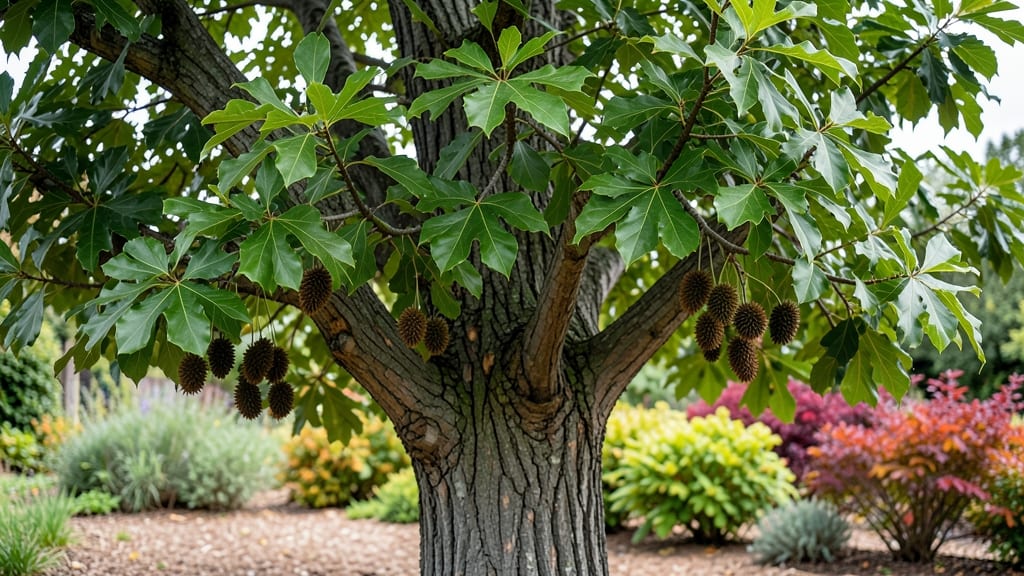
Sweet gum trees thrive in USDA growing zones 4 through 9, where they handle both freezing winters and scorching summers with ease. Their adaptability spans from -30°F to 30°F, making them ideal for nearly every U.S. climate.
Sweet gum trees originally hail from the southeastern U.S., where they evolved to withstand both humidity and drought. 🌳 This native resilience explains why they perform so well across such a wide range of climates—from the cold plains of zone 4 to the steamy summers of zone 9.
The key to their success lies in their deep root systems and glossy leaves, which help conserve moisture while still thriving in full sun exposure.
When planting, focus on well-draining soil to prevent root rot—a common issue in heavy clay. In northern zones, spring planting gives young trees time to establish before winter, while southern climates benefit from fall planting to avoid summer heat stress.
The tree's star-shaped leaves also help it shed excess water efficiently, making it surprisingly drought-tolerant once established.
💡 In This Article
- Understanding Sweet Gum Tree Climate Adaptations
- Optimal Planting Conditions for Sweet Gum Trees
Understanding sweet gum tree climate adaptations
The sweet gum tree's remarkable adaptability stems from its native southeastern U.S. origins, where it evolved to handle both extreme heat and occasional drought. Its deep taproot system can reach 10-15 feet deep, accessing groundwater that shallow-rooted trees can't tap into.
This explains why established trees survive -30°F winters in zone 4—they simply draw on stored moisture during dormancy. 🌲
Heat resistance comes from its star-shaped leaves that shed excess water efficiently through a process called guttation. These leaves also contain tannins, natural compounds that help prevent moisture loss during drought.
In zone 9's 90°F+ summers, the tree's glossy foliage reflects sunlight while its thick bark insulates against heat stress. The combination makes it one of the few trees that thrives in both humid coastal areas and arid inland regions.
Seasonal growth patterns reveal another adaptation secret: sweet gums produce new leaves in early spring (March-April) but drop them late (November-December), extending their growing season. This delayed leaf drop allows them to photosynthesize longer in fall, storing energy for winter survival.
In colder zones, the tree's buds contain antifreeze-like compounds that prevent ice crystal formation during -20°F nights.
What most gardeners overlook is how the tree's seed pods also play a role in climate resilience. These spiky capsules contain seeds that remain viable for years, allowing the tree to regenerate after disturbances like wildfires or ice storms.
This survival strategy explains why sweet gums often become dominant species in reforested areas across zones 5-8.
Comparing sweet gums to other shade trees highlights their unique balance. While oaks struggle in zone 4 winters, sweet gums maintain 90% survival rates even when exposed to -25°F for extended periods.
Their ability to reduce water loss by 40% during drought also outpaces maples and birches, which require more consistent moisture. 🌿
The tree's cambium layer (growth tissue) remains active later into fall than most species, allowing it to prepare for winter while still benefiting from late-season sunlight. This dual capability explains why sweet gums often outcompete other trees in marginal climates where conditions might be too harsh for less adaptable species.