
Pruning
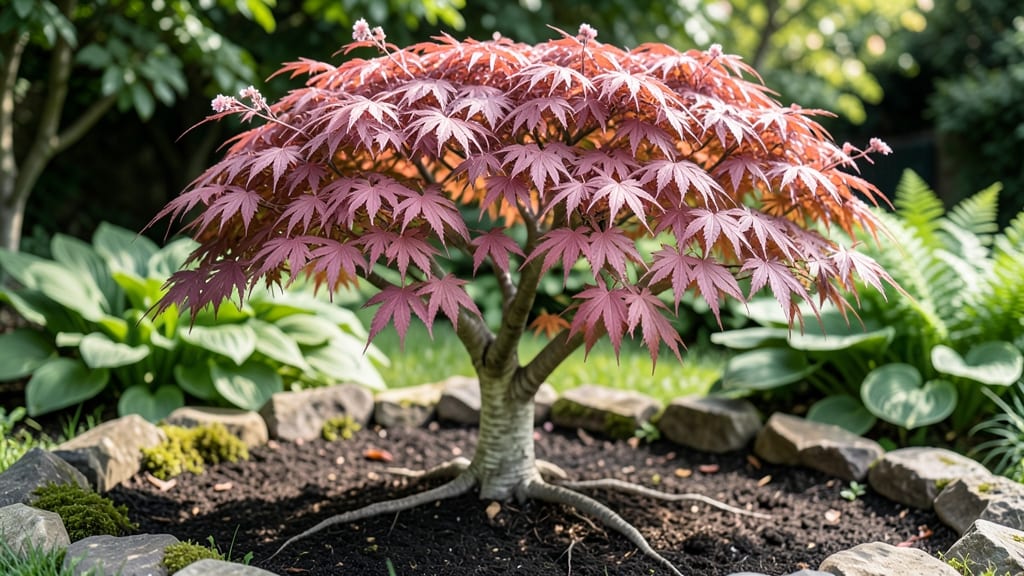
The name for pink leaf trees includes Japanese maples (Acer palmatum) and their red-leafed cultivars like Crimson Queen or Bloodgood, known for their stunning crimson fall foliage. Other varieties go by purple leaf plum (Prunus cerasifera) or smoke tree (Cotinus coggygria ‘Royal Purple’).
These stunning trees get their name from the vibrant pinkish-purple foliage that emerges in spring and intensifies into fiery autumn hues. 🌿 The color comes from anthocyanins, pigments that develop when cooler temperatures trigger their production.
Japanese maples are particularly prized for their delicate lace-like leaves, while purple leaf plums offer bold, glossy foliage that stays vibrant longer. Many gardeners choose these varieties for their low-maintenance nature and ability to thrive in both sun and shade conditions, making them perfect for almost any landscape.
If you're looking for specific varieties, consider the Autumn Moon Japanese maple for its weeping branches or the Royal Purple smoke tree for its velvety foliage that smokes in fall.
Both offer dramatic color changes without requiring special care. These trees aren't just beautiful—they're also surprisingly adaptable, growing well in containers or as focal points in larger gardens.
💡 In This Article
- Why Pink Leaf Trees Change to Crimson in Autumn
- Best Pink Leaf Trees for Shade, Sun, and Small Gardens
Why pink leaf trees change to crimson in autumn
Pink leaf trees transform into fiery crimson masterpieces thanks to a botanical process called anthocyanin production. These pigments develop in the leaf cells when cooler autumn temperatures—typically between 50-60°F—trigger chemical reactions that convert existing leaf compounds into vibrant reds and purples.
The process acts like nature's highlighter, making the leaves appear more intense than their springtime pink hues. 🌟 Japanese maples (Acer palmatum) are especially famous for this because their thin, delicate leaves have high surface area-to-volume ratios, allowing pigments to spread evenly.
The color shift happens because chlorophyll (the green pigment) breaks down as daylight shortens, revealing the underlying anthocyanins. In deciduous varieties like Crimson Queen, this creates a dramatic two-stage show: first, the pink foliage emerges in spring, then deepens to crimson by fall.
Evergreen pink-leafed trees, like some cotoneasters, maintain their color year-round because they retain chlorophyll but still produce anthocyanins during cooler months. The intensity of the color depends on sunlight exposure—trees in full sun develop richer pigments than those in deep shade.
Temperature isn't the only factor—nutrient availability plays a role too. Trees growing in well-drained, slightly acidic soil (pH 6.0-6.5) produce more vibrant fall colors because they can efficiently synthesize anthocyanins.
For example, Bloodgood Japanese maples grown in ideal conditions turn a deeper burgundy compared to those in poor soil. 🌿 This is why gardeners often see more dramatic color changes in trees planted in raised beds or amended garden soil rather than compacted native soil.
Leaf structure also affects how vivid the colors appear. Japanese maples have finely divided leaves that act like tiny prisms, scattering light and making the pigments look more intense.
In contrast, purple leaf plums (Prunus cerasifera) have thicker, waxy leaves that reflect more light, creating a glossy rather than translucent effect.
The smoke tree (Cotinus coggygria) takes this further—its foliage appears almost smoky purple because the leaves contain high concentrations of anthocyanins that scatter light differently, creating a velvety texture.
What most people don't realize is that the timing of color change varies by species. Japanese maples typically peak in October-November, while purple leaf plums may hold their color until December in mild climates. This is because different species have evolved to respond to slightly different temperature thresholds.
For instance, the Autumn Moon cultivar changes color earlier than Bloodgood because its genetic makeup triggers anthocyanin production at slightly higher temperatures (55°F vs. 50°F).
Understanding these mechanisms helps gardeners create the perfect conditions for vibrant fall displays. Planting pink-leafed trees in locations that receive at least 4-6 hours of sunlight daily maximizes pigment production.
Mulching with organic matter in early spring provides the nutrients needed for strong leaf development, setting the stage for that autumnal color explosion. The result? A garden that feels like a living painting, where every leaf tells a story of seasonal change. 🍂