
Pruning
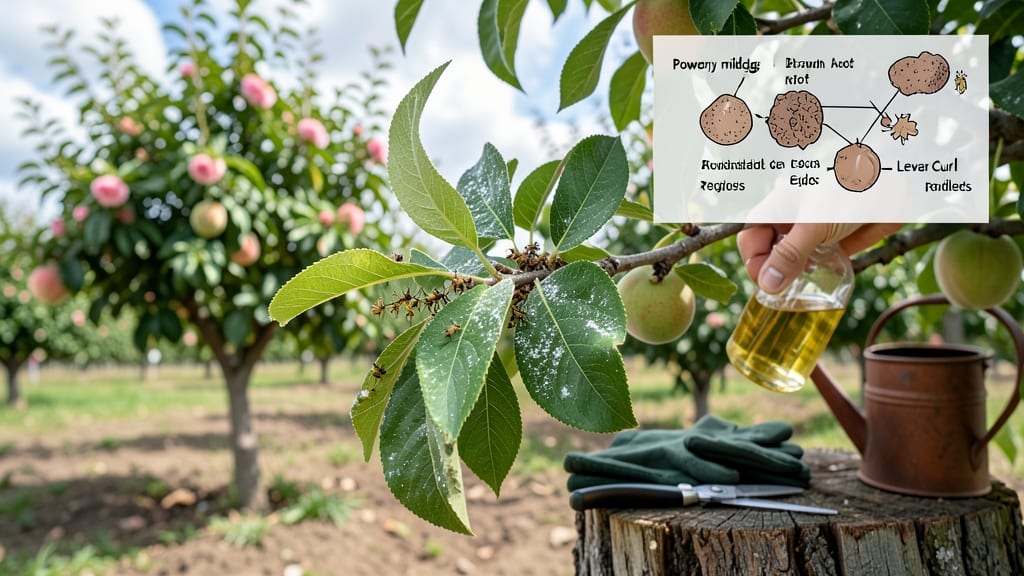
Your peach tree treatment starts with a sharp pair of pruners and a clear plan to outsmart pests, diseases, and weak growth. ✂️ I’ve saved more trees than I’ve lost by focusing on strategic pruning—removing dead wood, thinning crowded branches, and opening the canopy to sunlight and air.
This isn’t just about shaping the tree; it’s about giving it the best shot at fighting off borers, brown rot, and leaf curl before they take hold.
The key is timing: prune in late winter or early spring before buds swell, and repeat after harvest to remove any diseased wood.
I’ve seen trees go from struggling to thriving in just one season by combining pruning with a copper fungicide spray for fungal issues and neem oil for pests. It’s not about chemicals—it’s about giving your tree the right support to fight back naturally.
What you’ll end up with is a stronger, more productive peach tree that resists pests and diseases better than ever. The branches stay open for airflow, fruit develops evenly, and the tree’s energy goes into growth instead of fighting infections.
Plus, you’ll spot issues early—like aphid clusters or fungal spots—before they spread.
Works for backyard orchards, container-grown trees, or even that one stubborn peach tree in your yard. Let’s get your tree back in fighting shape—step by step.
Root Causes of Peach Tree Stress
Peach trees are resilient, but even the hardiest varieties can suffer from health issues that disrupt fruit production, leaf vigor, or overall growth. Understanding the why behind common peach tree problems is the first step to effective treatment—and prevention.
Below, we break down the most frequent culprits, backed by science, so you can diagnose (and fix!) your tree’s struggles with precision.
Peach trees thrive in well-aerated, slightly acidic soil (pH 6.0–6.5), but when roots become compacted or nutrients are depleted, the tree’s ability to absorb water and minerals plummets. Here’s what’s really happening:
- Root Zone Stress: Peach trees develop a fibrous root system that spreads widely but shallowly.
If the soil is clay-heavy, waterlogged, or overly compacted, roots suffocate, leading to: - Stunted growth (the tree can’t support new shoots or fruit). - Yellowing leaves (chlorosis) due to iron/zinc deficiency. - Premature leaf drop, especially in hot weather. - Nutrient Imbalance: Peaches are heavy feeders, requiring nitrogen (N), phosphorus (P), and potassium (K) in balanced ratios.
Soil tests often reveal: - Low organic matter (<2%) → Poor microbial activity → Reduced nutrient availability. - Excess salts (from fertilizers or irrigation water) → Osmotic stress → Wilting even when soil is moist. - Fungal Invaders: Compacted, waterlogged soil is a breeding ground for root rot pathogens like Phytophthora or Armillaria (honey fungus), which: - Block water uptake → Wilting leaves (even in damp soil). - Release toxins → Dark, mushy roots and sudden dieback.
Actionable Insight: Test your soil every 2–3 years (home kits work, but lab tests are more precise). Amend with compost, gypsum (for clay), or coarse sand to improve drainage. Mulch with wood chips (3–4 inches deep) to retain moisture without smothering roots.
Pruning is a double-edged sword—done wrong, it creates entry points for pathogens and weakens the tree’s structure. Common mistakes include:
- Cutting Too Late in the Season: - Pruning after bud swell (late winter/early spring) removes protective buds before they’ve hardened off, making the tree vulnerable to bacterial canker (Pseudomonas syringae) or silver leaf disease (Chondrostereum purpureum). - Symptoms: Oozing cankers, dead branches with silver-gray undersides, or sudden wilting. - Poor Cut Technique: - Leaving stubs or tearing bark creates wounds that won’t heal properly, inviting fungi like Botryosphaeria (dieback disease). - Over-thinning removes too much foliage → reduced photosynthesis → weakened tree unable to fight pests. - Ignoring Sanitation: - Leaving infected branches on the ground or using dull tools spreads spores.
Pruners often carry bacterial canker from tree to tree if not disinfected with 70% isopropyl alcohol or bleach solution.
Actionable Insight: Prune dormant season (late winter) using sharp, sterilized tools. Make cuts just outside the branch collar (the swollen area where the branch meets the trunk) at a 45° angle. Remove all infected wood and burn or bag it (do not compost).
Peach trees are a buffet for insects, and when populations explode, they sap nutrients, transmit viruses, or inject toxins. The most damaging culprits:
| Pest | How It Attacks | Tell-Tale Signs |
|---|---|---|
| Peach Tree Borer | Larvae tunnel into bark, disrupting sap flow. | Sawdust-like frass at branch bases, oozing sap, wilting despite watering. |
| Aphids | Pierce leaves to suck sap, excreting honeydew (a fungus magnet). | Curled leaves, sticky residue, sooty mold (black fungus on honeydew). |
| Japanese Beetles | Defoliate by skeletonizing leaves (eating only the soft tissue). | Swiss-cheese leaves, metallic green beetles in clusters. |
| Scale Insects | Attach to bark/leaves, sucking juices and secreting waxy shields. | White/brown bumps on stems, sticky residue, yellowing leaves. |
Why It Escalates:
- Drought stress makes trees more attractive to pests (they’re easier to penetrate).
- Monoculture gardens (planting only peaches) create pest hotspots with no natural predators.
- Lack of beneficial insects (like ladybugs or parasitic wasps) allows outbreaks.
Actionable Insight:
- Monitor weekly for early signs (use a 10x magnifying glass).
- Disrupt life cycles: Apply neem oil (aphids/scale) or Bt (Bacillus thuringiensis) (borers) before eggs hatch.
- Encourage predators: Plant dill, fennel, or marigolds nearby to attract ladybugs.
Peach trees are semi-tropical but not tropical—they’re adapted to cool winters and warm summers, but modern climate shifts and poor siting can push them past their limits.
- Winter Damage:
- Late frosts (after bud break) kill blossoms → reduced fruit set.
- Freeze-thaw cycles cause cracks in bark, inviting bacterial canker.
- Symptoms: Blackened buds, split bark, or sudden dieback in spring.
- Heat and Drought:
- Peaches need 500–1,000 hours of chilling (below 45°F) and consistent moisture during fruit development.
- Heat waves (>95°F) cause:
- Blossom drop (flowers abort due to stress).
- Sunburn on fruit (white/yellow patches, leathery texture).
- Premature leaf fall (tree conserves water).
- Wind Exposure:
- Constant wind desiccates leaves and breaks branches, reducing photosynthetic surface area.
- Symptoms: Scorched leaf edges, stunted shoots, or fruit cracking (from uneven water loss).
Actionable Insight:
- Protect from frost: Use frost blankets or sprinklers (running water releases heat as it freezes).
- Mulch deeply (4–6 inches) to retain moisture and moderate soil temps.
- Site trees on the south side of structures for winter sun and summer shade.
Peach trees are magnets for pathogens, especially when stressed. The most destructive invaders:
- Leaf Curl (Taphrina deformans):
- Overwinters in buds, infecting new leaves in spring.
- Symptoms: Thick, puckered, reddish leaves (resemble curled paper).
- Why it spreads: Humid springs and poor air circulation (dense canopies).
- Brown Rot (Monilinia fructicola):
- Infects blossoms → mummies (infected fruit that stay on the tree).
- Symptoms: Brown, mushy fruit with pink spores, blossom blight.
- Why it spreads: Rainy bloom season and warm nights (ideal for spore release).
- Bacterial Spot (Xanthomonas arboricola):
- Water splashes spores onto leaves, creating oily, water-soaked spots.
- Symptoms: **
Quick Fixes for Peach Tree Problems
Revitalizing your peach tree starts with identifying the root cause—whether it’s pests, disease, poor pruning, or environmental stress. Below are practical, step-by-step solutions tailored to common issues, along with prevention tips to keep your tree thriving year-round.
Signs: Chewed leaves, sawdust-like frass, or tiny holes in fruit.
🔥 Treat Aphids & Scale Insects
- Spray with Neem Oil (🌿 organic & effective)
- Mix 1 tsp neem oil + 1 tsp mild soap + 1 quart water in a spray bottle.
- Apply early morning or evening (avoid direct sun) to undersides of leaves.
- Reapply every 5–7 days until pests vanish.
- Introduce Beneficial Insects (🐞 long-term fix)
- Ladybugs and lacewings devour aphids. Buy them online or attract them with dill or fennel plants nearby.
- Prune Infested Branches (✂️ cut & dispose)
- Remove heavily damaged branches below the infestation to stop spread.
- Sterilize pruners with rubbing alcohol between cuts.
💡 Prevention Tip:
- Reflective mulch (aluminum foil strips) confuses pests like peach tree borers.
- Monitor regularly—catch infestations early with a 10x magnifying glass.
Signs: Brown spots, powdery white growth, or oozing cankers.
🍳 Cure Peach Leaf Curl & Brown Rot
- Fungicide Spray (💊 fast action)
- Use copper fungicide (e.g., Bordeaux mixture) or sulfur-based spray (follow label rates).
- Apply before buds swell in early spring and again after harvest.
- Remove & Destroy Infected Parts (🔥 burn or bag)
- Prune all diseased leaves, fruit, and branches—do not compost.
- Disinfect tools with bleach (1 part bleach : 9 parts water).
- Improve Airflow (🌬️ prevent recurrence)
- Thin out dense branches to reduce humidity (fungi thrive in wet conditions).
- Space trees 15–20 feet apart if replanting.
🌡️ Prevention Tip:
- Water at the base (avoid wetting foliage) and prune for sunlight exposure.
- Dormant season spray (copper fungicide) in late fall/winter builds resistance.
Signs: Blackened branches, peeling bark, or no spring buds.
👨🍳 Restore a Frost-Damaged Tree
- Prune Dead Wood (✂️ clean cuts only)
- Use sharp pruners to remove blackened, brittle branches (cut back to healthy green wood).
- Avoid heavy pruning—wait until spring to assess full damage.
- Protect Next Winter (🛡️ insulation hack)
- Wrap the trunk with tree wrap (burlap or commercial bark wrap).
- Mulch heavily (3–4 inches of wood chips) around the base but keep mulch 6 inches from the trunk.
- Fertilize Gently (💪 boost recovery)
- Apply balanced fertilizer (10-10-10) in early spring—avoid nitrogen-heavy mixes (they stress weak trees).
✨ Prevention Tip:
- Plant cold-hardy varieties (e.g., ‘Relenta’ or ‘Contender’) if your zone gets below 0°F.
- Avoid late-season pruning—it reduces winter hardiness.
Signs: Stunted height, sparse leaves, or no fruit.
🔪 Fix Nutrient Deficiencies
- Soil Test First (📊 know the problem)
- Test soil pH and nutrients (ideal pH: 6.0–6.5 for peaches).
- Amend with compost or aged manure if soil is poor.
- Fertilize Smart (🍎 timing matters)
- Early spring (before buds break): High-nitrogen (10-6-4) for foliage.
- After harvest: Low-nitrogen, high-potassium (5-10-10) for root/fruit health.
- Avoid over-fertilizing—burns roots!
- Deep Watering (💦 hydration fix)
- Water deeply 1–2 times per week (1–2 inches total).
- Use drip irrigation to keep moisture at roots.
🎯 Prevention Tip:
- Mulch annually with wood chips or straw to retain moisture and nutrients.
- Plant companion plants (e.g., clover or marigolds) to improve soil.
🔥 Pro Tip for All Issues: Keep a pruning journal—note when you prune, fertilize, and treat pests. Consistency is key! A well-maintained peach tree can bear fruit for decades with the right care. 🍑✨
Frequently asked questions
When is the best time to prune my peach tree for treatment?
Prune during late winter or early spring (before buds swell) to minimize disease risk. This timing allows wounds to heal before pests and pathogens become active. For cleanup after harvest, prune again in summer to remove diseased wood. Avoid pruning in fall—it reduces winter hardiness.
How do I know if my peach tree has brown rot?
Look for brown, mushy fruit with pink spores and blossom blight (blackened flowers). Leaf spots with concentric rings are another clue. Remove infected fruit immediately and apply copper fungicide before buds swell in spring.
Can I use neem oil on peach trees with fruit?
Yes, but apply it early in the morning and avoid spraying directly on fruit when it's ripe or nearly ripe. Neem oil is safe for edible crops when used properly, but harvest fruit 72 hours after application to ensure no residue. For pests, focus on leaves and stems.
Why are my peach tree leaves curling?
Curled leaves often signal leaf curl disease (fungal) or aphid infestation. Check undersides for tiny insects or thick, puckered leaves. Treat with neem oil (aphids) or copper fungicide (disease). Prune infected branches and improve airflow by thinning dense growth.
How often should I fertilize my peach tree?
Fertilize twice a year: once in early spring (high-nitrogen for growth) and again after harvest (balanced or potassium-rich for fruit health). Test soil first—peaches prefer pH 6.0-6.5. Avoid over-fertilizing, which burns roots. Use compost annually to improve soil.