
Pruning
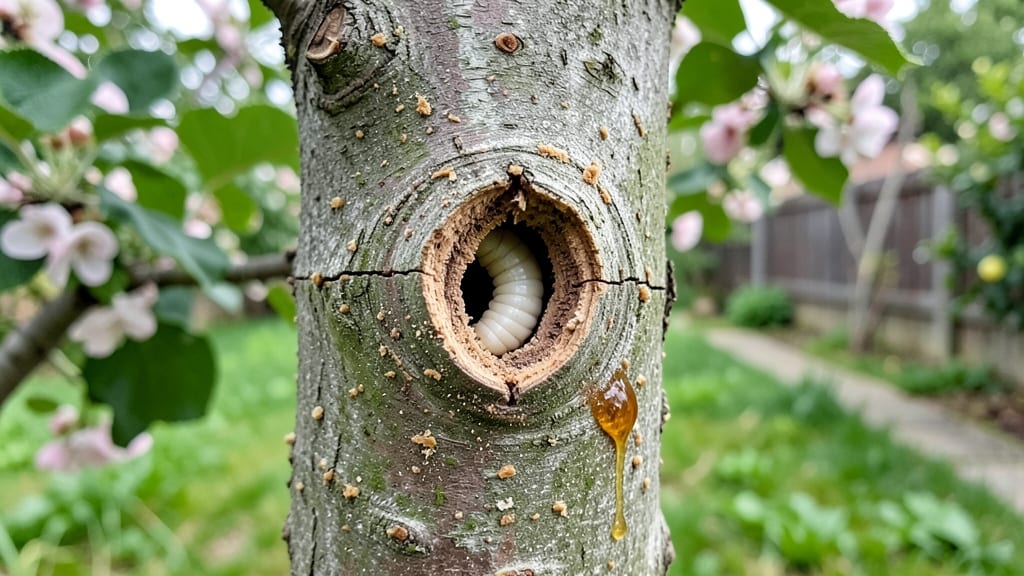
Apple tree borer damage turns your fruit tree into a slow-motion disaster—sawdust piles at the base, oozing sap, and branches that suddenly die. 🌳 I’ve watched these pests transform a thriving orchard into a sad, half-dead mess, but the good news?
You can stop it before it’s too late with the right moves.
The damage starts small: tiny holes in bark, frass (that sawdust-like debris), and wilting leaves that refuse to bounce back. Borers chew through the tree’s life-support system, and by the time you see major symptoms, it’s often too late to save that branch.
The key is catching it early—look for these warning signs in spring and summer.
With proper pruning, traps, and a few organic tricks, you can revive your tree and keep new borers from moving in. I’ll show you how to clean up damage, use natural predators, and protect your tree so it stays healthy for years—no chemicals required unless absolutely necessary.
Even if your tree is already struggling, don’t give up. Borer damage is beatable, and the steps I’ll walk you through work for both young saplings and mature trees. Let’s get your apple tree back in fighting shape!
Root Causes Of Tree Stress
Apple trees may seem sturdy, but they’re not immune to the apple tree borer—a destructive pest that exploits weakened wood. Understanding why these beetles target your tree is the first step in stopping them.
Below, we break down the key factors that make your apple tree a prime target for borer infestations.
Healthy trees naturally repel pests through thick bark, strong sap flow, and a robust immune system. But when a tree is stressed, its defenses weaken, making it an easy meal for borers. Here’s how it happens:
- Poor Nutrition: Trees lacking essential nutrients (like nitrogen, potassium, or micronutrients) produce thinner bark and slower sap circulation. Borers detect this vulnerability and lay eggs in cracks or wounds.
- Drought or Overwatering: Both extremes disrupt a tree’s ability to transport water and nutrients. Drought-stressed trees have dry, brittle wood—ideal for borer larvae to tunnel through. Overwatering, meanwhile, can cause root rot, further weakening structural integrity.
- Physical Damage: Cuts from pruning, storm wounds, or even animal scratches create entry points. Borers are drawn to fresh sap oozing from injuries, using them as nesting sites.
Pro Tip: 💡 Regularly inspect your tree’s bark for cracks, peeling, or sap leaks. Seal minor wounds with pruning sealant to deter borers before they strike.
Borers thrive when trees are under environmental pressure. These conditions create the perfect storm for infestations:
- Extreme Temperatures: Prolonged heatwaves or late frosts disrupt a tree’s growth cycle. Weakened foliage and stunted sap flow signal to borers that the tree is struggling—making it a high-risk target.
- Competition for Resources: Overcrowded orchards or nearby invasive plants (like blackberries or brambles) steal water and nutrients from your apple tree. Stressed trees are more likely to attract borers seeking easy access.
- Soil Depletion: Compacted or nutrient-poor soil limits root growth. When roots can’t support the tree’s needs, the entire plant becomes susceptible to borer attacks.
Action Step: ✨ Conduct a soil test every 2–3 years to monitor pH and nutrient levels. Amend soil with compost or organic matter to boost tree resilience.
Borers rarely strike a completely healthy tree. Instead, they follow other pests or diseases that have already compromised the wood. Common precursors include:
| Pest/Disease | How It Helps Borers |
|---|---|
| Codling Moth 🐛 | Weakens fruit production, reducing tree energy for defense. |
| Fire Blight 🔥 | Kills branches, creating deadwood where borers lay eggs. |
| Root Rot 🌱 | Disrupts nutrient uptake, making the tree’s vascular system easy to exploit. |
| Scale Insects 🐜 | Sap-sucking pests drain the tree, leaving it vulnerable to secondary borer attacks. |
Key Insight: 🎯 If your tree has a history of pest outbreaks or fungal infections, it’s high-risk for borers. Prioritize treating these issues before borers move in.
By addressing these root causes—nutritional gaps, environmental stress, and prior infestations—you can dramatically reduce your apple tree’s appeal to borers. The next step? Learning how to spot and treat early signs of damage before it’s too late.
Fixing Apple Tree Borer Issues
Once you’ve identified the signs of apple tree borer damage—sawdust-like frass, oozing sap, or wilting branches—it’s time to act. The key is a two-pronged approach: immediate treatment to stop the infestation and long-term prevention to protect your tree.
Below are practical, step-by-step solutions tailored to the root cause of the problem, plus proactive tips to keep your apple tree thriving.
If you’ve spotted fresh borer damage (like oozing sap or tunnels), act fast to prevent further spread.
1. 🍳 Prune Infested Branches
- How: Use sterilized pruning shears to cut 6–12 inches below the visible damage (borers can tunnel deeper than you see).
- Why: Removes the larvae and eggs before they spread.
- Pro Tip 💡: Seal the cut ends with pruning sealant to prevent secondary infections.
2. 👨🍳 Apply Borer-Specific Treatments - For light infestations: Spray neem oil or horticultural oil (like Dormant Oil) on the bark and soil around the base.
These suffocate larvae without harming the tree. - For severe cases: Use systemic insecticides (like Imidacloprid) or borer baits (e.g., Gorthal Borer Bait).
Follow label instructions carefully—timing is critical (apply when borers are active, usually late spring to early summer). - Pro Tip 🌡️: Water the tree first before applying oil sprays to help the solution adhere to the bark.
3. ⏰ Manual Removal (For Small Trees)
- If the tree is young or the infestation is localized, peel back the bark (gently!) to expose larvae, then drown them in soapy water. Reapply bark after treatment.
Borer tunnels weaken wood, making branches prone to snapping. Strengthen your tree with these fixes:
1. 🪵 Support Weak Branches
- Use tree straps or crutches to prop up heavy, damaged branches until they heal.
- Avoid over-pruning—remove only dead or severely compromised wood to maintain the tree’s stability.
2. 🛠️ Fill Large Holes (Optional)
- For large exit holes, fill them with wood putty or tree wound dressing to prevent pests from re-entering. Skip this for small holes—nature will seal them over time.
An ounce of prevention saves gallons of treatment. Build a borer-resistant defense system with these habits:
1. 🌳 Maintain Tree Health
- Water deeply (1–2 inches per week) during dry spells—stressed trees attract borers.
- Fertilize in early spring with a balanced, slow-release fertilizer (like 10-10-10) to boost vigor.
- Mulch properly: Keep mulch 3–4 inches deep but 6 inches away from the trunk to avoid moisture buildup (which borers love).
2. 🛡️ Barrier Treatments
- Paint tree trunks with borer-resistant paint (like Tanglefoot Tree Barrier) in early spring to trap emerging adults.
- Wrap young trees with aluminum foil or plastic wrap (remove in late spring) to confuse borers looking for entry points.
3. 🐛 Monitor & Trap Early
- Set up pheromone traps (like Great Lakes IPM Borer Traps) in late spring to catch adult borers before they lay eggs.
- Inspect regularly: Check for new frass piles or sap every 2–4 weeks during growing season.
4. 🌱 Choose Resistant Varieties
- Some apple varieties (like ‘Liberty’ or ‘Enterprise’) are more borer-resistant. If replanting, opt for disease-resistant rootstocks like M.9 or G.41.
Final Pro Tip 🎯: Healthy trees fight off pests better—combine these fixes with proper pruning (remove dead wood in dormant season) and regular soil testing to keep your apple tree borer-free for years!
Frequently asked questions
How can I tell if my apple tree has borer damage vs. other pests?
Look for sawdust-like frass (borer droppings) near the base or on branches, and small, round exit holes (about 1/8 inch) in the bark. Unlike aphids or mites, borers create visible tunnels under the bark, and you may see oozing sap or black stains where larvae have fed.
Is it safe to use chemical treatments on fruit-bearing apple trees?
Yes, but choose targeted options like Imidacloprid (systemic) or borer baits (e.g., Gorthal)—avoid broad-spectrum sprays that harm bees. Apply before blooming (late winter/early spring) to protect pollinators. Always follow label instructions for harvest intervals (e.g., wait 30+ days before picking fruit).
Can I save a tree with severe borer damage?
It depends! If the tree is less than 50% compromised (healthy leaves, new growth), aggressive pruning + treatment can revive it. For heavily infested trees (multiple large tunnels, widespread dieback), removal may be kinder. Test a small branch first—if it snaps easily, the tree’s structural integrity is likely lost.
What’s the best time of year to treat for borers?
Act in late spring to early summer (when larvae are active) or dormant season (fall/winter) to target eggs. Apply horticultural oils (like Dormant Oil) in winter to smother overwintering larvae. Avoid spraying during bloom to protect pollinators.
Will birdhouses or bat boxes help control borers?
Indirectly, yes! Birds (like woodpeckers) and bats eat adult borers, but they won’t solve an existing infestation. For prevention, add nesting boxes near your orchard—just don’t rely on them alone. Combine with pheromone traps and barrier treatments for best results.