
Watering
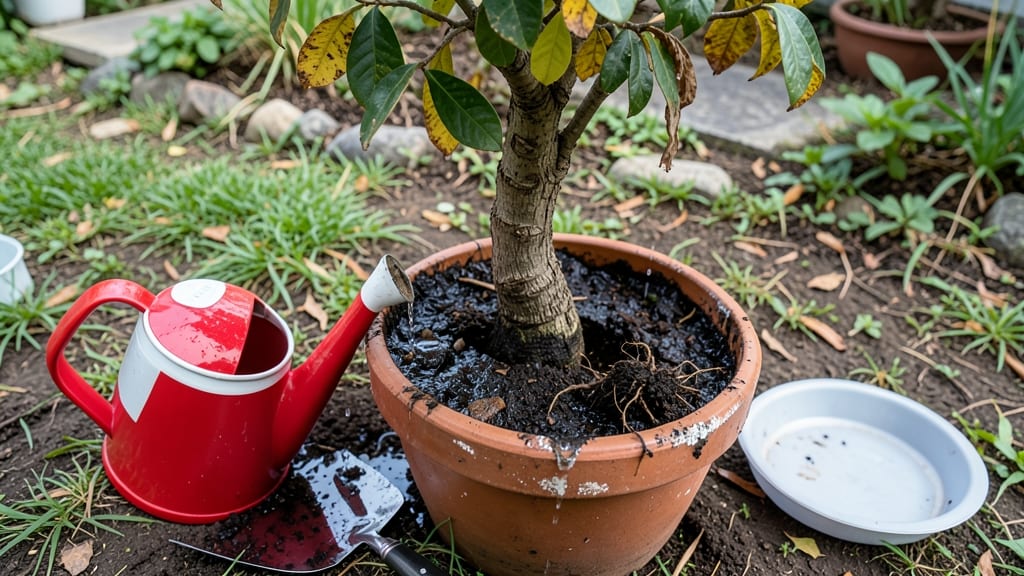
Your overwatered money tree plant’s drooping leaves and yellowing foliage scream one message: it’s drowning. 🌱 I’ve nursed more of these tropical beauties back from the brink than I’d like to admit, and the fix is simpler than you’d think—no fancy tools or expensive products required.
The root of the problem (pun intended) is usually soggy soil and poor drainage. Most people water on a schedule, but tropical plants like the money tree need their soil to dry out between waterings.
That’s why you’ll see leaves turning yellow or brown at the edges—it’s not a disease, it’s a cry for air. By the end of these three steps, you’ll have a plant that’s not just surviving but thriving again.
The leaves will return to their glossy green, and those telltale signs of stress will disappear within weeks. All it takes is a little patience and the right approach. First, stop watering immediately and let the soil dry out completely.
Then, gently remove the plant from its pot to check the roots—if they’re mushy or black, they’ve been overwatered. Trim away the damaged roots with clean scissors, and replant in fresh, well-draining soil mixed with perlite or sand.
Prevent future overwatering by using a pot with drainage holes and only watering when the top inch of soil feels dry. A moisture meter or even your finger can tell you when it’s time to water again. Trust me, your money tree will thank you for the break.
The Real Culprits Behind Soggy Roots
Your money tree (Pachira aquatica) thrives on balance—too much water, and its roots suffocate. But why does this happen? Overwatering isn’t just about pouring too much H2O into the soil.
It’s a mix of environmental factors, human habits, and even the plant’s own biology. Let’s break down the science behind soggy roots and how they lead to an overwatered money tree.
Money trees hate "wet feet." If your pot lacks drainage holes or the soil retains water like a sponge, excess moisture lingers around the roots. Here’s why this is deadly:
- Oxygen Deprivation: Roots need oxygen to respire (yes, they "breathe"!). Water-filled soil displaces air, starving roots of the O2 they need to process nutrients. Without oxygen, roots can’t absorb water or minerals efficiently—leading to root rot (a fungal or bacterial infection that turns roots mushy and brown).
- Soil Compaction: Heavy or clay-based potting mixes compact when wet, creating airless pockets. This traps water against the roots, accelerating decay. Even "well-draining" mixes can fail if they’re not fluffed up with perlite or orchid bark.
- Salt Buildup: Over time, dissolved minerals (from tap water or fertilizers) accumulate in soggy soil. High salt concentrations draw water out of roots through osmosis, dehydrating them even as the soil stays wet. This creates a vicious cycle: the plant wilts, you water more, and the problem worsens.
💡 Pro Tip: Test your soil’s drainage by filling a pot with water and timing how long it takes to drain. If it holds water for more than 2 hours, your mix is too dense. Add 20–30% coarse sand or perlite to improve airflow.
Most people overwater because they follow a time-based routine ("Water every Tuesday!") instead of a plant-based one. But money trees are tropical survivors—they’re used to short, intense rainfalls followed by dry spells. Here’s how rigid schedules backfire:
- Ignoring Soil Moisture: A schedule assumes consistent conditions, but humidity, temperature, and pot size change how fast soil dries. For example:
- 🌡️ Low humidity (e.g., winter indoors): Soil dries faster → watering "on time" keeps it wet too long.
- 🏺 Small pots: Roots fill the space quickly, soaking up water faster than larger containers.
- 🌿 New growth: Active leaves transpire more water, but overwatering can drown the roots supporting them.
- The "Topsoil Test" Illusion: Poking the top inch of soil feels dry, but the bottom 50% of the pot might still be soggy. Roots extend deep, and only checking the surface leads to partial drowning.
- Fertilizer Confusion: Fertilizers (especially liquid ones) increase a plant’s thirst temporarily. If you fertilize and water on schedule, you’re essentially double-dosing moisture.
✨ Actionable Fix: Switch to the "Finger Test"—stick your finger 2–3 inches deep into the soil. If it feels damp, wait. If it’s bone-dry, water thoroughly until it drains from the bottom.
Your money tree isn’t just reacting to your watering habits—it’s also at the mercy of its surroundings. These factors can trick you into overwatering:
| Factor | How It Causes Overwatering | Solution |
|---|---|---|
| 🌡️ Low Light | Plants photosynthesize less, so they transpire (sweat) slower. Soil stays wet longer, and you assume it’s thirsty. | Move to bright, indirect light (e.g., near a window with sheer curtains). |
| 💨 Humid Air | High humidity slows evaporation from the soil surface, making it seem dry when it’s not. | Use a hygrometer (aim for 40–60% humidity). Add a fan for airflow if needed. |
| 🏠 Cold Drafts | Cool air reduces root activity, so the plant absorbs water more slowly—leading to waterlogged roots. | Keep away from AC vents, doors, or windows that drop below 60°F (15°C). |
| 🌧️ Recent Rain or High Humidity Outdoors | If you bring a money tree inside after rain, the soil may still be saturated for days. | Let it air out for 24 hours before repotting or watering. |
🔥 Hot Tip: Group plants together to create a microclimate—they’ll regulate humidity and temperature better than solo pots.
Overwatering creates the perfect petri dish for pathogenic fungi like Phytophthora or Pythium. These microbes thrive in waterlogged conditions and:
- Clog root pores: Fungal hyphae (thread-like structures) block the root’s ability to absorb water, causing wilting despite wet soil.
- Release toxins: Some fungi produce root rot-inducing compounds that weaken cell walls, leading to collapse.
- Spread upward: Infected roots can transfer pathogens to stems and leaves, causing leaf spots or yellowing.
🎯 Prevention: Use sterilized potting mix (bake soil at 200°F/93°C for 30 mins to kill pathogens) and avoid overcrowding plants. If you suspect fungus, treat with neem oil or hydrogen peroxide (1 tsp per cup of water).
Revive Your Money Tree Fast
Reviving an overwatered money tree (Pachira aquatica) starts with diagnosing the root of the problem—literally! Below are practical, step-by-step solutions tailored to the most common causes of overwatering, plus prevention tips to keep your plant thriving. Let’s turn that soggy mess into a lush, happy money magnet!
Before diving into fixes, assess the damage. Healthy roots should be firm, white, or light tan.
If they’re: - Mushy, black, or smell foul → Severe rot (needs urgent action). - Brown but still firm → Early stress (can recover with care). - Dry and crispy → Underwatering (unlikely here, but good to confirm).
How to inspect:
- Gently remove the plant from its pot.
- Rinse roots with lukewarm water to remove soil.
- Trim dead roots with sterilized scissors (snip at a 45° angle).
- Pro tip: 💡 Use hydrogen peroxide (3%) on cuts to prevent infection.
Overwatering is usually the villain. Here’s how to fix it based on the cause:
🔥 Fix: soil too compacted or poor drainage
Cause: Roots suffocate in heavy, waterlogged soil. Solution:
- Repot immediately into a terracotta pot (breathable) or a container with drainage holes.
- Use fresh, well-draining soil: Mix cactus/succulent mix (50%) + perlite/pumice (30%) + peat moss (20%).
- Add a layer of gravel at the bottom for extra drainage.
Prevention: ✨ Water only when the top 1–2 inches of soil are dry (stick your finger in to test!). ✨ Avoid saucers—empty excess water within 10 minutes of watering.
🍳 Fix: overwatering frequency
Cause: Watering on a schedule (even if the plant doesn’t need it). Solution: - Let the soil dry out completely between waterings.
For money trees: - Spring/Summer: Water every 10–14 days (less if humid). - Fall/Winter: Water every 3–4 weeks (growth slows). - Bottom-watering trick: Place the pot in a tray of water for 10–15 minutes, then drain. This encourages roots to grow downward.
Prevention: 🌡️ Use a moisture meter ($10 on Amazon) to avoid guesswork. 🎯 Group plants together—they create a microclimate with more stable humidity.
👨🍳 Fix: wrong pot size or material
Cause: Plastic pots trap moisture; pots too large hold excess water. Solution:
- Downsize the pot to 1–2 inches larger than the root ball (money trees hate extra space).
- Switch to terracotta (absorbs moisture) or fabric pots (breathable).
- Line the pot with sphagnum moss for better aeration (optional but helpful).
Prevention: 🔥 Repot every 2–3 years to refresh soil and prevent compaction.
⏰ Fix: seasonal overwatering mistakes
Cause: Watering the same amount year-round (plants need less in winter!). Solution:
- Reduce watering by 50% in winter—growth nearly stops, so roots don’t need moisture.
- Move indoors if temperatures drop below 60°F (15°C)—cold + wet = root rot disaster.
Prevention: 💡 Set a reminder for seasonal adjustments (e.g., “Winter Mode: Water Less!”).
Once you’ve adjusted watering and repotted, give your money tree a health boost:
| Action | How to Do It | Why It Helps |
|---|---|---|
| Prune yellow leaves | Snip off only yellow/brown leaves at the base. | Redirects energy to healthy growth. |
| Fertilize lightly | Use diluted balanced fertilizer (½ strength) every 4–6 weeks in spring/summer. | Replenishes nutrients lost during stress. |
| Increase humidity | Mist leaves 2–3x weekly or use a pebble tray. | Mimics tropical habitat without overwatering. |
| Bright, indirect light | Place near a east or north window. Avoid direct sun. | Prevents leaf scorch while encouraging recovery. |
If roots are 90% mushy, don’t give up—try this:
- Trim all black/mushy roots (even if it looks drastic).
- Soak remaining roots in fungicide (like Neem oil solution or copper fungicide) for 10 minutes.
- Repot in fresh, sterile soil (sterilize by baking soil at 200°F/93°C for 30 mins if possible).
- Skip watering for 1 week, then resume the dry-soil method.
Success rate? Many money trees bounce back in 4–8 weeks with this method!
- ✅ Water only when soil is bone-dry (stick test is key!).
- ✅ Use pots with drainage holes (no exceptions!).
- ✅ Choose fast-draining soil (avoid garden soil or peat-heavy mixes).
- ✅ Adjust seasons—less water in winter, more in summer.
- ✅ Rotate the pot monthly for even light exposure.
Final Thought: Your money tree is tougher than you think! With these fixes, it’ll be back to its braided glory in no time. 💰🌿 Stay patient—revival takes time, but it’s worth it!
Frequently asked questions
Why do my money tree leaves turn yellow when overwatered?
Yellowing leaves signal oxygen deprivation—roots suffocate in soggy soil. The plant can't absorb nutrients, causing leaves to yellow from the bottom up. Check for mushy roots and repot in well-draining mix immediately.
Can I save a money tree with completely black, mushy roots?
Yes, but act fast! Trim all black roots with sterilized scissors, then soak healthy roots in fungicide (like neem oil) for 10 minutes. Repot in fresh, sterile soil and skip watering for 1 week. Many recover within 4-8 weeks with this method!
How often should I water my money tree after reviving it?
Wait until the top 2 inches of soil feel completely dry—usually every 10-14 days in summer, 3-4 weeks in winter. Use the finger test: stick your finger in 2-3 inches deep before watering.
What's the best pot material to prevent overwatering?
Terracotta pots are ideal—they breathe and absorb excess moisture. Avoid plastic containers that trap water. For extra protection, add a layer of gravel at the bottom before soil to improve drainage.
Will my money tree grow back if I've lost most of its leaves?
Prune only the damaged leaves to redirect energy. Keep the plant in bright, indirect light and maintain proper watering. New growth typically appears within 4-6 weeks as roots recover.