
Watering
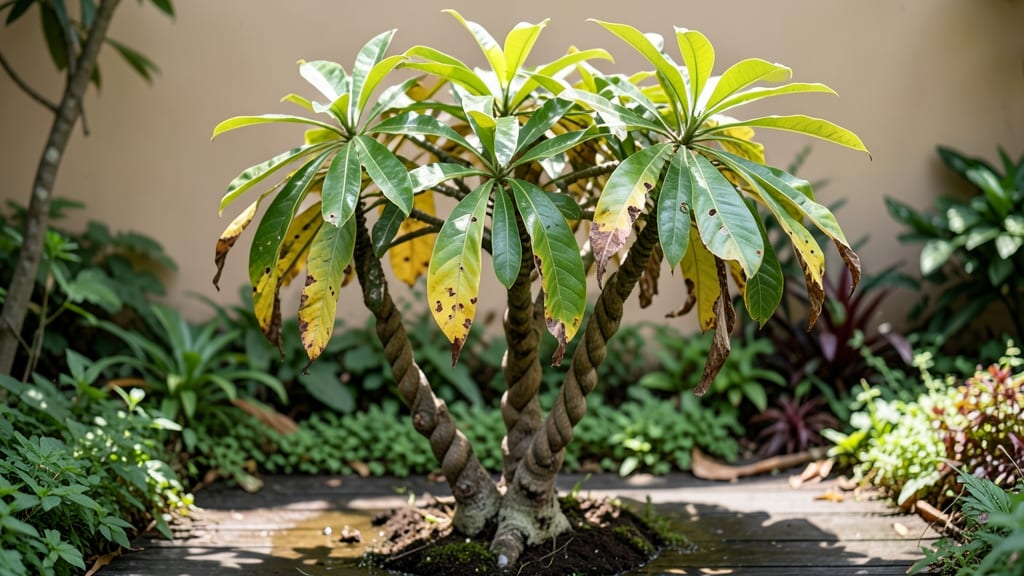
What does an overwatered money tree look like? It starts with sad, yellowing leaves that feel mushy when you touch them—like soggy lettuce. 🌱 I’ve seen this happen after just one week of too-frequent watering, and the drooping branches are the first red flag. Unlike underwatered plants that crisp up, these leaves turn a dull, limp yellow and may even develop brown, mushy edges as roots suffocate.
The real giveaway? The soil smells foul or stays clinging to your fingers like wet clay, never drying out between waterings. Root rot sets in fast—roots turn black and slimy instead of firm and white.
This isn’t just wilting; it’s your plant screaming for help, and the longer you wait, the harder it is to revive.
Here’s the good news: recovery is possible if you catch it early. Let the top 2 inches of soil dry completely before watering again, and repot into fresh, well-draining mix if the roots are already rotting.
Within weeks, you’ll see new growth pushing through, and those once-soggy leaves will firm up as the roots heal.
Confession: I’ve killed three money trees this way—each time learning the hard way that less water is more. Now I check soil moisture with my finger before watering, and my current tree has thrived for over two years without a single yellow leaf. The trick? Patience and a light touch.
Why it happens
Your money tree (Pachira aquatica) thrives in balance, but when watered too frequently, its roots and leaves send distress signals. Understanding the root causes—literally and figuratively—helps you adjust care before damage becomes permanent. Here’s why your plant might be drowning in its own pot:
🌧️ Excessive Watering Frequency
Money trees are tropical plants, but their roots need aeration, not saturation. Overwatering occurs when you water on a rigid schedule (e.g., every 2–3 days) without checking soil moisture. The plant’s roots, adapted to humid but well-draining environments, suffocate in soggy conditions.
When soil stays damp for more than 48 hours, anaerobic bacteria thrive, robbing roots of oxygen and triggering root rot (Phytophthora or Pythium fungi).
Actionable fix: Stick your finger 1–2 inches into the soil—if it’s moist, wait. Use a moisture meter for precision.
🏺 Poor Drainage In The Pot
A money tree’s native swampy habitat doesn’t mean it loves standing water. Without drainage holes, excess water pools at the bottom, creating a waterlogged environment. Clay or terracotta pots help, but even they fail if overwatered.
Compacted soil or a lack of perlite/sand in potting mixes worsens the issue by slowing drainage.
Actionable fix: Repot in a container with drainage holes and amend soil with 20–30% perlite or orchid bark. Elevate pots on saucers to prevent saucer water from seeping back in.
🌡️ Temperature And Humidity Mismatches
Cold drafts or high humidity (above 70%) can trick your money tree into thinking it’s raining constantly. When temperatures drop below 60°F (15°C), the plant’s metabolic rate slows, delaying evaporation.
Meanwhile, humid air reduces transpiration (water loss through leaves), so the soil stays wet longer. This doubles the risk of fungal infections like Botrytis.
Actionable fix: Keep your plant in 65–85°F (18–29°C) with moderate humidity (40–50%). Use a fan to improve airflow if humidity climbs.
🌱 Overpotting Without Adjustments
Big pots hold more water, and money trees in oversized containers dry out slowly. If you repotted into a 2–3 inch larger pot without reducing watering frequency, the excess soil stays damp for weeks. Roots in the outer soil layers may rot before the inner soil dries.
Actionable fix: Choose pots only 1–2 inches larger than the root ball. For mature trees, use self-watering pots with reservoir control to limit saturation.
💧 Tap Water Chemicals And Salinity
Hard water (high in calcium/magnesium) or tap water with chlorine/fluoride can stress roots over time. Salts accumulate in the soil, disrupting osmotic pressure and forcing roots to work harder to absorb water—leading to osmotic shock. This mimics drought conditions while the soil is actually soggy.
Actionable fix: Use filtered, distilled, or rainwater. Flush the soil monthly with plain water to leach out salts.
Revive Your Money Tree Now
Overwatering can feel like a slow-motion disaster for your money tree (Pachira aquatica), but the good news is that with the right steps, you can nurse it back to health—even if it’s looking sad and sorry.
Below, we’ll break down the fixes based on the specific symptoms your plant might be showing, along with preventive tips to keep it thriving long-term.
If your money tree’s leaves are turning yellow (especially starting from the bottom) and feel mushy to the touch, root rot is likely the culprit. Here’s how to tackle it:
🔧 Step 1: Remove the Plant from Its Pot
Gently take the money tree out of its container and shake off excess soil to inspect the roots. Healthy roots should be firm and white or light tan, while rotten roots will be dark, mushy, and smell foul.
🧴 Step 2: Trim the Damaged Roots
Using sterilized scissors or pruning shears, snip off any black, brown, or squishy roots. Cut back to healthy, firm tissue—this helps prevent the rot from spreading further.
🌱 Step 3: Repot in Fresh, Well-Draining Soil
- Choose a pot with drainage holes (if it doesn’t have them, drill some!).
- Use a lightweight, fast-draining potting mix designed for succulents or money trees.
Avoid heavy garden soil, which holds too much moisture. - Add perlite or orchid bark (10-20%) to improve aeration.
💡 Pro Tip:
After repotting, let the soil dry out completely before watering again. Stick your finger 1-2 inches into the soil—if it’s damp, wait another day.
If your money tree’s leaves are drooping but still firm (not mushy), it’s likely overwatered but not yet critically rotten. Here’s how to revive it:
🌧️ Step 1: Stop Watering Immediately
Let the soil dry out completely before watering again. This helps prevent further stress on the roots.
📅 Step 2: Water Only When the Top 2-3 Inches Are Dry
Money trees hate soggy soil. Use the "finger test"—insert your finger into the soil:
- Dry 1-2 inches deep? Water lightly until it drains from the bottom.
- Still damp? Wait another 2-3 days.
💧 Step 3: Water Less Frequently (But Thoroughly)
Instead of daily spritzes, water deeply but infrequently (about once every 1-2 weeks in warm weather, less in winter). Ensure excess water drains away completely—no soggy saucers!
🌡️ Pro Tip:
In humid climates, your money tree may need even less water. If the air is damp, reduce watering by 25-50% to avoid root suffocation.
Brown, crispy leaf edges (while the rest of the leaf stays green) usually mean overwatering + poor drainage. Here’s how to fix it:
⚡ Step 1: Improve Airflow Around the Plant
Brown edges can also signal low humidity or poor circulation. Move your money tree to a bright, indirect spot (like an east or north-facing window) and avoid drafts (AC, fans, or heaters).
🌿 Step 2: Mist the Leaves (But Not Too Much!)
Money trees enjoy moderate humidity. Lightly mist the leaves 2-3 times a week (avoid soaking them). For extra humidity, place the pot on a pebble tray with water (just don’t let the roots sit in it!).
🔄 Step 3: Fluff the Soil for Better Aeration
Over time, soil compacts and holds too much moisture. Gently loosen the top inch of soil with a chopstick or fork to help roots breathe.
✨ Pro Tip:
If the browning is severe, trim the damaged leaves with clean scissors. This encourages new growth and prevents further stress.
Now that your money tree is on the mend, here’s how to prevent overwatering for good:
| Do This ✅ | Avoid This ❌ |
|---|---|
| Use a moisture meter to check soil dryness. | Watering on a strict schedule (plants don’t need clocks!). |
| Choose a terracotta pot (helps soil dry faster). | Letting your plant sit in standing water. |
| Place in bright, indirect light (no harsh sun). | Overcrowding roots (repot every 2-3 years). |
| Bottom-water occasionally (place pot in a tray of water for 10 mins, then drain). | Using heavy garden soil (too dense, holds moisture). |
Before you panic, run through this quick checklist to save your plant:
- Check the roots—are they mushy? Trim the bad ones.
- Let the soil dry out—wait until it’s bone-dry before watering again.
- Repot if needed—fresh soil + drainage = happy roots.
- Adjust your watering routine—less is more!
- Monitor for 2-4 weeks—new growth should appear in 4-6 weeks if the rot isn’t severe.
With these steps, your money tree should bounce back in no time—and you’ll be the proud owner of a lucky, lush green companion (and maybe even some good fortune!). 🍀💚
Frequently asked questions about overwatered money trees
How can I tell if my money tree is overwatered vs. underwatered?
Overwatered money trees have mushy, yellowing leaves that feel soft when touched, while underwatered ones develop crispy, brown edges that stay firm. Check the soil: overwatered pots smell foul and stay clinging to your fingers, while dry soil pulls away easily. Roots tell the story too—overwatered roots turn black and slimy, while underwatered roots shrink and pull away from the pot.
Can an overwatered money tree recover if the roots are rotting?
Yes, but you must act fast! Trim all black, mushy roots with sterilized scissors, then repot in fresh, fast-draining soil with 20% perlite. Let the soil dry completely before watering again. With proper care, new growth typically appears in 4-6 weeks, though severe cases may take longer to fully recover.
Why does my money tree droop when it's overwatered?
Drooping occurs because overwatering suffocates roots, preventing them from absorbing water and nutrients. The plant wilts as it struggles to transport moisture from roots to leaves. Unlike underwatering (which causes crispy leaves), overwatered drooping feels limp and heavy, not brittle. Move to indirect light and let the soil dry out completely to revive it.
How often should I water my money tree to prevent overwatering?
Water only when the top 2 inches of soil are completely dry—typically every 1-2 weeks in warm weather, less in winter. Use the finger test: insert your finger into the soil. If it feels damp, wait another day. Terracotta pots help soil dry faster, while plastic pots keep moisture longer. Always ensure excess water drains away completely.
What's the fastest way to fix brown leaf tips on an overwatered money tree?
Trim the brown tips with clean scissors to encourage new growth, then improve airflow by moving to a brighter spot (but avoid direct sun). Fluff the top inch of soil to help it dry faster, and reduce humidity around the plant. Within 2-3 weeks, you should see fresh green growth pushing through, though severe cases may need repotting in well-draining soil first.