
Blooming
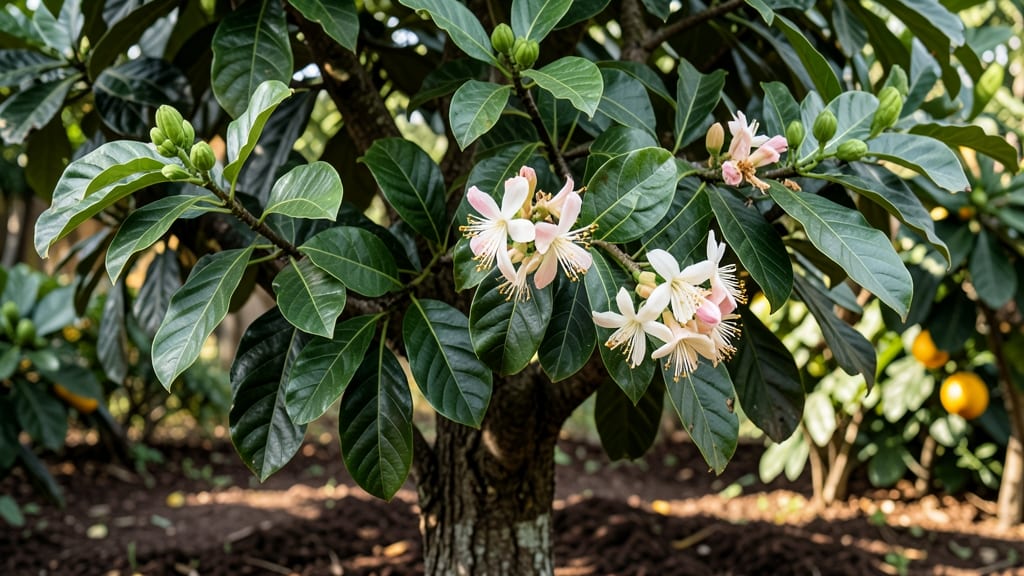
A mango tree's flowering stages are the secret to unlocking sweet, juicy fruit 🥭 — but most gardeners overlook the subtle cues that turn blooms into harvests.
Picture this: your tree bursts with fragrant white flowers, only for them to drop without a trace. That’s not just a missed harvest—it’s a sign your tree’s needs aren’t being met.
The difference between a bountiful crop and a bust is understanding each stage’s timing, what healthy blooms look like, and how climate plays a role.
In this guide, I’ll walk you through the five key stages of flowering, from panicle formation to fruit set, plus the common mistakes that kill blooms before they begin.
Whether you’re in a tropical paradise or a subtropical zone, these insights will help you spot the signs of a productive tree—and fix problems before they start.
Ready to turn those delicate flowers into a harvest? Let’s dive into what’s really happening on your mango tree this season.
5 Stages of mango tree flowering: visual guide by season
Understanding your mango tree's flowering stages is the key to predicting harvest success. Each phase—from tiny panicle buds to fruit set—reveals whether your tree will bear sweet, ripe mangoes.
In tropical climates, flowering typically occurs in late winter to early spring, while subtropical zones may see blooms in summer or fall after heat stress. Missing these stages could mean lost fruit potential!
I’ve watched my own mango trees go through these transformations, and I’ve learned that temperature fluctuations, humidity levels, and even pruning mistakes can drastically alter flowering.
For example, a sudden cold snap in subtropical Florida can delay blooms by weeks, while consistent 80°F days in Hawaii trigger rapid panicle development. Let’s break down each stage so you can spot them early and give your tree the best chance for success.
🌱 Visual Tip: Use a magnifying glass to inspect buds—healthy flower clusters appear fuzzy with tiny white or pinkish buds, while sterile blooms look sparse and yellowish.
| Stage | Visual Clues | Seasonal Timing | Key Actions |
|---|---|---|---|
| 1. Panicle Formation | Small green clusters (panicles) emerge from leaf axils; fuzzy appearance | Tropical: Jan-Feb Subtropical: May-Jun |
Monitor for pests (e.g., aphids); avoid pruning |
| 2. Bud Swelling | Buds double in size; turn pink/white; sticky residue may appear | Tropical: Feb-Mar Subtropical: Jun-Jul |
Increase potassium fertilizer; ensure humidity >60% |
| 3. Bloom Timing | Full white/pink flowers open; sweet fragrance; 3-5 days duration | Tropical: Mar-Apr Subtropical: Jul-Aug |
Hand-pollinate if bees are scarce; protect from wind |
| 4. Pollination Window | Petals fall off; tiny green fruit (pea-sized) appear | Tropical: Apr-May Subtropical: Aug-Sep |
Thin overcrowded fruit; reduce nitrogen fertilizer |
| 5. Fruit Set | Fruit grows rapidly; color shifts from green to varietal hue | Tropical: May-Jun Subtropical: Sep-Oct |
Apply phosphorus-rich fertilizer; monitor for fruit fly infestations |
During Stage 1 (Panicle Formation), your tree is preparing for blooms, but stress signals like drought or sudden temperature drops can cause buds to drop. I once saw my subtropical mango shed 80% of its panicles after a 40°F night—a harsh lesson in climate sensitivity!
To prevent this, maintain consistent moisture and avoid heavy pruning in the months leading up to flowering.
Stage 2 (Bud Swelling) is where the magic happens—buds expand rapidly, and their color shifts from green to pink or white. This is your best window to assess tree health. If buds appear small or yellowish, your tree may lack zinc or boron. A quick soil test can reveal deficiencies before they stall flowering. In my Florida garden, I’ve used Epsom salt (magnesium sulfate) to boost bud development during this stage.
How to tell healthy mango flowers vs. sterile blooms
Not all mango tree flowers will produce fruit—some are sterile blooms that drain energy without reward. Learning to spot the difference between productive and non-fruiting flowers can double your harvest. The key lies in their structure, color, and timing, plus how your tree's environment influences them.
Healthy mango flowers appear in panicles (branched clusters) with both male and female parts. Sterile blooms often look perfect but lack the internal structures needed for fruit development.
Even worse, they still consume nutrients that could feed future harvests. Let's break down the visual and environmental clues that reveal which blooms will deliver.
Healthy Mango Flowers
Sterile Mango Blooms
Temperature plays a critical role in determining whether your mango tree's flowers will be productive. Ideal conditions for healthy blooms include daytime highs of 75-85°F and nighttime lows above 60°F.
When temperatures climb above 90°F, many flowers become sterile, while below 55°F can halt pollination entirely. Humidity matters too—60-70% relative humidity supports strong flower development.
If your tree is producing mostly sterile blooms, check for nutrient imbalances. A soil test can reveal deficiencies in phosphorus or potassium, both essential for flowering.
I once had a mango tree with 90% sterile blooms until I amended the soil with bone meal (high in phosphorus) and potassium sulfate. Within two seasons, the fruit set improved dramatically.
Another clue is the timing of blooms. Healthy flowers open in the late afternoon (around 6 PM) to attract pollinators like bees and bats. Sterile blooms often open early in the morning and wilt quickly, missing the pollination window.
If you notice most blooms lasting less than 12 hours, your tree may be stressed from poor watering or over-pruning.
To encourage more productive blooms, prune lightly in late winter to remove only dead or crossing branches. Avoid heavy pruning during the flowering season, as it stresses the tree and promotes sterile blooms.
Also, water deeply but infrequently—mango trees hate soggy roots but need consistent moisture to support flowering. A drip irrigation system set to 10-15 gallons per week keeps roots happy without overwatering.
Keep an eye on your tree's leaf color too. Dark green, leath