
Pruning
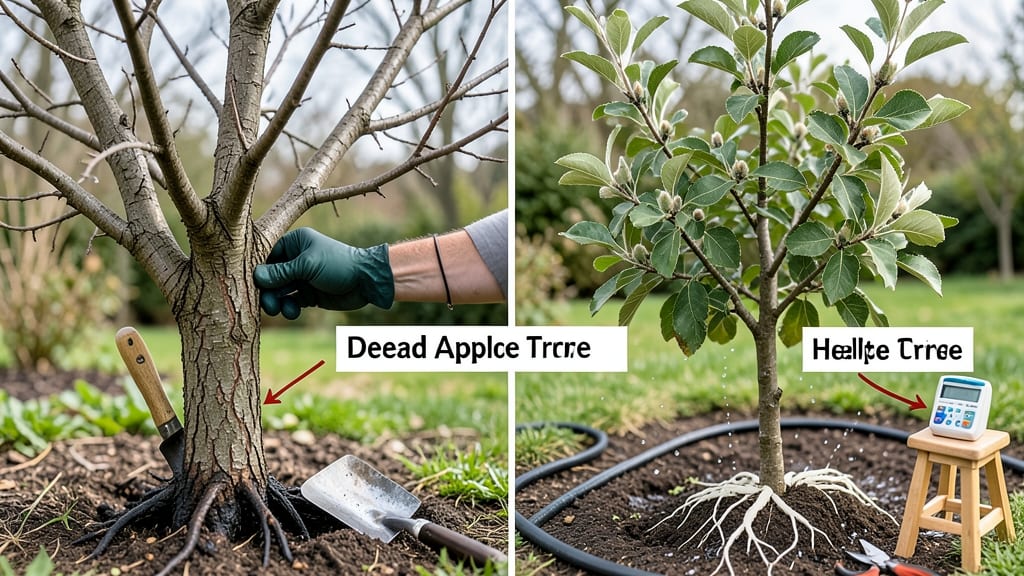
Determining if your apple tree is dead requires checking for green bark on branches, new bud growth in spring, or fresh shoots—even if leaves appear brown or absent. These signs indicate life, so verify before deciding to prune or replace it.
Apple trees often enter dormancy during winter, which can mimic death with brown leaves and bare branches. 🌱 The key is looking for subtle signs of life—like green bark under the surface or tiny buds swelling in early spring.
I’ve seen trees that appeared lifeless for months only to burst back to life when conditions improved. Even if the canopy looks dead, roots may still be active underground.
For a more thorough check, gently scratch the bark on smaller branches with a knife or tool. If you see green beneath, the tree is alive. 💚 Younger trees are more resilient, while older ones may take longer to show recovery signs.
Patience is crucial—don’t rush to prune or replace until you’ve confirmed the tree’s condition through multiple observations.
💡 In This Article
- How to Diagnose Apple Tree Health Beyond Obvious Signs
- Step-by-Step Apple Tree Revival Guide for Beginners
How to diagnose apple tree health beyond obvious signs
Apple trees exhibit dormancy—a survival mechanism triggered by cold temperatures and reduced sunlight—rather than true death, even when they appear lifeless. 🌿 The key difference lies in the cambium layer, a thin layer of living cells just beneath the bark that produces new growth.
In healthy trees, this layer remains active year-round, storing nutrients and preparing for spring. When you see green bark under the outer layer (even if it’s brown or cracked), it’s a clear sign the cambium is still alive and capable of reviving.
Bud formation is another critical indicator, as buds contain meristematic cells—undifferentiated cells that can develop into leaves, flowers, or branches. In late winter or early spring, healthy buds will begin to swell (often visible as tiny bumps along branches).
A simple test involves gently squeezing a bud between your fingers: if it feels firm and plump, the tree is likely alive. 🌱 For example, a ‘Fuji’ apple tree might show buds swelling by mid-March in temperate climates, even if the tree looks bare.
Compare this to true death, where buds remain shrunken and brittle.
Root vitality is often overlooked but crucial—roots can stay alive for years even if the above-ground parts appear dead. To test this, use a screwdriver or knife to probe the soil around the tree’s base.
If the soil resists slightly (indicating moisture retention) and you find white or light-colored roots (not black or mushy), the tree may still recover. 💧 In contrast, a completely dead tree will have no resistance in the soil and roots that crumble easily.
This method works best in early spring when roots are most active before new growth begins.
Seasonal variations also play a role—what appears dead in winter might be dormant.
For instance, apple trees in USDA Zone 5 (where winters drop below -20°F) may lose leaves entirely but survive if the cambium remains intact. 🌡️ The temperature threshold for irreversible damage is typically <-30°F for most apple varieties, though grafted trees (like those on M.9 rootstock) are more vulnerable.
Always observe the tree across multiple seasons before concluding it’s dead.
Another subtle clue is the texture of branches. Live branches feel slightly springy when bent, while dead ones snap like dry sticks. 🌳 This test works best on 1/4-inch-thick branches—thicker limbs may remain rigid even if the tree is dying.
For a deeper check, cut a small section of bark (about 2 inches long) and look for green tissue beneath. If present, the tree is alive; if brown and dry, it’s likely dead.
This method is especially useful in early spring, when sap flow increases and signs of life become more visible.
Finally, consider the age of the tree. Young apple trees (under 5 years old) recover more easily than mature ones, as their root systems are still developing. 🌱 Older trees may take 2-3 years to show signs of revival, even after severe stress.
For example, a 10-year-old ‘Gala’ apple tree might appear dead after a harsh winter but could produce new shoots by mid-summer if the roots remain viable. Patience and consistent monitoring are key—don’t give up until you’ve ruled out all possibilities.