
How To
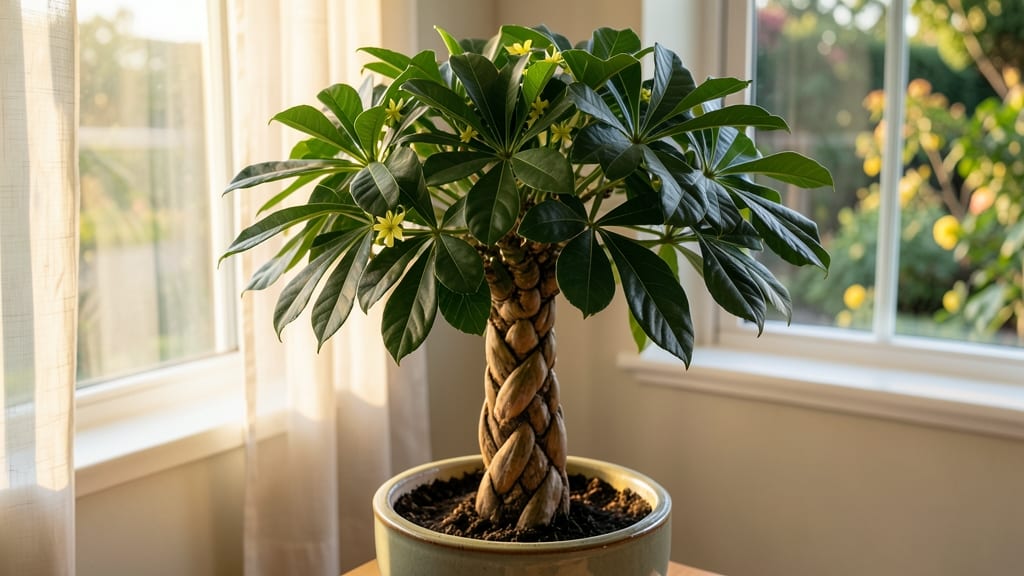
A money tree grows between 3 and 10 feet tall indoors, depending on care and conditions — but you can shape its height naturally with the right techniques.
Picture this: your 💵 Money Tree stretching toward the ceiling, branches scraping the light fixture, while you watch helplessly. The good news? This isn’t inevitable.
With proper pruning, light management, and a few simple care tweaks, you can keep your money tree at a height that fits your space—whether you want a compact tabletop plant or a statement piece under 6 feet.
Indoor conditions play a huge role in how tall your money tree grows. Too much light or neglecting pruning can send it skyrocketing, while balanced care and strategic trimming keep it in check.
Below, I’ll break down the science behind its growth, how to control its height without stressing the plant, and the 5 easiest pruning methods to encourage bushier, manageable growth.
Ready to take control? You’ll learn exactly when to prune, how often to rotate your plant for even growth, and the one lighting mistake that turns your money tree into a vertical tower. Let’s get started.


Money tree height guide: average growth rates and mature sizes
The money tree (Pachira aquatica) is a tropical favorite known for its striking braided trunk and glossy leaves. But how tall will your money tree grow? The answer depends on its growth stage, genetics, and your indoor environment.
Without intervention, these plants can reach 10 feet indoors, but most gardeners keep them between 3 to 6 feet for manageable care.
Understanding your money tree’s natural growth timeline helps set realistic expectations. Seedlings grow slowly at first, then accelerate during their juvenile phase (years 1-2). After that, growth slows slightly as they mature, but they’ll continue climbing if given enough space and nutrients.
Indoor vs. outdoor growth differs dramatically. Outdoors in tropical climates, money trees can exceed 20 feet, but indoors, their height is limited by pot size, light exposure, and pruning habits. Even in ideal conditions, most indoor money trees max out at 8 feet without aggressive care.
| Growth Stage | Height Range (Indoors) | Timeframe | Key Influencers |
|---|---|---|---|
| Seedling | 6-12 inches | 0-6 months | Genetics, soil quality |
| Juvenile | 1-3 feet | 6 months-2 years | Light exposure, pot size |
| Mature (Standard) | 5-10 feet | 2-5+ years | Pruning, humidity, nutrients |
| Dwarf Varieties | 3-5 feet | 3-5 years | Genetics, regular pruning |
Your money tree’s growth rate accelerates during spring and summer when it enters its active growth phase.
In these months, you might see 6-12 inches of new growth if conditions are ideal. Low light or nutrient deficiencies can stunt growth, while bright indirect light and balanced fertilization encourage faster, healthier development.
Humidity plays a surprising role in height control. Money trees native to tropical regions thrive in 50-70% humidity. In dry indoor air (common in homes with 30-40% humidity), they’ll grow taller and leggier as they stretch toward moisture.
A simple pebble tray or humidifier nearby can keep your plant bushier and more compact.
Pot size directly impacts vertical growth. Money trees become root-bound when their roots fill the container, triggering rapid upward growth. If you notice roots circling the pot’s bottom, it’s time to upgrade to a 2-4 inch larger pot.
This slows height growth by redirecting energy to root expansion rather than stem elongation.
Genetics also determine your money tree’s potential height. Some varieties, like the ‘Braided Money Tree’, naturally stay shorter (3-5 feet) when properly cared for, while others may push toward 8-10 feet. Always check your plant’s breeding history—seed-grown trees tend to grow taller than grafted or propagated clones.
Light is the most critical factor for controlling height. Place your money tree near an east or north-facing window for bright indirect light. Avoid south-facing windows, which can scorch leaves and cause etiolation (excessive stretching).
Rotate the pot quarter-turns every 2 weeks to ensure even light exposure and balanced growth.
To maintain a compact money tree, combine these strategies: prune top growth in early spring, use well-draining soil, and fertilize lightly during active growth months. With consistent care, you can keep your money tree at a manageable 3-5 feet while enjoying its lush, tropical beauty indoors.
Remember, every money tree grows at its own pace. Patience and observation are key—watch for new leaf growth and stem thickening to gauge your plant’s progress. With the right approach, you’ll have a thriving money tree that fits your space perfectly! 🌿
5 Natural pruning and care techniques to control money tree height
Your money tree (Pachira aquatica) might grow tall quickly, but with the right techniques, you can guide its height naturally. The key is balancing pruning, light exposure, and root management to encourage bushier growth instead of vertical stretching.
These methods keep your plant healthy while preventing it from becoming a ceiling hazard.
Start by understanding your money tree’s growth habits. Without intervention, it can reach 5 to 10 feet indoors, but strategic care can limit it to a more manageable 3 to 5 feet.
The goal is to redirect energy from height to fuller foliage, making your plant look lush and intentional rather than leggy.
- 🌿 1. Strategic Pruning: Trim top growth in early spring to encourage branching. Cut just above a leaf node to promote new shoots.
- 🪴 2. Root Pruning: Repot every 2-3 years to trim root-bound roots, slowing vertical growth while boosting bushiness.
- ✂️ 3. Pinching Young Shoots: Pinch off new growth tips on stems to stimulate side branches, creating a fuller shape.
- ☀️ 4. Light Adjustment: Move to bright indirect light (e.g., east-facing window) to prevent leggy stretching caused by low light.
- 💧 5. Balanced Watering: Let soil dry slightly between waterings to avoid overwatering, which can stress the plant and spur rapid vertical growth.
For height control, focus on pruning in late winter or early spring when the plant is entering its active growth phase. Cut back 1/3 of the tallest stems to redirect energy toward lateral branches. Always use clean, sharp pruners to avoid damaging the plant and risking disease.
If your money tree is already top-heavy, reduce the risk of tipping by pruning lower branches first. This lowers the center of gravity while encouraging new growth at the base. Pair this with a heavier pot (like one made of ceramic) to add stability without sacrificing aesthetics.
Adjusting light exposure is another game-changer. Money trees stretch toward light, so if you notice long, sparse stems, move the plant closer to a bright window or supplement with a grow light. Avoid direct sunlight, which can scorch the leaves and stress the plant further.
Finally, monitor your money tree’s root health. Root-bound plants grow taller as they compete for space. Repot into a container just 1-2 inches larger than the current one, and trim any circling roots. This encourages outward growth and keeps your plant compact and sturdy.