
How To
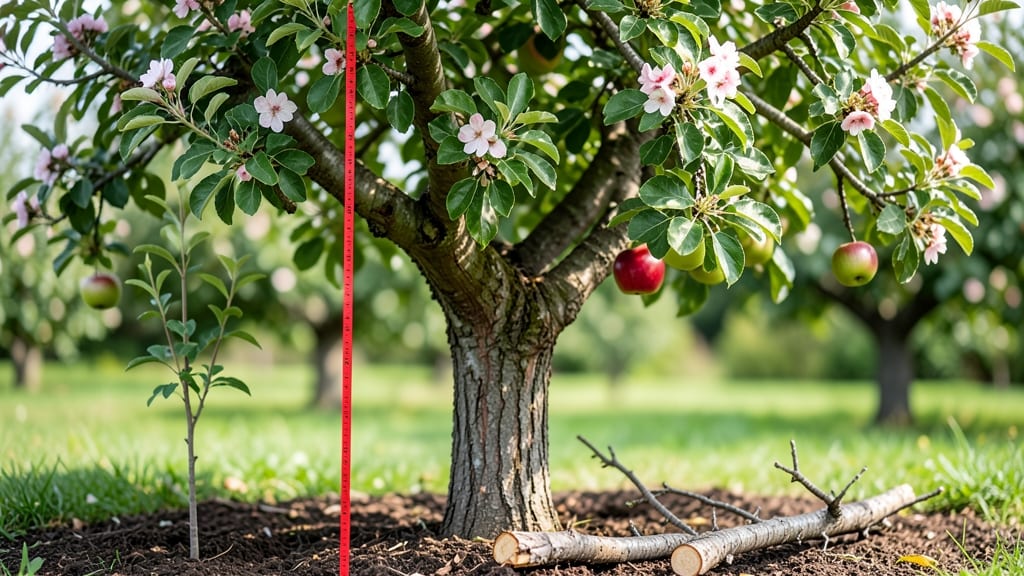
An apple tree 🍎 can grow anywhere from 6 feet to towering 40 feet tall, depending on its rootstock and growing conditions.
If you’ve ever dreamed of growing your own apples but wondered whether your backyard could accommodate a towering tree, the answer depends entirely on the rootstock—some varieties stay compact while others reach skyward like giants.
For home gardeners with limited space, dwarf varieties like those grafted onto M9 rootstock max out at 6-12 feet, making them perfect for small yards or even containers. Meanwhile, standard varieties on seedling rootstock can easily stretch to 20-40 feet, requiring careful planning and pruning.
In this guide, I’ll break down the height ranges by rootstock type, share tips for controlling growth, and help you choose the right size for your space—whether you’re working with a tiny balcony or a sprawling orchard.


Apple tree height limits by rootstock: dwarf to standard sizes explained
Choosing the right apple tree rootstock determines whether your backyard will host a 10-foot dwarf tree or a 30-foot giant. The rootstock—essentially the tree’s "foundation"—controls not just height but also growth rate, fruit production, and cold hardiness.
For example, M9 rootstock keeps trees under 10 feet, while MM.111 can send branches soaring past 25 feet. Understanding these differences helps you plan your orchard or container garden with precision.
Your space constraints and gardening goals should guide your rootstock choice. A dwarf apple tree thrives in urban backyards or even large containers, while standard varieties need acres of land to avoid shading out neighboring plants.
Below, we break down the three main categories—dwarf, semi-dwarf, and standard—along with their mature heights, growth rates, and ideal spacing requirements to ensure your apple tree reaches its full potential without overcrowding.
| Rootstock Type | Mature Height Range | Growth Rate (Annual) | Ideal Spacing (Feet) | Best For |
|---|---|---|---|---|
| Dwarf (e.g., M9, B9) | 6–12 ft | 1–2 ft/year | 8–12 ft apart | Containers, small yards, urban gardens |
| Semi-Dwarf (e.g., MM.106, MM.111) | 12–18 ft | 2–3 ft/year | 15–20 ft apart | Home orchards, medium-sized yards |
| Standard (e.g., Seedling, Antonovka) | 20–40 ft | 3–5 ft/year | 30–50 ft apart | Commercial orchards, rural properties |
Dwarf rootstocks like M9 and B9 are the best choices for small spaces, maturing between 6 and 12 feet tall. These trees grow slowly—about 1–2 feet per year—making them ideal for container gardening or backyards with limited room.
However, their compact size comes with a trade-off: smaller fruit yields compared to larger trees. If you’re growing apples for personal use rather than commercial harvests, this compromise is well worth it for the convenience.
Semi-dwarf rootstocks, such as MM.106 and MM.111, strike a balance between size and productivity. These trees typically reach 12–18 feet at maturity and grow faster than dwarfs, adding 2–3 feet annually. They’re perfect for home orchards where you want a manageable tree without sacrificing fruit production.
For optimal growth, space semi-dwarf apple trees 15–20 feet apart to allow airflow and sunlight penetration, reducing the risk of disease.
Standard rootstocks, often grown from seeds or older varieties like Antonovka, are the tallest apple trees, reaching heights of 20–40 feet. These giants grow rapidly—3–5 feet per year—and produce abundant fruit, but they require significant space: 30–50 feet apart to avoid shading and competition.
Standard trees are best suited for rural properties or commercial orchards where space isn’t a constraint. Their towering presence also makes them less practical for urban or suburban settings.
When selecting a rootstock, consider your climate zone as well. Some dwarf rootstocks, like M9, struggle in colder regions due to poor cold hardiness. In contrast, MM.106 and MM.111 are more resilient and better suited for USDA Zones 4–8.
Always check the rootstock’s hardiness rating before planting to ensure your tree survives winter. For example, if you live in Zone 5, a B9 rootstock might be riskier than MM.111.
Another critical factor is soil drainage. Dwarf rootstocks, in particular, are sensitive to waterlogged soil, which can lead to root rot. Amend your planting site with organic matter like compost to improve drainage and aeration.
For container-grown dwarf apple trees, use a well-draining potting mix with perlite or sand to prevent soggy roots. Proper drainage ensures your tree’s root system stays healthy, supporting optimal growth and fruit production.
If you’re planting multiple apple trees, pollination compatibility becomes a key consideration. Most apple varieties require cross-pollination from a different cultivar to produce fruit. For example, a Granny Smith tree on M9 rootstock needs a pollinator like Gala or Fuji planted nearby.
When choosing rootstocks for an orchard, select varieties with compatible flowering times to maximize pollination success. Dwarf trees make this easier in small spaces since you can plant two compatible varieties close together.
Pruning plays a vital role in managing your apple tree’s height, especially for dwarf and semi-dwarf varieties. Regular pruning not only controls size but also improves air circulation and fruit quality. For dwarf trees, prune in late winter or early spring to remove dead, crossing, or overcrowded branches.
Use sharp pruning shears to make clean cuts just above outward-facing buds. Avoid heavy pruning in the fall, as it can stimulate new growth that won’t harden off before winter.
For those with limited space, consider <
Best rootstocks for small gardens vs. large orchards
Choosing the right apple tree rootstock can transform your backyard into a fruit-bearing paradise—or turn your orchard into a high-yielding operation. For urban gardeners with limited space, dwarf rootstocks like M9 and B9 are game-changers, keeping trees under 12 feet while delivering abundant fruit.
Meanwhile, commercial growers rely on MM.106 or MM.111 to support towering trees up to 30 feet, maximizing yield per acre.
The key difference lies in growth vigor and fruit production trade-offs. Dwarf rootstocks produce smaller, earlier-bearing trees but require more frequent pruning to maintain shape. In contrast, standard rootstocks demand spacious orchards but reward growers with longer-lived trees and higher overall yields.
Let’s break down the best options for your space and goals.
Small Garden Rootstocks (Dwarf/Semi-Dwarf)
✅ Pros
- Compact size (6-12 ft)
- Faster fruiting (2-3 years)
- Easier harvesting (no ladders)
- Ideal for containers (M9, B9)
❌ Cons
- Smaller fruit size
- Limited lifespan (15-20 years)
- More pruning needed
- Sensitive to drought
Large Orchard Rootstocks (Standard)
✅ Pros
- Larger fruit yield
- Longer tree life (30+ years)
- Drought-resistant (MM.106)
- Better for windy areas
❌ Cons
- Requires more space (20-40 ft)
- Slower to fruit (5-7 years)
- Harvesting challenges (ladders needed)
- Higher maintenance
For urban gardeners, M9 rootstock is the gold standard—reaching just 8-10 feet and thriving in containers. Pair it with dwarf apple varieties like 'Liberty' or 'Honeycrisp' for a low-maintenance harvest.
Just remember: these trees need annual pruning to prevent overcrowding and ensure airflow. I’ve seen M9 trees in my neighbor’s 5-gallon buckets producing 50+ apples per season!
On the other hand, commercial orchards swear by MM.106 or MM.111 rootstocks, which can support trees up to 25-30 feet. These rootstocks are vigorous, making them perfect for heavy-bearing varieties like 'Gala' or 'Fuji'.
The trade-off? You’ll need heavy-duty pruning tools and regular thinning to manage the canopy. Without proper care, these trees can become unmanageable—literally reaching the roof of a two-story house!
If you’re torn between yield and space, consider semi-dwarf rootstocks like B9 or Budagovsky 9. They strike a balance, growing 12-16 feet tall while producing larger fruit than full dwarfs.
My B9 apple tree in the backyard now stands at 14 feet and has been a fruit bomb for the past 5 years—no ladders required!
One final tip: always check your local climate before choosing a rootstock. MM.106, for example, handles poor soil and drought like a champ, while M9 struggles in hot, humid summers.
For cold climates, Antonovka rootstock is a hardy choice that keeps trees compact while enduring sub-zero temperatures.