
Trees
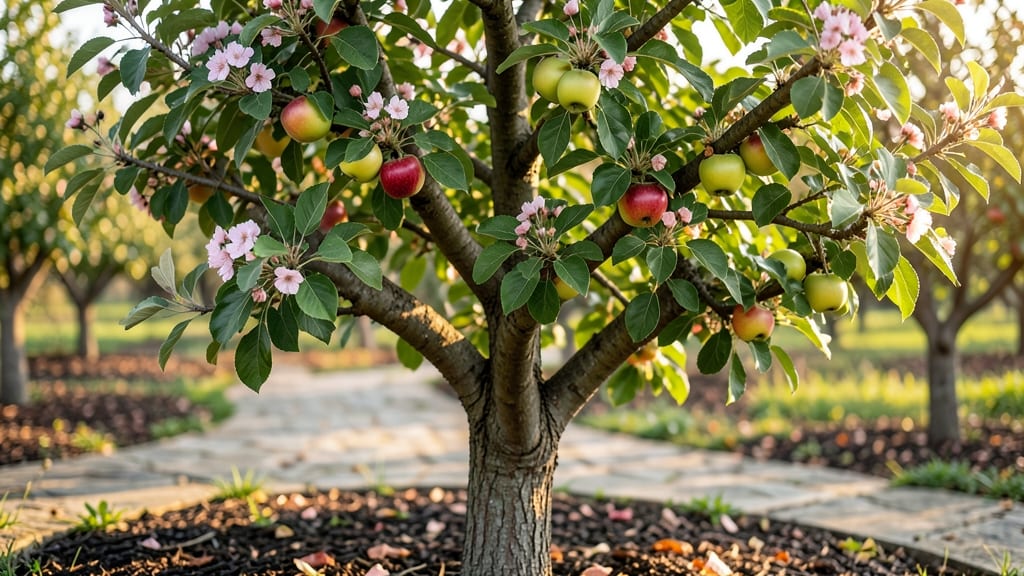
One apple tree can produce fruit, but it needs cross-pollination from another compatible tree to develop full yields. Self-pollinating varieties may still bear fruit, though often in smaller quantities without external pollinators like bees.
A single apple tree can set fruit through self-pollination, but the quality and quantity depend heavily on genetic compatibility and environmental factors. 🌳 Most commercial varieties require another tree within 50 feet to ensure proper fertilization, as apple flowers need pollen from a different genetic line for optimal fruit development.
Even self-pollinating types like 'Liberty' may produce fewer apples without bee activity, since wind alone is less efficient at transferring pollen between blossoms.
What's fascinating is how temperature plays a role—apple trees need consistent spring weather between 45°F and 85°F for successful pollination. Too cold delays blooming, while extreme heat can cause flowers to drop before pollinators arrive.
This is why many home growers plant two different varieties together, creating a natural pollination network that boosts yields by up to 300%.
💡 In This Article
- How Apple Tree Pollination Works for Fruit Production
- Best Apple Tree Varieties for Single-Tree Fruit Yields
How apple tree pollination works for fruit production
Apple trees rely on a precise biological process called pollination to produce fruit. The flowers contain both male and female reproductive parts, but they need pollen from a genetically different tree to trigger fertilization.
When bees or wind transfer pollen between blossoms, the ovules in the flower's ovary develop into seeds, while the surrounding tissue grows into the apple itself. This cross-pollination is crucial because it prevents inbreeding depression, which would lead to weaker, less viable fruit.
The efficiency of this process depends on several factors. Bees are far more effective pollinators than wind, transferring pollen with 90% accuracy compared to wind's 10-30%. 🐝 The best pollination occurs when trees bloom simultaneously—typically within a 5-7 day window—allowing bees to move freely between compatible varieties.
Temperature also matters: ideal pollination happens between 50°F and 75°F, as colder weather delays blooming while heat above 85°F can cause flower drop. This is why commercial orchards often plant multiple varieties in close proximity.
Genetic compatibility plays a surprising role too. While some varieties like 'Liberty' can self-pollinate, their fruit may develop irregularly without cross-pollination. The pollen from one variety often contains different genetic markers than another, which can enhance fruit quality—think of it like mixing paint colors to create richer hues.
For example, pairing 'Granny Smith' (a tart variety) with 'Gala' (sweet) can produce apples with balanced flavors that neither variety achieves alone.
Here's what happens when pollination fails: flowers drop off without setting fruit, or the apples that do form are small, misshapen, or core-less. This is why home growers often see sparse harvests from single trees—even self-pollinating varieties need some external pollen to reach their full potential.
The key is planting at least two different varieties within 50 feet of each other to ensure adequate pollinator access and genetic diversity.
Timing is everything in apple pollination. Trees typically bloom in spring when day lengths increase and temperatures stabilize. The process begins when the tree's hormonal signals trigger flower opening, followed by a 3-5 day window where pollen is most receptive.
Missing this window—due to late frosts or early heat waves—can reduce fruit set by up to 70%. This is why experienced growers monitor bloom times and plant varieties with staggered flowering periods to extend the pollination season.
For those with limited space, consider dwarf apple trees that can be planted in containers. These still require cross-pollination, but their compact size makes it easier to place two compatible varieties close together.
The variety 'Enterprise' is a great choice for single-tree setups, as it's partially self-fruitful while still benefiting from cross-pollination. Just remember: even the best self-pollinating trees will produce more abundant harvests with a compatible neighbor nearby.