
How To
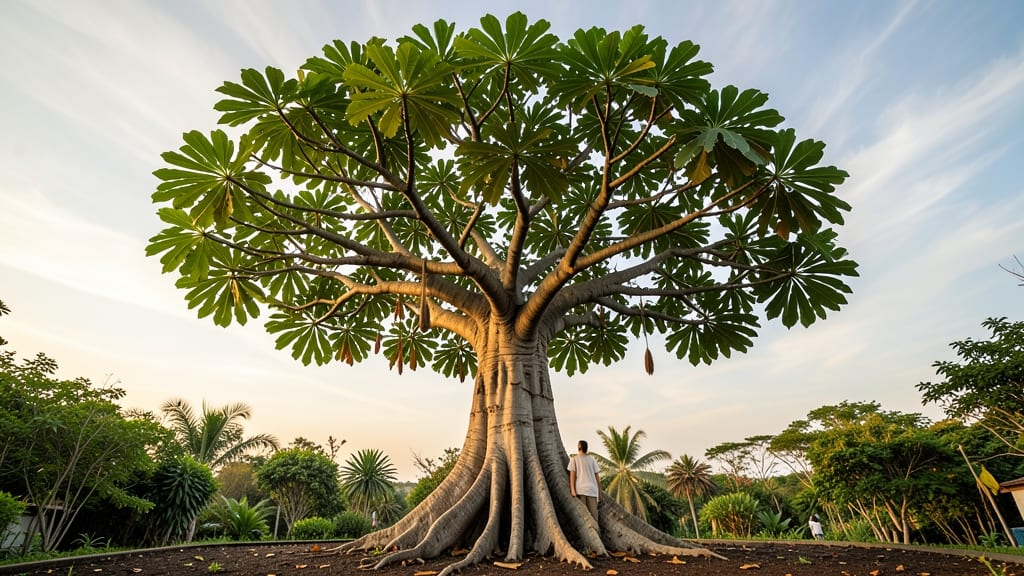
A kapok tree can grow how tall can a kapok tree grow up to 200 feet—taller than a 20-story building—making it one of nature’s most impressive giants 🌳.
If you’ve ever dreamed of planting a tree that reaches the sky, you’ll want to know how genetics, climate, and soil work together to push its height to these extreme limits.
But here’s the catch: while its potential is jaw-dropping, growing a kapok tree to its full height in your backyard is a big challenge.
Most gardeners plant it for its shade or ornamental value, not its sky-piercing growth—yet understanding its limits can help you decide if it’s the right fit for your landscape.
In this guide, I’ll break down the factors that determine how tall a kapok tree can grow, from its natural habitat in tropical climates to the practical realities of cultivating one in your own space.
You’ll learn how to maximize its height (or keep it manageable), the ideal conditions for growth, and whether your climate zone can support this towering beauty.


Kapok tree height limits by species: how tall can they Really Grow?
The kapok tree (Ceiba pentandra), also called the silk-cotton tree, is a tropical marvel that can reach staggering heights—somewhere between 100 to 200 feet under ideal conditions. But not all kapok trees grow this tall.
The species Ceiba pentandra typically dominates the height charts, while its cousin, Ceiba aesculifolia, stays shorter at 60 to 100 feet. These differences stem from genetic variations and environmental factors. For perspective, that’s taller than a 15-story building!
Documented records show a 200-foot kapok tree in the Amazon basin, while most mature trees in cultivation average 120 to 150 feet. The genetic potential of Ceiba pentandra is unmatched, but achieving such heights requires perfect growing conditions.
Even in its native habitats, not every tree reaches its maximum height due to competition, disease, or poor soil.
| Species | Average Height | Maximum Recorded Height | Growth Rate (Per Year) |
|---|---|---|---|
| Ceiba pentandra | 120–150 ft | 200 ft (Amazon) | 3–5 ft |
| Ceiba aesculifolia | 60–100 ft | 120 ft (rare) | 2–4 ft |
| African Baobab | 80–100 ft | 160 ft (Madagascar) | 1–3 ft |
| Eucalyptus regnans | 200–250 ft | 370 ft (Australia) | 4–6 ft |
Comparing kapok trees to other giants: height isn’t everything—growth rate and adaptability matter too!
Genetics play a critical role in determining a kapok tree’s height potential. Ceiba pentandra has a stronger vertical growth gene than Ceiba aesculifolia, which is why it dominates in height records.
However, even within Ceiba pentandra, individual trees can vary by 20 to 30 feet due to localized genetic mutations or hybrid vigor. If you’re dreaming of a 200-foot kapok tree in your backyard, you’ll need to start with a high-quality sapling from a reputable nursery.
Comparing kapok trees to other giants like the African baobab or eucalyptus reveals fascinating insights. While eucalyptus can grow even taller (up to 370 feet in Australia), kapok trees have a faster growth rate—gaining 3 to 5 feet per year in ideal conditions.
This makes them a practical choice for those seeking rapid vertical expansion without waiting decades. The trade-off? Kapok trees require tropical climates to reach their full potential.
Soil quality and nutrient availability also influence height. Kapok trees thrive in well-drained, fertile soils rich in nitrogen and phosphorus. In nutrient-poor soils, their growth can stall at half their potential height.
For example, a kapok tree in Amazon floodplains may reach 180 feet, while one in drier regions might only hit 80 feet. This is why soil testing is essential before planting.
Pruning can accelerate or limit height growth. If you want a taller kapok tree, avoid heavy pruning of the main trunk. Instead, focus on removing lower branches to reduce competition for nutrients.
However, if you’re growing kapok in a smaller landscape, strategic pruning can control height while maintaining a full canopy. Just remember: prune in late winter to minimize stress on the tree.
Climate zones matter just as much as genetics. Kapok trees are native to tropical regions with high humidity, warm temperatures (75–90°F), and 60+ inches of rainfall annually. Outside these zones, growth slows dramatically.
For instance, a kapok tree in Florida’s subtropical climate might only reach 60 to 80 feet, while one in Costa Rica’s rainforests could easily surpass 150 feet. If you’re in a cooler climate, consider container growing or a greenhouse to extend its lifespan.
For gardeners considering a kapok tree,
Climate and soil factors that influence kapok tree growth height
The kapok tree (Ceiba pentandra) thrives in tropical climates where warm temperatures, high humidity, and abundant rainfall create ideal conditions for its rapid vertical growth. In the Amazon rainforest, these trees often reach 150–200 feet thanks to the perfect storm of nutrients and moisture.
But even in these ideal environments, subtle variations in soil composition and elevation can dramatically alter their height potential.
In Southeast Asia, where annual rainfall exceeds 120 inches, kapok trees grow taller and straighter than their counterparts in drier regions. Studies show trees in West Malaysia average 120 feet, while those in Thailand's drier zones rarely exceed 80 feet.
The difference? Soil fertility and water retention play starring roles in determining whether a kapok tree will stretch toward the sky or stay stunted.
🌱
⚠️ Mistake Alert: Over-Pruning or Poor Soil
Many gardeners unknowingly limit kapok tree height by pruning too aggressively or planting in nutrient-poor soil. Over-pruning removes vital growth hormones, while compacted or sandy soils restrict root expansion. In West Africa, kapok trees in degraded soils grow 30–50% shorter than those in fertile floodplains. Always test soil pH (6.0–7.5) and amend with compost or organic matter before planting.
🌿 Pro Tip: Mulch heavily with wood chips to retain moisture and improve soil structure.
Elevation also matters—kapok trees in lowland tropical forests (below 1,000 feet) grow faster due to warmer air and richer soils. However, at higher elevations (like Andean foothills), growth slows dramatically.
A study in Peru found kapok trees at 3,000 feet reached only 60–80 feet, compared to 180 feet in coastal Brazil. The cooler nights and thinner air at higher altitudes reduce photosynthesis efficiency, directly impacting height.
Even within the same region, microclimates create surprises. In Southeast Asia's monsoon zones, kapok trees near rivers grow 20–30% taller than those inland due to floodplain nutrients. Meanwhile, in West Africa's savannas, the dry season can stunt growth unless the tree has deep roots to access groundwater.
This adaptability shows why kapok trees are both resilient and finicky—give them the right conditions, and they’ll reach for the clouds.
For gardeners dreaming of a 200-foot kapok tree in their backyard, remember: climate and soil are non-negotiable. Without consistent warmth, high humidity, and fertile soil, even the hardiest kapok sapling will struggle to grow beyond 50 feet.
But with the right conditions? The sky’s the limit—literally.
☀️