
Container Gardens
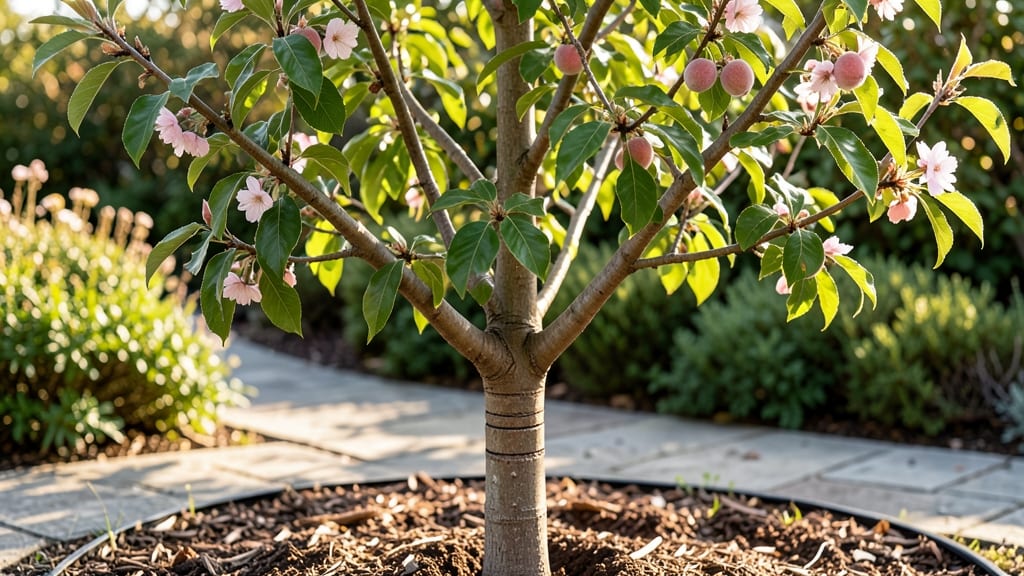
Donut peach trees grow best in USDA zones 5 through 9, handling cold down to about -15°F (-26°C) once established. Young trees require extra winter protection in colder areas to avoid frost damage or dieback.
These zones reflect the tree's ability to survive winter dormancy while still producing fruit. 🌱 In zone 5, where winters are harshest, peaches need protection like thick mulch or tree wraps to shield against freezing temperatures.
Meanwhile, zone 9's milder winters allow for more natural growth but require careful water management to prevent root stress. The key difference lies in how each zone's frost timing affects flowering and fruit development.
For container growers, zone compatibility matters even more since pots offer less insulation. I always recommend using black plastic containers to absorb heat and adding extra mulch around the base. In zone 5, I've seen dramatic differences when using frost blankets during sudden cold snaps—sometimes saving entire harvests.
What's interesting is how these trees adapt: established trees develop deeper root systems that naturally insulate against cold, while young trees need our help. The -15°F threshold is for mature trees—younger ones should be protected down to 10°F (-12°C) to ensure survival.
💡 In This Article
- Understanding Donut Peach Tree Cold Hardiness by Zone
- Planting and Winterizing Donut Peach Trees for Optimal Survival
Understanding Donut peach tree cold hardiness by zone
The Donut peach tree's cold tolerance hinges on its biological adaptations to winter dormancy. During dormancy, trees produce antifreeze proteins that prevent ice crystal formation in their cells.
These proteins work best when temperatures gradually drop, which is why zone 5's longer, colder winters require careful management—sudden temperature swings below -15°F (-26°C) can still damage flower buds even in mature trees. 🌡️ In contrast, zone 9's milder winters allow the tree to maintain dormancy without extreme stress, but the lack of cold periods can sometimes lead to poor flower bud differentiation.
Root systems play a critical role in cold hardiness. Established trees develop roots that extend 3-4 feet deep, creating natural insulation against frost. In zone 5, where soil temperatures can drop below 20°F (-6°C), these deep roots act as a thermal buffer.
Young trees, with shallower roots, are far more vulnerable—this is why they need extra mulch (4-6 inches) to protect against soil freezing. The root zone's temperature is often 5-10°F warmer than the air temperature, which is why proper soil insulation becomes non-negotiable in colder zones.
Flower bud survival is where zone differences become most noticeable. In zone 5, flower buds must endure 100-150 hours below 45°F (7°C) during dormancy to properly develop. Without this chilling period, buds may fail to open in spring, resulting in poor fruit set.
Meanwhile, zone 9's shorter chilling periods mean growers must sometimes use artificial chilling techniques or select varieties with lower chilling requirements. The Donut peach variety typically needs 400-500 hours of chilling, making it better suited for zones 6-8 without additional interventions.
Frost timing creates another critical difference between zones. In zone 5, late spring frosts (after bud break) can devastate blossoms, while zone 9's frost-free periods allow for earlier planting.
The tree's ability to recover from frost damage depends on its overall health—well-nourished trees with proper winter care can often regrow from dormant buds after light frost damage. This is why balanced fertilization in late summer is crucial for building resilience before winter sets in.
Container growing adds another layer of complexity. Pots heat up and cool down faster than in-ground plantings, making zone compatibility even more critical. In zone 5 containers, I've seen temperatures 10°F warmer in summer and 15°F colder in winter compared to in-ground plantings.
Using black containers helps absorb heat during the day, while wrapping the pot in bubble wrap provides insulation against winter cold. The key is mimicking the thermal stability of in-ground planting as closely as possible.
What most growers overlook is how wind exposure affects cold hardiness. In zone 5, wind chills can drop effective temperatures by 10-15°F, making windbreaks essential. I've found that planting near a southeast-facing wall or using burlap windbreaks can make a 5°F difference in winter survival rates.
The combination of proper wind protection, mulching, and container insulation can push a zone 5 Donut peach tree's survival threshold closer to -20°F (-29°C) in extreme cases.