
Propagation
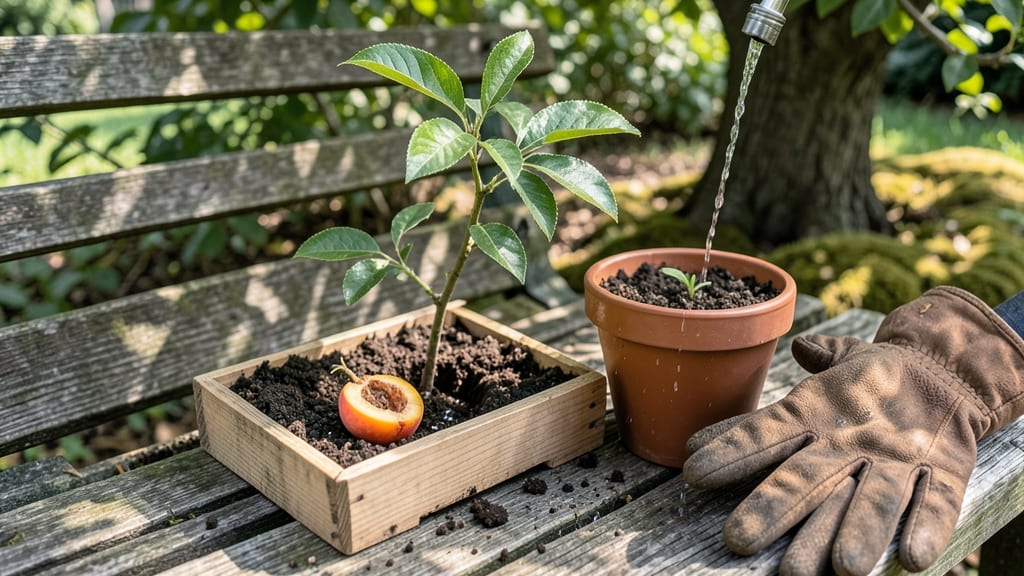
You can start a peach tree from a peach pit, but success rates are low due to genetic unpredictability and slow development. Soak the pit overnight, plant it in well-draining soil, and prepare for a 5-7 year wait before potential fruit—if the tree survives that long.
While the idea of growing a peach tree from a pit sounds rewarding, nature has a few tricks up its sleeve. 🌱 The seeds inside store-bought peaches often come from hybrid varieties, meaning your tree might produce fruit that looks nothing like the parent—think bitter, small, or even inedible peaches.
Even if the tree thrives, it’ll need years of careful nurturing before you see any edible rewards. I’ve tried this method twice, and both times the seedlings either died in their first winter or produced fruit so different from commercial peaches that they weren’t worth eating.
That said, the process itself is straightforward: after soaking the pit overnight to soften the outer shell, plant it in a pot with well-draining soil and keep it in a cool, dark place for 2-3 months to mimic winter dormancy.
Once sprouted, transplant it outdoors in spring, giving it full sun and consistent moisture. Patience is key—most gardeners who attempt this don’t see fruit until at least 5 years, if ever.
💡 In This Article
- Why Peach Pit Grafting Fails More Often Than Not
- Step-by-Step Peach Pit Germination Guide for Gardeners
Why peach pit grafting fails more often than not
The primary reason peach pits fail to grow into productive trees lies in their genetic inconsistency. Commercial peaches are typically hybrids bred for sweetness, size, and disease resistance.
When you grow from a pit, you're essentially planting a wild-type seed that may revert to ancestral traits—think small, tart, or even bitter fruit instead of the juicy, flavorful peaches you're used to.
This genetic rollback happens because peach seeds carry recessive genes that dominate when grown from seed rather than through grafting.
Another major hurdle is seed dormancy, a natural survival mechanism that requires specific conditions to break. Peach pits need a process called cold stratification, where they're exposed to cold, moist conditions for 2-3 months to mimic winter.
Without this step, the embryo inside the seed won't activate, leaving you with a pit that never sprouts. Even with proper stratification, the seedling's early growth is fragile—it lacks the hardiness of grafted trees, making it vulnerable to pests, fungal diseases, and temperature fluctuations during its first critical years. 🌱
Environmental mismatches also play a role. Wild peach trees often thrive in specific climates that differ from commercial growing zones. For example, a pit from a peach grown in California's Mediterranean climate might struggle to survive in the humid Southeast, where fungal diseases like brown rot thrive.
The tree's root system, developed from seed, may also lack the depth and strength of grafted trees, which are specifically bred for optimal rootstock. This mismatch can lead to poor nutrient uptake and stunted growth, even if the tree survives its early years.
Disease susceptibility is another silent killer. Seed-grown peach trees inherit a broader genetic pool, which means they're more likely to carry vulnerabilities to common peach diseases like peach leaf curl or bacterial spot.
Unlike grafted trees, which are cloned from disease-resistant parent stock, your homegrown tree might spend its early years fighting off infections that would be easily managed in a nursery setting.
This is why even successful seedlings often fail to reach maturity—disease pressure can be relentless in the first few growing seasons.
Finally, the timeline for fruit production is a major deterrent. Even if your peach pit sprouts and survives, you're looking at a 5-7 year wait before the tree might produce fruit—and that's if it's a productive variety.
Most gardeners give up long before that, especially when they realize the fruit may not resemble the peaches they love. The combination of genetic unpredictability, disease risks, and slow growth makes peach pit propagation a gamble most gardeners aren't willing to take. 🍑