
Container Gardens
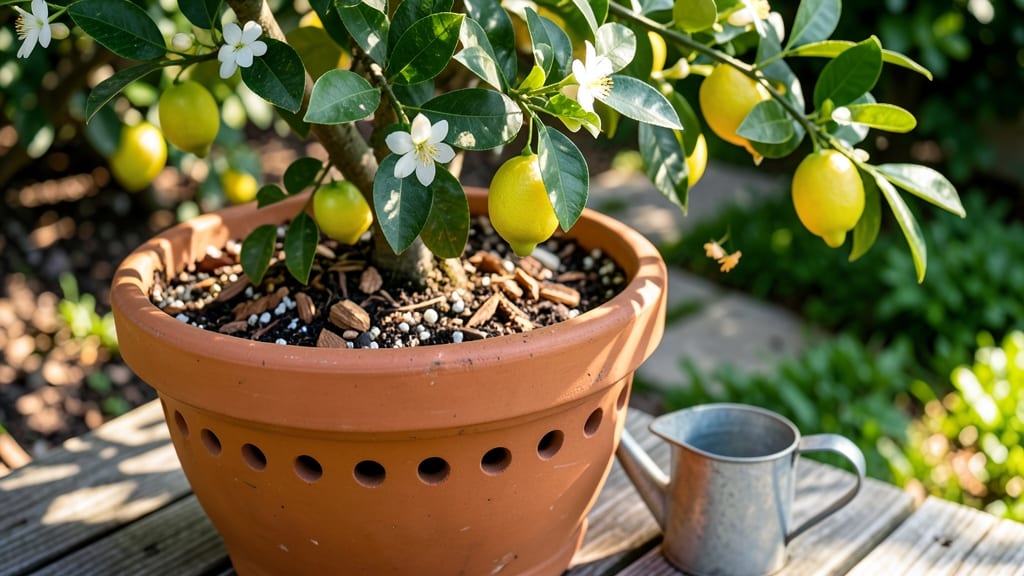
You can keep a lemon tree in a pot, particularly with dwarf varieties like Meyer or Improved Meyer, though it demands precise care with pruning, well-draining soil, and ample sunlight. Use containers at least 12 inches wide with drainage holes, and repot every 2-3 years to maintain vigor.
Growing citrus in containers isn't just possible—it's a fantastic way to enjoy fresh lemons year-round, even in small spaces. 🌱 The key lies in choosing the right variety; dwarf types like Meyer lemons thrive in pots while producing abundant fruit.
These compact trees also tolerate indoor environments better than their full-sized counterparts, making them perfect for kitchens or sunrooms. Just remember to balance their needs with regular pruning to encourage bushier growth and prevent overcrowding in the pot.
Beyond variety selection, container size and soil composition play critical roles in long-term success. A 12-inch diameter pot gives roots room to establish, while a well-draining potting mix prevents root rot—a common issue in confined spaces.
I've found that adding perlite or sand to commercial citrus mixes improves aeration, which is especially important during Florida's humid summers. The trade-off? You'll need to fertilize more frequently than outdoor trees to compensate for nutrients leaching out with water.
💡 In This Article
- Best Dwarf Lemon Tree Varieties for Container Growing
- Essential Pot and Soil Requirements for Potted Lemon Trees
Best dwarf lemon tree varieties for container growing
When selecting a dwarf lemon tree for container life, the Meyer lemon stands out as the gold standard.
This hybrid between a true lemon and a mandarin orange grows just 6-10 feet tall but produces sweet, fragrant fruit that's more like a cross between a lemon and orange. 🌿 The Improved Meyer variety takes it further with even better cold tolerance (down to 20°F), making it ideal for USDA zones 9-11.
These varieties thrive in 12-18 inch pots and can produce fruit within 2-3 years of planting, compared to 5+ years for full-sized trees.
The classic Eureka and Lisbon lemon trees are better suited for outdoor cultivation in warmer climates but can work in containers if given winter protection.
Eureka lemons are particularly productive, yielding 50-100 fruits per year when properly cared for, though they require full sun (6-8 hours daily) and struggle below 25°F.
For indoor growers, the Meyer's ability to tolerate lower light levels (around 4-6 hours of bright indirect light) makes it the most adaptable choice. The trade-off? Meyer lemons are slightly less acidic than Eurekas, with a pH closer to 3.5-4.0 compared to Eureka's 2.0-2.5.
Growth habits differ significantly between varieties. Meyer lemons develop a rounded, bushy shape that fits beautifully in pots, while Eureka trees grow more upright and may need staking.
This compact growth means Meyer trees can be placed on patios, balconies, or even indoors near sunny windows. 🍋 The key to maintaining this shape is regular pruning—removing 1/3 of new growth in spring encourages branching.
Without pruning, even dwarf varieties can become leggy and top-heavy, risking tipping over in containers.
Cold hardiness becomes critical for container-grown trees since pots lack the ground's insulating properties. Meyer lemons can survive brief exposure to 20°F but will suffer damage below 15°F. For colder climates, move potted trees indoors to a 50-60°F environment during winter.
This temperature range prevents dormancy while maintaining growth. The root system in containers is also more vulnerable to freezing, so wrapping pots in bubble wrap or using frost blankets adds an extra layer of protection.
Fruit production varies dramatically between varieties. Meyer lemons produce 20-30 fruits per year in containers, with each fruit weighing about 1.5-2.5 ounces. The Improved Meyer variety often yields slightly larger fruit with thicker skins, making them more transportable if you're gifting.
In contrast, Eureka lemons produce fewer but larger fruits (3-4 ounces each) that are prized for their tartness. This difference matters when choosing a variety—Meyer is better for frequent small harvests, while Eureka suits those who prefer larger, classic lemons for cooking.
For indoor growing, consider the 'Four Seasons' lemon tree, a true dwarf variety that stays under 4 feet tall and thrives in 10-12 inch pots. It produces small, tart lemons but requires meticulous care to maintain health.
The challenge with indoor varieties is their sensitivity to temperature fluctuations—keeping them within 60-75°F during the day and 55-65°F at night prevents stress. Humidity levels above 40% also help mimic their natural tropical environment, reducing the risk of leaf drop.