
Pruning
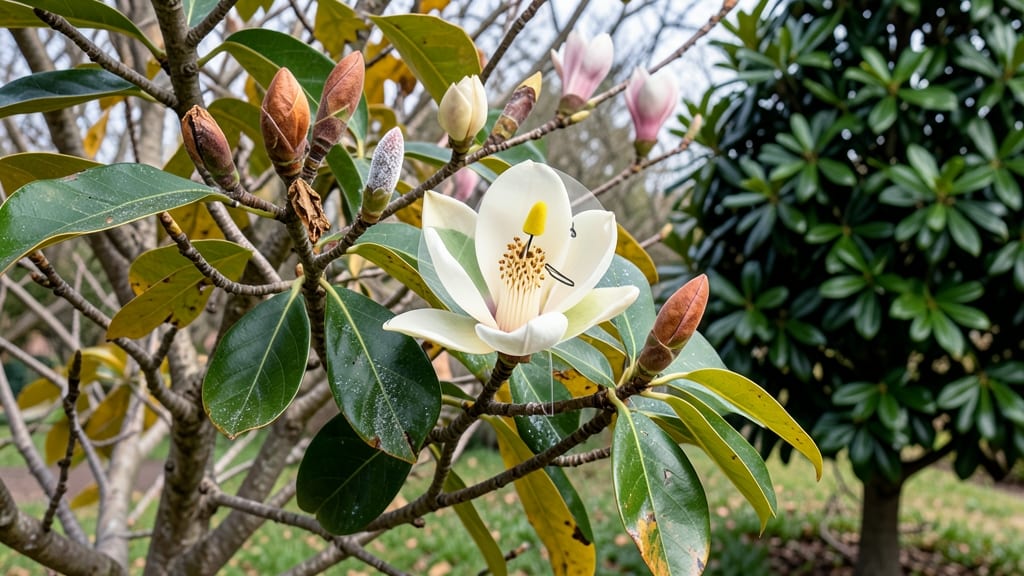
Why doesn’t my magnolia tree flower? It’s likely staging a silent rebellion—often from age, light deprivation, or pruning mistakes. 🌸 I’ve seen mature trees with perfect conditions still hold back blooms, and the fix usually comes down to patience, sunlight, and knowing exactly when (and when not) to prune.
Young magnolias under 10 years old rarely flower—they’re saving energy for growth. But if yours is mature and still bare, check for 6+ hours of sunlight daily and avoid pruning in late summer or fall, which can shock the tree and delay blooms.
Even a single misplaced cut can set back flowering for a season.
Here’s the game-changer: fertilize in early spring with a high-phosphorus blend (like 10-10-10) to encourage blooms, and water deeply during dry spells. If pests like scale or diseases like powdery mildew move in, they’ll steal energy meant for flowers—treat them early or call an arborist.
Most fixes take 1-2 seasons to show results, but the payoff—a canopy of fragrant blooms—makes every adjustment worth it. Start with sunlight and pruning, then move to nutrients and pests. You’ll see buds forming before you know it.
Why it happens
Magnolia trees are prized for their stunning, fragrant flowers—but when they fail to bloom, it’s often due to a mix of biological, environmental, or human factors. Understanding these causes is the first step to reviving your tree’s floral potential.
Let’s break down the science behind why your magnolia might be holding back those show-stopping blossoms.
🌱 Age Matters: Young Trees Need Patience
Magnolias are slow growers, and most species require 5–10 years before producing their first flowers. This isn’t laziness—it’s biology. Younger trees prioritize root and branch development over reproductive energy.
For example, Magnolia grandiflora (Southern magnolia) can take up to a decade to bloom, while Magnolia stellata (star magnolia) may flower sooner, around 3–5 years.
Why it happens: Flower buds form in the previous year’s growth (a process called bud initiation). If your tree is too young, its energy is diverted to establishing a strong structural framework. Even if you see leaf buds, flower buds may not have had time to develop.
Actionable fix: If your tree is under 5 years old, resist the urge to prune aggressively. Focus on providing optimal care (water, nutrients, and sunlight) to accelerate maturity. For older trees that should be flowering but aren’t, check for other issues below.
☀️ Light Levels: Shade Steals the Show
Magnolias are light-hungry and thrive in full sun (6–8 hours of direct sunlight daily). When deprived of adequate light, they shift energy away from flowering to basic survival—producing leaves instead of blooms.
Why it happens: Photosynthesis fuels flower bud formation. In low-light conditions, the tree’s chlorophyll struggles to produce enough glucose, triggering a stress response that suppresses flowering. Evergreens like Magnolia grandiflora are particularly sensitive, while deciduous types (e.g., Magnolia × soulangeana) may tolerate partial shade but still produce fewer flowers.
Actionable fix:
- 🔍 Assess your tree’s location: Are nearby structures, taller trees, or dense foliage blocking sunlight? Trim overhanging branches or consider transplanting to a sunnier spot if possible.
- 🌿 Thin out competing vegetation: Remove weeds or shrubs within 6–10 feet of the magnolia’s canopy to reduce shade competition.
- ⏳ Be patient with newly planted trees: It can take 1–2 years for roots to establish enough to support full sun exposure.
✂️ Pruning Mistakes: Cutting Too Late or Too Much
Pruning at the wrong time or too aggressively can severely limit a magnolia’s ability to flower. These trees form flower buds in the summer or early fall for the following spring. If you prune after bud set (typically August–October), you risk removing next year’s blooms.
Why it happens: Magnolias are bud-bearing on old wood, meaning flower buds develop on branches from the previous year. Pruning in late winter or early spring (when buds are already set) can:
- 🌸 Remove flower buds entirely: If you shear or cut back hard, you’re essentially snipping off potential blooms.
- 🔄 Stimulate excessive new growth: Over-pruning encourages rapid, non-flowering shoots that divert energy from bud formation.
- 🦠 Increase stress: Heavy pruning weakens the tree, reducing its ability to allocate resources to reproduction.
Actionable fix:
- ⏰ Prune at the right time: The only safe window is late winter (just before buds swell) or early spring before buds break. Avoid pruning in summer or fall.
- 🌿 Use the “selective thinning” method: Remove no more than 20–30% of the canopy in one year. Focus on:
- Dead, diseased, or crossing branches.
- Suckers at the base (these drain energy).
- 🚫 Avoid topping or shearing: This habit encourages dense, non-flowering growth. Instead, prune to maintain an open center.
💧 Water and Nutrient Stress: Starving the Blooms
Flower production is energy-intensive. If your magnolia isn’t getting enough water, nutrients, or proper soil conditions, it will prioritize leaf growth over blooms.
Why it happens:
Issue
Scientific Cause
Symptoms
Drought stress
Water deficit triggers abscisic acid production, a hormone that inhibits flowering to conserve energy.
Wilting leaves, crispy leaf edges, stunted growth.
Poor soil drainage
Waterlogged roots suffocate roots, reducing nutrient uptake. Magnolias prefer well-draining, slightly acidic soil (pH 5.0–6.5).
Yellowing leaves, root rot, slow growth.
Nutrient deficiencies
Lack of phosphorus (P) (critical for flower development) or potassium (K) (supports bud formation) limits blooming.
Purple-tinged leaves (P deficiency), weak stems, small or no buds.
Competition from weeds
Weeds and grass steal water and nutrients, leaving the magnolia malnourished.
Pale leaves, slow growth, sparse foliage.
Actionable fix:
- 💦 Water deeply and consistently: Aim for 1–2 inches of water per week (more in extreme heat). Use drip irrigation or soaker hoses to avoid wetting foliage (which promotes disease).
- 🌍 Improve soil conditions:
- Amend heavy clay soil with compost or pine bark to improve drainage.
- Test soil pH and add elemental sulfur if pH is above 6.5.
- 🌿 Fertilize strategically: Apply a balanced fertilizer (e.g., 10-10-10) in early spring, followed by a phosphorus-rich fertilizer (e.g., 5-10-5) in late spring to encourage bud formation. Avoid high-nitrogen fertilizers in fall—they promote leafy growth at the expense of flowers.
- 🪴 Mulch properly: Spread 2–4 inches of organic mulch (wood chips or pine straw) around the base (keep it 6 inches away from the trunk) to retain moisture and suppress weeds.
🐞 Pests and Diseases: Silent Bloom Blockers
Unseen threats like pests and pathogens can drain your magnolia’s energy, leaving it too weak to flower. Common cul
How to Revive Your Magnolia’s Bloom
If your magnolia tree is stubbornly refusing to flower, don’t despair—there’s almost always a fix! Below, we’ve mapped out practical, step-by-step solutions tailored to the most common causes, plus prevention tips to keep your tree thriving for years.
Whether it’s age, light, pruning, or nutrition holding it back, these strategies will help your magnolia burst into bloom.
Cause: Magnolias need time to mature before flowering (often 5–10 years). Solution:
- 🔥 Wait It Out: If your tree is under 5 years old, flowering may not happen yet. Focus on healthy growth instead.
- 🌡️ Optimize Growing Conditions:
- Plant in well-draining soil (amend clay with compost or sand).
- Ensure 6+ hours of sunlight daily (partial shade is okay, but full shade delays blooms).
- 💡 Pro Tip: Mulch around the base (2–3 inches deep) to retain moisture and regulate soil temperature.
- 📊 Feed Smartly: Use a balanced, slow-release fertilizer (10-10-10) in early spring. Avoid high-nitrogen fertilizers—they encourage leafy growth over flowers.
Cause: Too much shade or harsh afternoon sun stunts flowering. Solution:
- 👨🍳 Adjust the Location (If Possible):
- Move potted magnolias to a sunnier spot (morning sun + afternoon shade works best).
- For in-ground trees, prune nearby trees/shrubs to increase light exposure (but avoid exposing roots to extreme heat).
- 🌿 Prune Strategically:
- Thin out dense foliage to improve airflow and light penetration (focus on the interior of the canopy).
- ✨ Prevention Tip: Plant magnolias where they’ll get at least 4–6 hours of sun from the start.
Cause: Over-pruning, wrong timing, or cutting flower buds removes blooms. Solution:
- 🔪 Correct Pruning Practices:
- When to Prune: Late winter or early spring (after the last frost but before buds swell). Never prune in fall—this can remove next year’s flower buds!
- What to Cut: Remove dead, diseased, or crossing branches only. Avoid heavy thinning—magnolias bloom on old wood, so minimal pruning is key.
- 💡 Pro Tip: If you must shape the tree, never trim more than 20% of the foliage in one season.
- 🚫 What NOT to Do:
- Don’t prune in summer or fall (this can trigger new growth that won’t harden off before winter).
- Avoid topping or shearing—this harms the tree’s natural form and flower production.
Cause: Poor soil or incorrect fertilizing leads to weak growth and few flowers. Solution:
- 📊 Soil Test First: Check your soil’s pH (magnolias prefer 5.0–6.5). Adjust with sulfur (to lower pH) or lime (to raise it).
- 🥗 Fertilize for Flowers:
- Fall: Add compost or aged manure to replenish nutrients without promoting late-season growth.
- 💡 Pro Tip: Avoid chemical fertilizers in summer—they can stress the tree and reduce next year’s flowers.
- Deep water 1–2 times per week (more in extreme heat). Shallow watering encourages weak roots.
- ✨ Prevention Tip: Mulch annually to lock in moisture and reduce fertilizer runoff.
Cause: Pests (scale, borers) or diseases (powdery mildew) weaken the tree, reducing blooms. Solution:
- 🔍 Identify the Problem:
- Scale insects: Look for white cottony masses or black sooty mold on leaves.
- Borers: Check for sawdust-like frass at branch bases or holes in bark.
- Powdery mildew: White fungal coating on leaves.
- 🚫 Treatment Steps:
- For diseases: Apply copper fungicide (follow label instructions) and improve airflow by pruning.
- 💡 Pro Tip: Keep the area under the tree clean and weed-free to deter pests.
With these targeted fixes, your magnolia should bounce back—and bloom beautifully next season. The key is patience, proper care, and timely action. Once you address the root cause, your tree will reward you with stunning, fragrant flowers for years to come! 🌸
Frequently asked questions
How do I know if my magnolia tree is too young to flower?
Most magnolia varieties take 5–10 years to produce their first blooms. Look for these clues: if your tree is under 5 feet tall or has mostly new, flexible branches (not woody), it's likely still maturing. Southern magnolias often need 10+ years, while star magnolias may bloom sooner at 3–5 years.
What's the best way to tell if my tree has enough sunlight?
Magnolias need 6–8 hours of direct sunlight daily. Check by observing your tree's canopy: if leaves are small, sparse, or yellowing on the north side (in Northern Hemisphere), it's likely shade-starved. Use a sunlight tracker app for 2 weeks to measure actual light exposure.
Can I still get flowers if I pruned my magnolia at the wrong time?
It depends! If you pruned in late summer or fall (after flower buds formed), you may have removed next year's blooms. For spring-flowering varieties, buds form in summer/early fall—so wait until late winter to prune. If you cut too much, focus on light and nutrients this year to encourage new bud formation.
What fertilizer actually makes magnolias bloom?
Use a low-nitrogen, high-phosphorus blend like 5-10-5 or 10-20-10 in early spring. Phosphorus (the middle number) directly supports flower development. Avoid high-nitrogen fertilizers (like 30-0-0) in fall—they promote leafy growth instead of blooms. Apply 2–3 times per year with deep watering after each application.
How do I know if pests are preventing my magnolia from flowering?
Watch for these signs: sticky residue on leaves (aphids), white cottony masses (scale insects), or holes in bark (borers). Powdery mildew appears as white powdery coating on leaves. These pests drain the tree's energy, leaving nothing for flowers. Treat with neem oil or horticultural oil in early spring/fall.