
Pruning
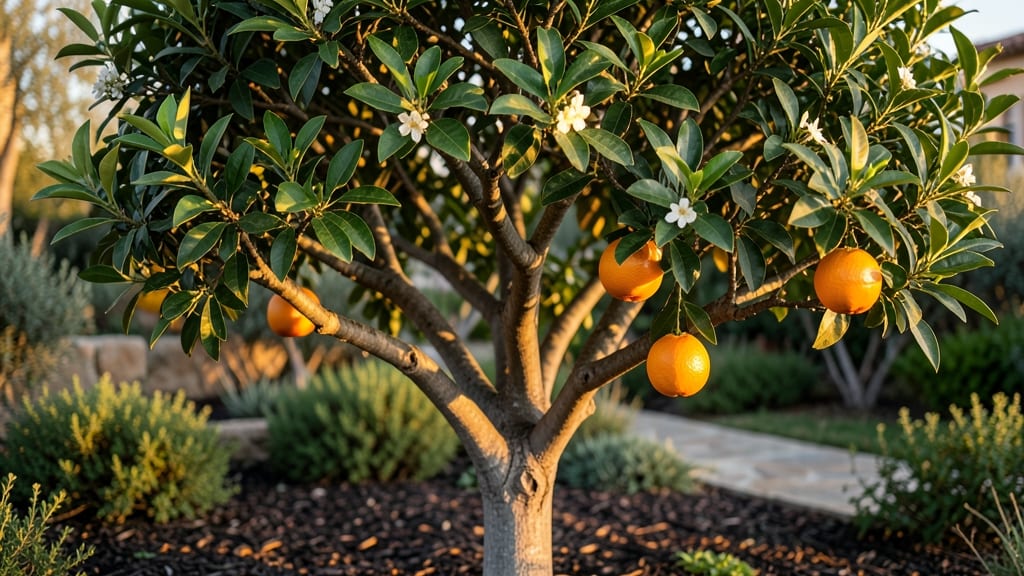
This tree has orange berries in the fall, and it includes dogwoods, serviceberries, and hackberries, along with winterberry holly and crabapples, which add striking autumn color and support local wildlife.
Identifying these trees often comes down to their unique fruit shapes and leaf patterns. For example, dogwoods feature four-petal flowers that transition into showy clusters, while hackberries have spiky, grape-like berries. 🍂 Serviceberries produce larger, amber-colored clusters that ripen later in the season, making them a favorite for birds.
Most of these species thrive in USDA hardiness zones 3-8, so they're great choices for gardeners in temperate climates.
Beyond their visual appeal, these trees serve practical purposes. Winterberry holly, for instance, offers year-round interest with its glossy evergreen leaves and bright berries that persist into winter. Meanwhile, crabapples provide both fruit for wildlife and fragrant blossoms in spring.
I always recommend planting at least two varieties to create a layered fall display that changes colors as the season progresses.
💡 In This Article
- Identifying Fall Orange-Berry Trees by Fruit and Leaf Traits
- Best Orange-Berry Trees for Landscaping and Wildlife Attraction
Identifying fall orange-berry trees by fruit and leaf traits
Fall orange-berry trees reveal their identities through distinctive fruit shapes and leaf structures. Take dogwoods (Cornus spp.): their berries appear in tight clusters of 4-8 bright red-orange fruits that resemble miniature lanterns, each about 0.5 inches wide.
These berries form after showy four-petal flowers that bloom in spring, creating a dramatic seasonal transition. The leaves are elliptical with noticeable veins, often turning deep purple-red in autumn before dropping.
In contrast, serviceberries (Amelanchier spp.) produce amber-red clusters of 1/2-inch berries that ripen in late summer to early fall, attracting flocks of birds. Their leaves are oval with serrated edges and turn golden-yellow before falling.
What sets them apart is their multi-stemmed growth habit, creating a shrub-like appearance that thrives in USDA zones 3-8. 🌿 Meanwhile, hackberries (Celtis spp.) have peppercorn-sized orange-red berries covered in tiny spikes, growing singly along branches, with rough, asymmetrical leaves that stay on the tree until winter.
The key to identification lies in these physical contrasts. For example, dogwood berries are smooth and clustered, while hackberries are spiky and solitary.
Leaf shape also matters: serviceberry leaves are thinner and more delicate than the thick, leathery leaves of winterberry holly (Ilex verticillata), which produces 1-inch bright orange berries in dense clusters. Winterberry's evergreen leaves and berries that persist through winter make it uniquely identifiable even in bare branches.
Hardiness zones play a crucial role in selecting these trees. Dogwoods and serviceberries thrive in zones 3-8, while hackberries extend to zones 4-9. Winterberry holly prefers zones 3-9 but requires a male pollinator plant for berry production.
Crabapples (Malus spp.) grow in zones 4-8 and produce 1/2-inch orange-red fruits with five-petaled flowers, often developing a rust-colored fall foliage that contrasts beautifully with their berries.
Consider these visual cues when identifying trees in your landscape: berry cluster density, leaf texture, and seasonal color changes. For instance, a tree with spiky orange berries and rough leaves is likely a hackberry, while smooth clusters with four-petal flower remnants point to dogwood.
These traits not only help with identification but also inform pruning and care strategies tailored to each species' growth patterns.
Pro tip: Examine the bark too. Dogwoods have smooth gray bark that develops diamond-shaped patterns with age, while serviceberries feature thin, scaly bark. These subtle details complete the identification puzzle and help you appreciate the intricate beauty of each tree's structure.