
Pruning
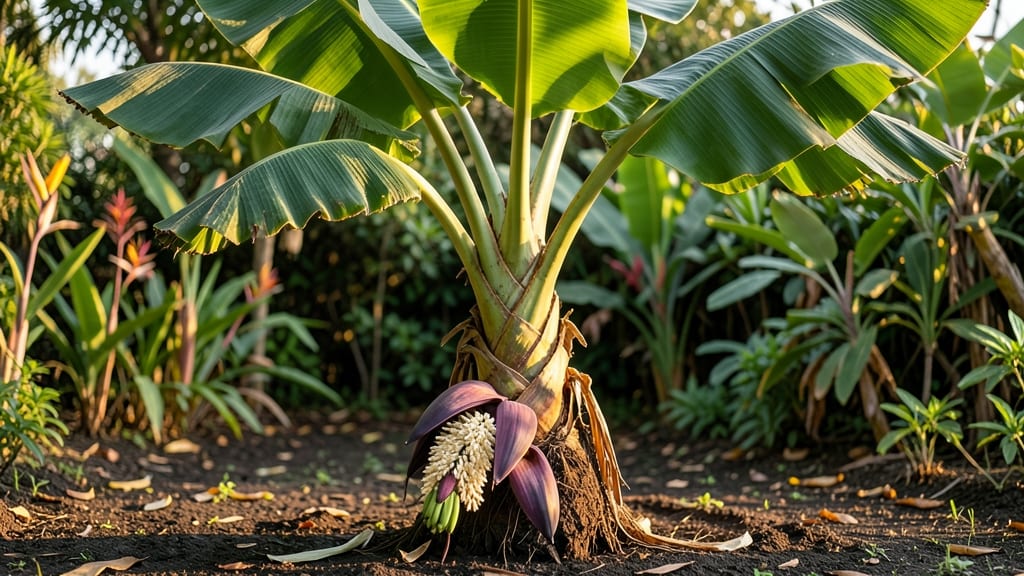
What a banana tree is called botanically is a Musa plant from the Musaceae family, though it’s actually a giant herbaceous plant—not a true tree—with a pseudostem formed by tightly packed leaf sheaths.
A banana tree is called a Musa plant because that's its genus name in the Musaceae family, which includes all edible bananas. 🌿 The confusion about it being a "tree" comes from its massive size—up to 30 feet tall—but botanically, it's classified as a herbaceous plant because it lacks true wood.
This distinction matters for gardeners, as herbaceous plants grow differently than trees, often spreading via underground rhizomes rather than developing a woody trunk.
The Musa genus contains over 70 species, including the familiar Cavendish bananas and starchy plantains. Wild varieties like Musa acuminata and Musa balbisiana form the foundation for most cultivated hybrids, each with unique leaf shapes, fruit colors, and growth patterns.
For example, Lady Finger bananas have smaller, sweeter fruits compared to the larger, firmer Red Dacca variety.
Understanding these classifications helps when selecting plants for your garden. 🌱 While all Musa plants produce edible fruit, their growth habits vary—some thrive in tropical climates while others adapt to subtropical regions.
The pseudostem structure also affects how they respond to pruning and harvesting, making species identification key for proper care.
💡 In This Article
- Botanical Classification of Banana Plants
- Identifying Banana Plant Species by Common Names
Botanical classification of banana plants
The term Musa refers to the botanical genus that includes all edible bananas, and it belongs to the Musaceae family—a group of flowering plants that also includes the closely related ensete (false banana). What makes Musa plants unique is their herbaceous nature: unlike true trees, they lack a woody stem.
Instead, their pseudostem is built from tightly packed, overlapping leaf sheaths that can reach heights of 20-30 feet—taller than most people! This structure gives the illusion of a trunk, but it’s actually just compressed leaves and fibers.
The confusion arises because botanists classify plants based on their reproductive structures and growth habits. True trees (like oaks) have a single, woody stem that grows from a seed. Banana plants, however, grow from underground rhizomes—horizontal stems that produce new shoots.
This rhizomatous growth means they’re more like giant grasses or herbs than trees. 🌱 The pseudostem also lacks vascular cambium (the tissue that creates wood in true trees), confirming their herbaceous classification.
Within the Musa genus, there are three primary species that form the basis for most cultivated bananas: Musa acuminata (sweet, dessert bananas), Musa balbisiana (starchier, cooking bananas like plantains), and their hybrids.
For example, the Cavendish banana (the most common supermarket variety) is a hybrid of Musa acuminata and Musa balbisiana, bred for its thick skin, sweetness, and resistance to disease.
Wild varieties, like Musa acuminata subsp. burmannicoides, can produce small, seedy fruits with intense flavors—far different from the seedless bananas we know today.
Evolutionarily, banana plants have adapted to tropical climates by developing rapid growth cycles. A single plant can produce fruit in just 9-12 months, though the pseudostem dies after harvesting (the plant "blooms" only once before producing suckers for regrowth).
This monocarpic trait—flowering once and then dying—is another reason they’re classified as herbaceous rather than perennial trees. The large, broad leaves (up to 9 feet long) also maximize sunlight absorption, aiding their C4 photosynthetic pathway, which is highly efficient in hot, humid conditions.
For gardeners, this classification matters because herbaceous plants like bananas respond differently to pruning, fertilization, and climate changes than woody trees. For instance, their pseudostems can’t support heavy pruning like a tree branch—cutting too aggressively risks damaging the plant’s ability to regrow.
Instead, gardeners focus on removing dead leaves and controlling suckers (new shoots) to direct energy toward fruit production. The rhizomatous root system also means they spread easily, sometimes becoming invasive in warm climates.
One fascinating detail is how the flowering process works: bananas grow from an inflorescence (a cluster of flowers) that emerges from the center of the plant. This "heart" is often harvested for cooking (called a banana heart or banana blossom), while the fruit develops along the stem.
The flowers themselves are hermaphroditic, meaning they contain both male and female parts, which helps explain why bananas are parthenocarpic (they develop without fertilization, resulting in seedless fruit). 💡 This trait was likely selected for during domestication, as seedless bananas are sweeter and easier to eat.