
Companion Plants
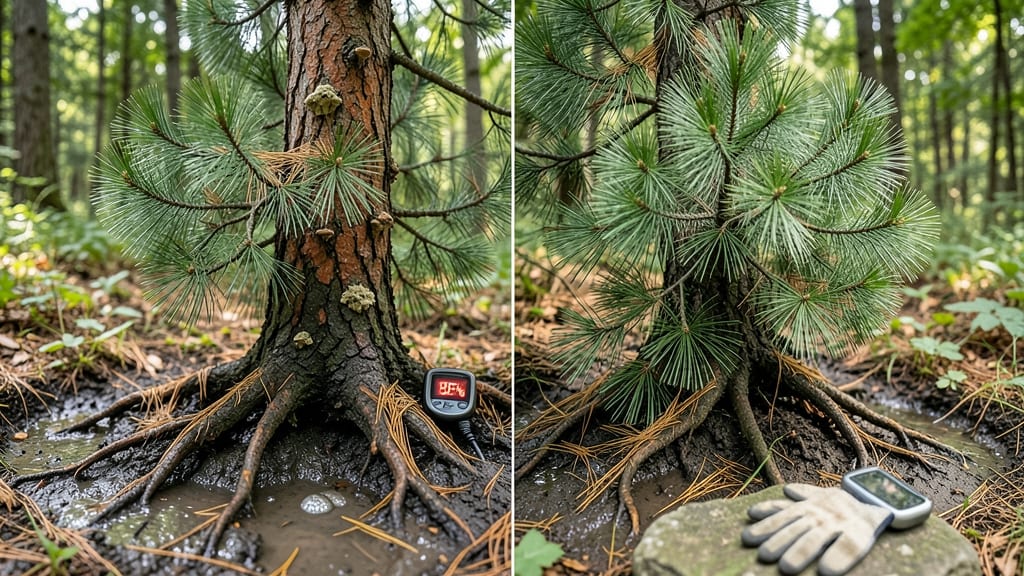
What does an overwatered pine tree look like? It reveals itself with yellow needles that won’t fall, drooping branches that feel spongy, and roots that smell like rotting fruit. 🌲 I’ve seen this mistake ruin perfectly healthy pines in just weeks—waterlogged soil cuts off oxygen, and the tree can’t recover without intervention. The first sign? Needles that stay yellow instead of browning and dropping, paired with a soft trunk when you press it.
Digging into the soil tells the real story: roots turning brown or black, a musty odor, and soil that stays soggy for days after watering.
Many gardeners confuse this with fungal diseases, but the key difference is the soggy soil—dry pine roots can’t absorb nutrients, but drowning them is just as deadly. The good news? Pines are tough once you fix the drainage.
Your first move should be adjusting watering—pines hate "wet feet" and need well-draining soil. Check the top 2-3 inches of soil before watering; if it’s damp, wait.
For established trees, spread mulch 3-4 inches thick to help soil dry faster. Within weeks, you’ll see new green needles and firmer branches as the roots recover.
Prevention is simple: water deeply but infrequently, especially in winter when pines need less. If your soil stays compacted, amend it with coarse sand or gravel to improve drainage. The goal is soil that feels like a damp sponge, not a swamp—your pine’s health depends on it.
Root Causes Of Overwatering
Overwatering your pine tree might seem like a harmless act of care, but it can quickly turn into a silent killer—especially when you don’t understand why it happens. Pine trees, like many evergreens, are surprisingly resilient, but their roots and soil environment demand precision.
When water overwhelms their system, it triggers a cascade of physiological stress. Let’s break down the key reasons this occurs, so you can avoid repeating the same mistakes.
Pine trees thrive in well-draining soil because their roots hate sitting in soggy conditions. When soil lacks proper drainage—whether due to compacted clay, heavy mulch, or a poorly designed landscape—the excess water pools around the roots instead of draining away.
This creates an anaerobic environment, where oxygen levels plummet and harmful bacteria thrive.
- Why it’s deadly: Roots need oxygen to respire and absorb nutrients. Without it, they suffocate, leading to root rot (often caused by Phytophthora or Pythium fungi).
- Signs of poor drainage:
- Water pooling on the soil surface for hours after watering.
- Mushy, dark, or foul-smelling roots when inspected.
- Needles turning yellow or brown in patches, even if the tree seems otherwise healthy.
- Actionable fix: Amend heavy soil with organic matter (like pine bark fines or compost) to improve aeration. If planting, choose a site with a slight slope to encourage runoff.
Pine trees are drought-tolerant once established, but many gardeners overcompensate by watering too frequently or in large volumes. This is especially common in:
- Newly planted trees (which need less water than mature ones).
- Container-grown pines (where soil dries out faster but roots can’t escape excess moisture).
- Regions with high humidity or frequent rain (where soil stays damp longer than expected).
When you water on a schedule rather than checking soil moisture, you risk drowning the roots—even if the topsoil feels dry.
- Why it’s risky: Pine roots are shallow and spread widely. Overwatering forces them to drown, while also leaching essential nutrients (like nitrogen and potassium) out of reach.
- Actionable fix:
- Use the finger test: Stick your finger 2–3 inches into the soil. If it’s damp, wait. If it’s bone-dry, water deeply but infrequently.
- Water early in the day (before 10 AM) to reduce evaporation and fungal growth.
- Avoid shallow watering—aim for deep, infrequent soakings to encourage root growth downward.
Not all overwatering comes from your hose. Sometimes, Mother Nature conspires against your pine tree by trapping moisture in ways you can’t control. Here’s what to watch for:
| Factor | Why It Causes Overwatering | How to Mitigate |
|---|---|---|
| 🌧️ Heavy or prolonged rain | Soil can’t absorb excess water fast enough, leading to waterlogging. | Plant in a slightly elevated area or use swales (shallow trenches) to redirect runoff. |
| ☁️ High humidity | Slows evaporation, keeping soil damp longer and encouraging fungal growth. | Prune lower branches to improve airflow around the base. |
| 🌿 Thick mulch or ground cover | Acts like a sponge, holding moisture against the trunk and preventing drying. | Keep mulch 2–4 inches deep and 3+ inches away from the trunk. |
| 🏡 Impermeable surfaces (like patios or driveways) | Prevents water from draining naturally, redirecting it toward the tree. | Use permeable pavers or create a berm (raised soil edge) around the tree. |
Not all trees are created equal—and pine trees have unique water requirements that many gardeners overlook. Here’s what you might be missing:
- Slow root growth: Pine roots grow slowly, especially in the first 2–3 years. Overwatering can stunt this growth, leaving the tree vulnerable to stress.
- Needle function: Pine needles are adapted to conserve water. When overwatered, they may close stomata (pores) to prevent excess moisture uptake, leading to chlorosis (yellowing).
- Soil pH sensitivity: Pines prefer acidic soil (pH 4.5–6.0). Overwatering with alkaline water (common in hard water areas) can disrupt nutrient availability, worsening stress.
Actionable fix: Test your soil’s pH and amend with sulfur or peat moss if needed. Water with rainwater or filtered water if your tap water is highly alkaline.
Reviving Your Pine Tree: Step-by-Step Fixes
Overwatering can feel like a death sentence for pine trees, but with the right approach, you can nurse your tree back to health. The key is acting fast, adjusting your watering habits, and giving your pine tree the conditions it actually thrives in.
Below, we break down the cause-specific fixes to save your tree, plus prevention tips to keep it strong long-term.
Yellow needles are the first red flag, but they’re also the easiest to reverse if caught early.
1️⃣ Stop Watering Immediately
- How: Pause all watering for 7–10 days to let the soil dry out.
- Why: Pine trees hate soggy roots.
Overwatering suffocates roots by cutting off oxygen, leading to nutrient starvation and yellowing. - Pro Tip: 💡 If the soil feels damp more than 1 inch below the surface, wait longer before watering again.
2️⃣ Improve Soil Drainage
Pine trees need well-draining soil—sandy or loamy mixes work best.
If your soil is heavy clay: - Amend the soil with coarse sand, perlite, or pine bark fines (mix 50/50 with existing soil). - Raise the tree slightly by mounding soil around the base to prevent water pooling. - Use raised beds if planting new pines in problem areas.
3️⃣ Prune Damaged Needles (If Necessary)
- When: Only prune brown or crispy needles—never healthy green ones.
- How: Use clean, sharp pruners to trim dead branches back to live wood (look for green tissue inside the branch).
- Avoid: Over-pruning—pines are slow to recover, so remove no more than 20% of the tree at once.
Drooping isn’t just sad—it’s a sign of root rot or nutrient stress from overwatering.
1️⃣ Check for Root Rot (The Silent Killer)
- How to test: Gently dig near the root flare (where the trunk meets the roots). Healthy roots are tan or light brown; rotten roots are black, mushy, or smell foul.
- If rot is present:
- Trim away mushy roots with sterilized pruners.
- Disinfect the area with a 10% hydrogen peroxide solution (1 part peroxide to 9 parts water).
- Repot or replant in fresh, dry soil if the tree is in a container.
2️⃣ Adjust Watering Schedule
Pine trees hate consistency—they prefer deep but infrequent watering.
Follow this rule: - Water deeply (1–2 inches per week) only when the top 2–3 inches of soil are dry. - Use the finger test: Stick your finger in the soil—if it’s damp, wait.
If dry, water slowly until it drains through. - Morning watering is best—it gives roots time to dry out before nighttime humidity sets in.
3️⃣ Boost Airflow & Light
- Thin out nearby plants to improve airflow (pines need good circulation to dry quickly).
- Move container pines to a sunnier spot (most pines need 6+ hours of sunlight daily).
- Avoid mulch piles near the trunk—keep mulch 3–4 inches away to prevent moisture buildup.
If your pine tree’s roots are soft, discolored, or stinky, root rot has set in—and time is critical.
1️⃣ Emergency Root Rescue
- For container pines:
- Remove the tree, rinse roots gently with water to remove excess soil.
- Prune all black/mushy roots with sterilized shears.
- Repot in fresh, fast-draining soil (cactus/succulent mix works well).
- For in-ground pines:
- Dig a shallow trench around the roots to improve drainage.
- Mix sand or grit into the soil to aerate it.
- Avoid watering for 2 weeks to let roots recover.
2️⃣ Fungal Treatment (If Needed)
If root rot is severe, fungicides can help:
- Use a copper-based fungicide (like Copper Soap) or hydrogen peroxide spray (3% solution) on roots before replanting.
- Avoid chemical fungicides—they can harm beneficial microbes in the soil.
3️⃣ Long-Term Drainage Solutions
- Install a French drain around the base if your yard has poor drainage.
- Plant pines on slopes (if possible) to encourage natural water runoff.
- Use gravel or rocks in the planting hole to improve drainage.
Once your pine recovers, prevent future overwatering with these habits:
✅ Water Less, Not More – Pine trees are drought-tolerant once established.
Overwatering is the #1 killer! ✅ Check Soil Before Watering – Stick your finger in the soil—dry topsoil = time to water. ✅ Use the Right Pot – If growing in containers, ensure pots have drainage holes and use terracotta or fabric pots for better airflow. ✅ Mulch Correctly – Use 2–3 inches of mulch, but keep it away from the trunk to prevent rot. ✅ Choose the Right Pine – Some pines (like Pinus sylvestris or Pinus mugo) handle drought better than others.
Pick wisely! ✅ Monitor Year-Round – Even in winter, avoid watering unless the ground is frozen—pines don’t need extra moisture then.
Final Thought: 🌟 Pines are tough survivors—with the right care, they can bounce back from overwatering. The key is patience, proper drainage, and smart watering. Once you adjust your routine, your pine will reward you with vibrant green needles and strong growth for years to come!
Frequently asked questions
Why do pine needles stay yellow instead of turning brown and falling?
Yellow needles that persist indicate chlorosis from overwatering, not the normal browning that precedes needle drop. Overwatered pines struggle to process nutrients, causing the chlorophyll to break down but leaving the needles clinging to branches. Unlike healthy needle drop (which occurs in late fall/winter), these yellow needles stay attached for months, signaling root stress.
Can I save my pine tree if the trunk feels soft when pressed?
That's a critical warning sign of advanced root rot—time is limited. The soft trunk means the internal wood is breaking down. Immediately stop watering, improve drainage (add sand or gravel to soil), and prune any blackened roots. For severe cases, consult an arborist about potential replanting with fresh, sterile soil.
How often should I water a newly planted pine tree?
Newly planted pines need deep but infrequent watering—typically once every 1-2 weeks during the first year, depending on rainfall. Water only when the top 2-3 inches of soil are completely dry. The key is encouraging deep root growth rather than keeping surface soil moist, which leads to overwatering.
What's the difference between overwatered pines and those with needle blight?
Needle blight (from fungi) causes brown or purple tips that eventually fall, while overwatering causes uniform yellowing that persists. Blight often appears in patches, while overwatering affects the entire tree. Check the soil: if it's soggy and smells musty, it's overwatering; if dry but needles still show symptoms, consider fungal treatment.
Will my pine tree recover if I fix the overwatering now?
Yes, but recovery depends on how severe the damage is. With proper drainage and adjusted watering, most pines will show new green needles within 4-8 weeks. However, if root rot has set in deeply, some branches may die permanently. The good news: pines are resilient—once you correct the watering habits, they often bounce back surprisingly well.