
Watering
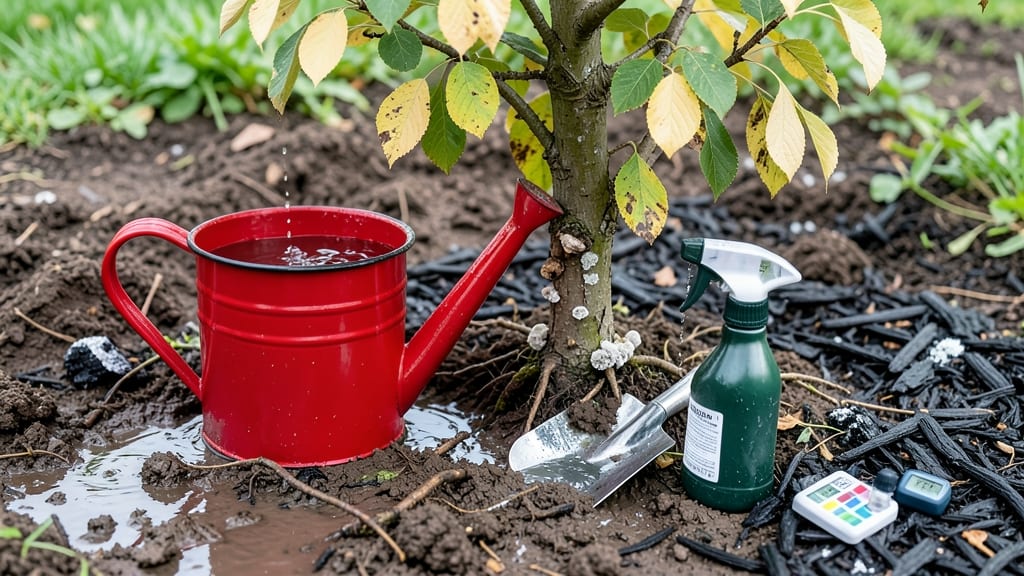
Your cherry tree’s yellowing leaves and mushy roots aren’t just random bad luck—they’re overwatering’s calling cards. 🌿 I’ve seen this mistake turn thriving trees into sad, soggy shadows, and the fix starts with recognizing the warning signs before it’s too late.
The good news? You can reverse it with the right adjustments.
Look for leaves that stay yellow even when dry, stems that feel soft to the touch, or a musty smell at the base—these are your tree’s SOS signals. Overwatering doesn’t just drown roots; it invites fungal infections and rots the bark from the inside out.
The key is checking the soil moisture 2 inches down—if it’s damp, hold off on watering.
Once you spot the damage, act fast: prune back any mushy roots, improve drainage with organic matter, and adjust your watering schedule to once every 10-14 days (unless it rains). Within weeks, you’ll see fresh green growth pushing through, proving your tree can bounce back—if you catch it early.
Prevention is easier than rescue: mulch properly, avoid compacted soil, and always water deeply but infrequently. Your cherry tree will thank you with plump fruit and sturdy branches for years to come. Let’s get it back to healthy!
Root Causes Of Overwatered Cherry Trees
When your cherry tree starts showing signs of distress—like yellowing leaves, wilting branches, or a foul odor—overwatering is often the silent culprit. But why does this happen? Understanding the root causes (pun intended) helps you adjust care and save your tree. Let’s dig into the science behind it.
Cherry trees thrive in well-draining soil, but if your garden bed or container lacks proper aeration, water pools around the roots instead of draining away. Here’s why this is dangerous:
- Compacted soil (from foot traffic, heavy clay, or poor amendments) prevents oxygen from reaching roots, suffocating them.
- Waterlogged roots can’t absorb oxygen, leading to anaerobic conditions—a toxic environment where harmful bacteria and fungi thrive.
- Root rot (often caused by Phytophthora or Pythium) sets in within days, turning healthy roots mushy and brown.
Actionable fix: Test your soil’s drainage by digging a 12-inch hole, filling it with water, and timing how long it takes to drain. If it takes more than 6 hours, amend with compost, perlite, or sand to improve airflow.
Even with good soil, watering frequency and volume can backfire. Cherry trees (especially young ones) are often drowned by well-meaning gardeners who:
- Water on a schedule instead of checking soil moisture (e.g., daily light sprinkles instead of deep, infrequent watering).
- Use low-quality sprinklers that mist leaves, increasing humidity and fungal risks like powdery mildew.
- Ignore the season: Spring showers + extra watering = double the stress. Cherry trees need less water in wet climates.
Science note: Roots need oxygen more than water. Overwatering displaces soil air pockets, triggering a chain reaction of nutrient starvation and disease.
Sometimes, Mother Nature plays a role. These conditions make overwatering more likely:
| Factor | Why It Matters | Solution |
|---|---|---|
| 🌧️ Heavy rainfall | Saturated soil + frequent watering = drowning roots. Cherry trees in USDA Zones 5–8 (common for sweet/tart varieties) are especially vulnerable. | Install a French drain or raised beds to divert excess water. |
| 🏡 Shallow root systems (common in containers or young trees) | Limited soil volume fills up faster, leading to hydroponic-like suffocation. | Upgrade to a larger pot with drainage holes or mulch to regulate moisture. |
| 🌡️ Cold, wet springs | Cool temps slow evaporation, keeping soil soggy longer. Fungal spores thrive in these conditions. | Apply mulch 3–4 inches deep (straw or wood chips) to insulate roots. |
Overwatering doesn’t just drown roots—it invites pathogens that turn your tree into an all-you-can-eat buffet. Key offenders:
- Phytophthora root rot: Thrives in waterlogged soil, causing roots to turn black and slimy.
- Armillaria mellea ("honey fungus"): Spreads through moist soil, attacking roots and bark.
- Botrytis cinerea: Causes brown rot in fruit and leaf spots, weakening the tree’s defenses.
Pro tip: If you see mushrooms at the tree’s base or a sour, rotten smell, act fast. Prune infected areas with sterilized tools and treat with copper fungicide.
Potted cherry trees (like dwarf varieties) are high-risk for overwatering because:
- 🔥 Limited soil volume: A 5-gallon pot fills up in 2–3 days in hot weather.
- 🍄 No natural drainage: Many pots lack holes, trapping water against roots.
- 🌡️ Temperature swings: Containers heat up faster, increasing evaporation—but if you overcompensate, you’re back to soggy soil.
Fix: Use terracotta pots (breathable) and self-watering systems with moisture sensors. Never let a potted cherry tree sit in a saucer of standing water.
Reviving Your Cherry Tree Now
Overwatering can feel like a silent enemy—until it’s too late. But don’t worry! With the right steps, you can nurse your cherry tree back to health and prevent future waterlogging. Below, we’ve mapped out practical fixes for each overwatering symptom, plus prevention tips to keep your tree thriving.
Cause: Too much water suffocates roots, starving leaves of oxygen and nutrients. Fix:
- 🔥 Stop Watering Immediately
- Let the top 2–3 inches of soil dry out completely before watering again. Stick your finger in the soil—if it’s damp, wait.
- 🍳 Improve Soil Drainage
- Mix sand, perlite, or compost into the soil (20–30%) to break up compacted areas.
- For potted cherry trees, ensure the pot has drainage holes and use a well-draining potting mix.
- 👨🍳 Prune Affected Leaves
- Snip off yellow or brown leaves to redirect energy to healthier growth. Use sterilized pruners to avoid disease.
- ⏰ Water Deeply but Less Often
- Water deeply 1–2 times per week (instead of daily shallow watering) to encourage strong root growth.
💡 Pro Tip: If your tree is in a clay-heavy soil, consider raising the root zone by mounding soil around the base to improve airflow.
Cause: Waterlogged roots create the perfect breeding ground for root rot and fungi. Fix:
- 🔪 Trim Damaged Roots (If Possible)
- Gently remove the tree from the pot (or dig carefully if planted) and trim black, mushy roots with clean shears.
- Replant in fresh, sterile soil with improved drainage.
- 🌡️ Apply Fungicide (If Needed)
- Spray copper-based or hydrogen peroxide (3%) fungicide on roots and soil to kill fungal spores.
- Avoid chemical fungicides near fruit-bearing trees—opt for organic options like neem oil.
- ✨ Boost Root Health with Mycorrhizae
- Add mycorrhizal fungi to the soil to help roots recover faster. These beneficial microbes improve nutrient uptake.
💡 Pro Tip: If repotting, choose a terracotta pot—it dries out faster than plastic.
Cause: Oxygen-starved roots can’t absorb water, leading to wilting despite wet soil. Fix:
- 🥘 Aerate the Soil
- Use a garden fork to poke holes around the root zone (6–12 inches deep) to let air circulate.
- For potted trees, gently loosen roots if they’re circling the pot.
- 🎯 Adjust Watering Schedule
- Water only when the top 4 inches of soil are dry (use a moisture meter for accuracy).
- In rainy seasons, cover the base with mulch (2–3 inches) to regulate moisture.
- 💪 Support the Tree Temporarily
- If branches are drooping severely, stake them lightly to prevent breakage while roots recover.
💡 Pro Tip: Morning watering is best—it allows excess moisture to evaporate during the day.
- ✅ Test Your Soil: Use a soil moisture meter or the finger test before watering.
- ✅ Choose the Right Pot: If potted, ensure it’s 1–2 sizes larger than the root ball with drainage holes.
- ✅ Mulch Properly: Use wood chips or straw (not rocks) to retain moisture without suffocating roots.
- ✅ Monitor Weather: Adjust watering during heavy rains or humidity spikes.
- ✅ Plant in Well-Draining Spots: Avoid low-lying areas where water pools after rain.
Remember: Recovery takes time—patience and consistency are key. With these fixes, your cherry tree should bounce back stronger than ever! 🌳💚
Frequently asked questions
How do I tell if my cherry tree has root rot from overwatering?
Root rot shows up as black, mushy roots that smell foul when pulled gently. Healthy roots should be firm and light tan. If you see white fungal growth or the roots crumble easily, it’s a clear sign of rot. Dig carefully near the base—if the soil smells sour or looks waterlogged, you’ve got overwatering damage.
Can I save a cherry tree if the leaves are already yellow and falling?
Yes, but act fast! First, stop watering immediately and let the soil dry out. Prune any severely yellow leaves to help the tree focus energy on recovery. Improve drainage by adding compost or perlite to the soil, and water only when the top 2–3 inches are dry. With these steps, new green leaves should appear within 2–4 weeks.
Why does my cherry tree wilt even when the soil feels moist?
Overwatered trees wilt because waterlogged roots can’t absorb oxygen, starving the tree of nutrients. Stick your finger 2 inches deep—if it’s damp, hold off on watering. The fix? Aerate the soil with a fork and water deeply but less often (every 7–10 days unless it’s extremely hot or dry).
How often should I water a mature cherry tree in summer?
Mature cherry trees need deep watering every 10–14 days in summer, unless it rains. Check soil moisture 4 inches down—if it’s dry, water slowly until it seeps down 6–8 inches. Avoid shallow watering, which encourages weak roots. Mulch around the base to retain moisture and reduce evaporation.
What’s the fastest way to improve drainage for a potted cherry tree?
Upgrade to a terracotta pot with drainage holes, then mix 50% potting soil with 30% perlite and 20% compost. Avoid compacted soil—gently loosen roots if they’re circling the pot. Water only when the top 1–2 inches are bone-dry, and never let the tree sit in standing water.