
Planting
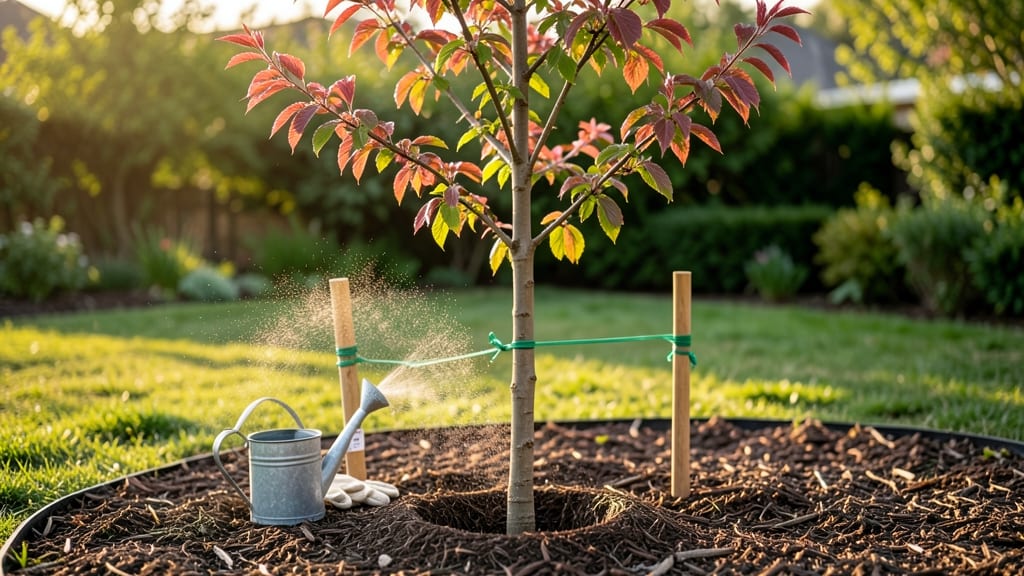
Tree transplant shock recovery time varies by species, size, and care but typically spans 2 weeks to 2 years, with critical early stages (first 4-6 weeks) being most vulnerable as roots adjust and foliage adapts to new conditions.
Understanding transplant shock helps you recognize why some trees thrive while others struggle after relocation.
The first 4-6 weeks are the most critical, as roots establish new connections and foliage adjusts to environmental changes. 🌳 For example, deciduous trees like maples often bounce back faster than evergreens because their needle structure demands more consistent moisture.
Proper aftercare—like deep watering and avoiding heavy pruning—can cut recovery time by up to 50%.
What surprises many gardeners is how soil type and seasonal timing affect recovery. Trees transplanted in early spring or fall (when roots can grow without extreme heat or cold) recover faster than those moved during drought or frost.
Even mature trees with extensive root systems may take 6-12 months to fully stabilize, while smaller specimens can show improvement in just 2-4 weeks with ideal conditions.
💡 In This Article
- Stages of Tree Transplant Shock and Root Adaptation
- Accelerating Recovery: Post-Transplant Care Checklist
Stages of tree transplant shock and root adaptation
The physiological recovery process begins immediately after transplanting, as roots experience a sudden disruption in their water and nutrient supply. During the first 7-14 days, roots undergo what arborists call "root pruning shock"—the severed root tips release ethylene gas, triggering a stress response.
This causes temporary wilting as the tree prioritizes root regrowth over foliage growth, often resulting in leaf drop (especially in deciduous species like oaks or maples). 🌱 Coniferous trees, however, handle this differently due to their needle structure, which has less surface area for water loss but also less capacity to photosynthesize under stress.
After the initial shock phase, roots enter the root regrowth stage, typically lasting 4-12 weeks depending on species. New fine roots (less than 2mm in diameter) emerge from the cut surfaces, but these are highly vulnerable to drought or compaction.
For example, a 5-year-old red maple might produce 1,000-2,000 new root tips during this period, while a 50-year-old oak could take 6-12 months to regenerate even 50% of its original root mass.
The key here is hormonal balance—auxin production in roots slows while abscisic acid (a stress hormone) spikes, which is why overwatering can be as harmful as underwatering.
Foliage adaptation occurs in parallel, with trees often entering a dormancy-like state to conserve energy. Deciduous trees may shed 20-50% of their leaves in the first 2-4 weeks, while evergreens like pines or spruces might develop brown needles due to water stress.
This isn't permanent damage—it's a survival mechanism. For instance, a 10-foot blue spruce transplanted in late spring might lose 30% of its needles but regrow them fully by the following season if conditions are ideal.
The critical factor here is stomatal regulation: trees close their leaf pores to retain moisture, which reduces photosynthesis but also limits transpiration losses.
Species-specific recovery timelines vary dramatically due to root structure and growth habits. Fast-growing trees like willows or poplars can recover in as little as 4-6 weeks because their fibrous root systems regenerate quickly.
In contrast, slow-growing trees like crepe myrtles or magnolias may take 6-12 months to stabilize because their taproots are less adaptable.
Even within species, size matters—a 3-foot dwarf Japanese maple might recover in 8-12 weeks, while a 20-foot standard specimen could take 18-24 months to fully adapt. 🌿 The deeper the root system, the longer the recovery period.
Environmental factors accelerate or delay these stages. Transplanting during optimal seasons (early spring or fall) allows roots to establish before extreme temperatures, while summer transplants in 90°F+ heat can double recovery time due to increased water demand.
Soil conditions play a role too—sandy soils drain too quickly, while clay holds excess moisture, both stressing roots. For example, a dogwood tree in well-amended loam might recover in 3 months, but the same tree in compacted clay could take 12+ months to show signs of stabilization.
What most gardeners overlook is the microbiome recovery—beneficial fungi and bacteria in the soil that help roots absorb nutrients. These relationships take time to re-establish, which is why trees often appear healthy on the surface but struggle with nutrient uptake for months.
A simple soil test can reveal deficiencies, but the real indicator is root growth—healthy new roots should be white or light tan, not dark or mushy, which signals rot. 🌱