
Pruning
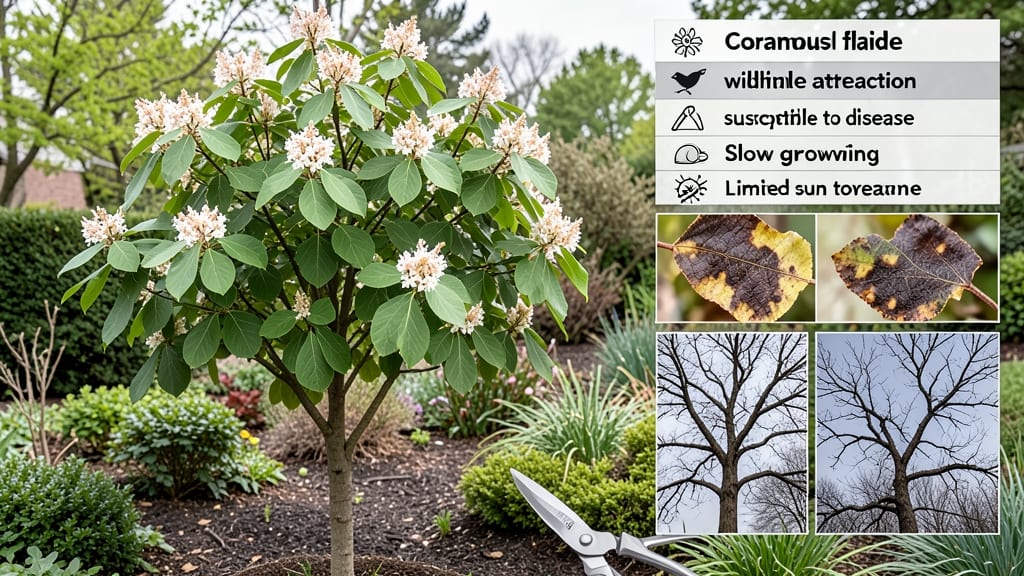
Dramatic spring flowers and glossy foliage make the Venus dogwood tree a stunning choice—but the pros and cons of this fast-growing shade plant demand careful consideration. 🌿 The Cornus florida var. rubra delivers dramatic spring flowers and glossy foliage that turns brilliant red in fall, making it a standout for privacy screens and focal points.
Yet its rapid growth comes with trade-offs: weak wood structure, pest vulnerabilities, and a tendency to flop under heavy snow or wind.
This tree thrives in partial shade to full sun and adapts to most well-drained soils, even clay—though it hates soggy roots. Its wildlife benefits (birds love the berries) and low-maintenance habit (once established) make it tempting, but pruning mistakes can turn its elegant branches into a tangled mess.
I’ve seen neighbors swear by it and others curse it after a single storm—here’s how to decide if it’s right for your yard.
You’ll love the quick privacy it provides (growing 12–24 inches per year) and the four-season interest—but brace for potential bark-splitting issues and borer attacks if you skip proper care. The key is strategic planting (stake young trees) and light annual pruning to reinforce structure before winter hits.
Perfect for USDA Zones 5–9, but check local regulations—some states flag it as invasive. If your climate is mild and space allows, it’s a showstopper; in storm-prone areas, consider alternatives like oakleaf hydrangea. Here’s how to weigh the trade-offs before planting.
📚 In This Guide
- What you need
- Instructions
- Tips and common mistakes
- Wrapping up and next steps
What you need
- ● Pruning shears – Sharp, bypass-style shears (for small branches, 4–6" blades)
- ● Loppers – For thicker branches (2–3" cutting capacity)
- ● Pruning saw – For large, stubborn branches (8–10" curved blade)
- ● Gloves – Heavy-duty, cut-resistant gloves (to protect from thorns and splinters)
- ● Disinfectant (70% isopropyl alcohol or bleach solution) – 1:9 ratio with water (to sterilize tools)
- ● Heavy-duty trash bags or bucket – For collecting pruned branches
- ● Ladder or step stool – If the tree exceeds 6–8 feet in height
- ● Permanent marker & tape measure – For marking cuts and measuring branch thickness
- ○ Pruning sealant – For large cuts (optional, but reduces disease risk)
- ● Handheld leaf blower – To clear debris from the work area
- ● Safety glasses – Protects eyes from falling debris
- ● Tree wound dressing – Only if working with severely damaged bark
- ● Notebook & pen – To sketch a pruning plan before starting
Step-by-Step guide to evaluating Venus dogwood trees for your landscape
This showstopper grows fast but demands specific care—here’s how to decide if it’s right for your yard.
🌱 Step 1: Assess Your Site’s Sunlight and Soil Conditions
The Venus dogwood (Cornus florida ‘Venus’) thrives in partial shade to full sun, but its signature blooms appear most reliably with 4-6 hours of morning sunlight. I always check my yard’s sun patterns first—if your space gets harsh afternoon sun, plant it where it’ll receive filtered light instead. The tree’s roots prefer moist, well-draining soil with a slightly acidic pH (6.0-6.5).
Dig a hole twice as wide as the root ball but only as deep—planting too deep suffocates the roots. Amend heavy clay soil with 2-3 inches of compost mixed into the bottom of the hole. If your soil drains poorly, add a layer of coarse sand or perlite to improve aeration. The Venus dogwood’s roots spread aggressively, so avoid planting near sidewalks or foundations.
☀️ Step 2: Plan for Fast Growth and Pruning Needs
This cultivar grows 3-5 feet annually under ideal conditions, so expect a 15-foot-tall tree by year 3. That rapid growth means you’ll need to prune twice yearly: once after flowering (late spring) to shape the canopy, and again in late winter to remove dead or crossing branches. I always use sterilized pruners to prevent bacterial infections, which are common in dogwoods.
Here’s the thing—Venus dogwoods produce their best blooms on new wood, so avoid heavy pruning in early spring. Instead, focus on thinning out crowded branches to improve air circulation. If you notice yellowing leaves or blackened stems, these are signs of anthracnose disease, which thrives in wet, humid conditions. Space your tree 15-20 feet from other plants to reduce fungal spread.
✂️ Step 3: Schedule Watering and Fertilization for Optimal Health
Young Venus dogwoods need deep watering twice weekly during the first growing season, while established trees tolerate once-weekly watering once roots are established. I test soil moisture by sticking my finger 2 inches deep—if it’s dry, water thoroughly until moisture reaches 6 inches down. Overwatering leads to root rot, so ensure your planting site has good drainage from the start.
Fertilize in early spring with a balanced, slow-release fertilizer (10-10-10) applied at half the recommended rate. Too much nitrogen encourages leafy growth at the expense of flowers. Mulch around the base with 3 inches of organic mulch, keeping it 6 inches away from the trunk to prevent moisture buildup. Replenish mulch annually—this conserves soil moisture and regulates temperature.
🌿 Step 4: Monitor for Pests and Disease Year-Round
Venus dogwoods attract dogwood borers and scale insects, which weaken the tree over time. I inspect the bark and undersides of leaves monthly during growing season. If you spot sawdust-like frass (borer droppings) or sticky residue (scale), treat immediately with neem oil or insecticidal soap. For severe infestations, consult an arborist—borers can kill a tree in one season if left unchecked.
Watch for powdery mildew on leaves, which appears as white, flour-like spots. This fungal issue thrives in shady, humid conditions, so improve airflow by pruning dense branches. If mildew appears, spray leaves with a baking soda solution (1 tsp baking soda + 1 quart water + a drop of dish soap) every 7-10 days until it clears. Preventative fungicide applications in early spring can also help.
Tips & tricks for perfect Venus dogwood tree planting
Real talk: This fast-growing beauty rewards patience with stunning results—but only if you nail these critical details first.
Sunlight Strategy: That 4-6 hours of morning sun in Step 1 is non-negotiable for those signature blooms. I track my yard's sun patterns for a week first—morning sun is gentler and prevents leaf scorch that afternoon sun causes. If your space gets harsh afternoon rays, position the tree where it'll receive filtered light through nearby structures or taller plants. Trust me on this: afternoon sun will turn those pretty leaves into crispy brown edges faster than you can say "dogwood borer."
Root Ball Rescue: When you're digging that hole twice as wide as the root ball (Step 1), don't cut the roots—tease them gently with your fingers. I've seen too many trees struggle because someone sliced through the roots with a shovel. The goal is to loosen the soil around the edges while keeping that central root structure intact. If you're planting in clay soil, mix in that 2-3 inches of compost right into the bottom of the hole—this creates a perfect transition zone for roots to spread into.
Pruning Precision: Those twice-yearly pruning sessions in Step 2 require surgical accuracy. Never remove more than 25% of the canopy in one session, and always make cuts just above a bud or branch junction. I mark my cuts with a piece of chalk before making them—this prevents accidental over-pruning. For the late winter session, focus on removing branches that cross or rub against each other first, as these wounds become entry points for diseases like anthracnose. And here's what nobody tells you: Sterilize your pruners between cuts with rubbing alcohol, not just water—this stops bacterial spread that can kill your tree in just a few seasons.
Watering Wisdom: The deep watering twice weekly for young trees (Step 3) needs to go deeper than you think. I use a soil probe to check moisture—if it's dry at 6 inches down, keep watering until you see moisture at 12 inches. The key is slow, deep watering that encourages roots to grow downward rather than staying shallow. For established trees, that once-weekly watering should be done with a soaker hose at the base, not overhead sprinklers. Overhead watering creates perfect conditions for powdery mildew, which we definitely want to avoid.
Pro Tips for Venus Dogwood Tree Pros And Cons
- Real talk: This fast-growing beauty rewards patience with stunning results—but only if you nail these critical details first.
- Sunlight Strategy: That 4-6 hours of morning sun in Step 1 is non-negotiable for those signature blooms.
- Root Ball Rescue: When you're digging that hole twice as wide as the root ball (Step 1), don't cut the roots—tease them gently with your fingers.
Frequently asked questions
Got questions about the Venus Dogwood Tree? You’re not alone! Here are some of the most common concerns—plus straight answers to help you decide if this fast-growing beauty is right for your yard.
How fast does a Venus Dogwood Tree grow?
The Venus Dogwood (Cornus florida) grows at a moderate to fast pace—about 12–24 inches per year under ideal conditions. With proper care, it can reach 20–30 feet tall in just 10–15 years, making it a stellar choice for quick privacy screens or shade.
Does pruning a Venus Dogwood hurt its flowers?
Yes! The Venus Dogwood blooms on old wood, so pruning in late winter or early spring (before buds swell) minimizes damage. Avoid heavy cuts—focus on shaping or removing dead branches. Never prune after flowering or you’ll sacrifice next year’s stunning blooms.
What’s the best alternative if I don’t want to deal with pruning?
If maintenance is a concern, consider these low-fuss alternatives:
- Emerald Green Arborvitae – Evergreen, dense, and hates pruning.
- Leyland Cypress – Fast-growing and naturally columnar.
- Japanese Maple – Slower-growing but zero-pruning needed for shape.
Are Venus Dogwood Trees prone to pests or diseases?
They’re generally tough, but watch for:
- Dogwood anthracnose (fungal leaf spots)—prevent with proper spacing and fungicide if needed.
- Borers or scale insects—treat with neem oil or insecticidal soap early.
How much space should I leave between a Venus Dogwood and my house?
Leave at least 10–15 feet from structures, fences, or power lines at maturity. Roots spread moderately, but the tree’s aggressive growth means less space = more pruning. If you’re tight on room, opt for the ‘Rubra’ cultivar—it stays slightly smaller.
Wrapping up and next steps
The Venus Dogwood Tree offers a stunning blend of beauty, speed, and privacy—but like any fast-growing tree, it comes with trade-offs.
Whether you’re drawn to its lush foliage or wary of its pruning demands, understanding its pros and cons helps you decide if it’s the right fit for your landscape.
Ready to take the next step? Research local climate suitability, consult a pruning expert, or sketch a planting plan to visualize its growth over time!