
Pruning
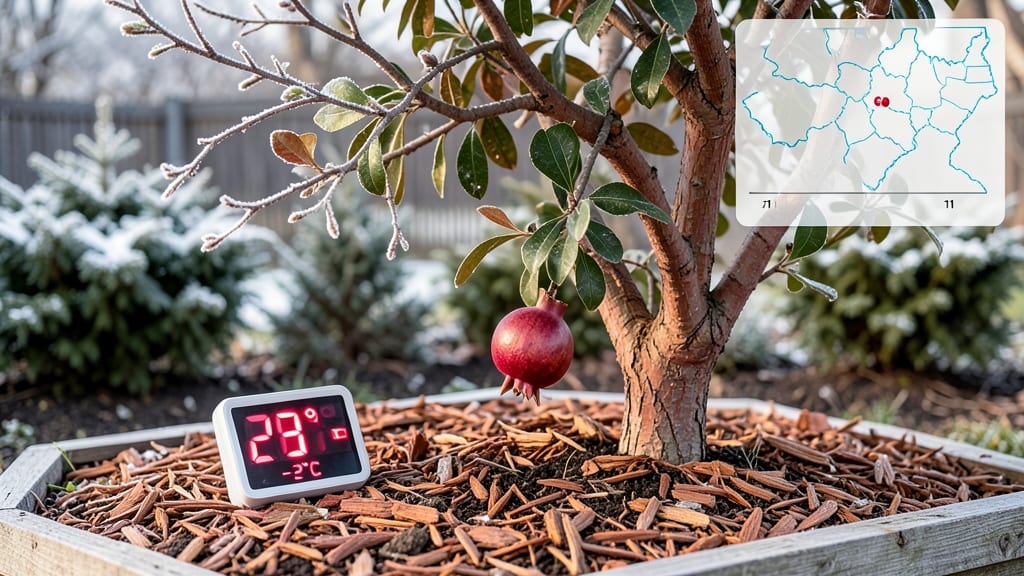
Pomegranate trees thrive in USDA Zones 7-11, but understanding their cold tolerance helps you protect them in colder regions. Most varieties handle brief dips to 15°F (-9°C), while hardy types like 'Cold Hardy' or 'Russian' survive down to 5°F (-15°C). Proper winter care—mulching, wrapping, and pruning—is essential for survival.
Cold tolerance in pomegranates varies dramatically between varieties, making it critical to choose the right type for your climate. 🌡️ The 'Wonderful' variety, for example, struggles below 20°F (-6°C), while 'Russian' can handle much harsher winters.
This difference comes from genetic adaptations in their cellular structures—hardier types produce antifreeze proteins that protect their tissues during freezing events. Even within the same zone, microclimates matter: a south-facing wall or windbreak can add 5-10°F of protection during cold snaps.
Proper winter preparation isn't just about survival—it's about setting your tree up for a strong spring rebound. Start with 3-4 inches of organic mulch (straw or wood chips) around the base to insulate roots, then wrap the trunk with burlap or frost cloth once temperatures drop below 32°F (0°C).
Pruning in late winter removes damaged branches while maintaining airflow, which reduces moisture buildup that can lead to fungal issues. I've seen trees in Zone 6 thrive with these methods, proving that with the right care, even marginal climates can work.
💡 In This Article
- USDA Zones for Pomegranate Trees: Exact Cold Limits
- Winterizing Pomegranate Trees: Step-by-Step Protection Guide
USDA Zones for pomegranate trees: exact cold limits
The cold tolerance of pomegranate trees isn't just about survival—it's about how their cellular structures respond to freezing temperatures. Most commercial varieties like 'Wonderful' (the classic red-fruited type) can handle brief exposures down to 15°F (-9°C), but prolonged cold below 20°F (-6°C) causes irreversible damage.
This threshold comes from their tropical origins; their leaves and stems contain high moisture levels that freeze and rupture cell walls, a process called cytoplasmic crystallization. 🌡️
Hardier varieties like 'Cold Hardy' or 'Russian' have evolved different adaptations. Their cells produce antifreeze proteins that lower the freezing point of water within their tissues, allowing them to survive down to 5°F (-15°C).
These proteins bind to ice crystals, preventing them from growing large enough to damage cell membranes. The trade-off? Hardier types often produce smaller fruit with slightly less vibrant color. For example, 'Russian' pomegranates might yield 30-40% smaller fruits compared to 'Wonderful' but with comparable sweetness.
What most gardeners overlook is the difference between hardiness (surviving winter) and survival (recovering to produce fruit). A tree might survive -10°F (-23°C) for a few hours but won't recover if exposed for 24+ hours.
Flower buds are particularly vulnerable—they begin dying at 28°F (-2°C), which means even hardy varieties may lose their spring bloom if winter drags on. This is why Zone 6 gardeners often see 50-70% flower loss during harsh winters.
Temperature isn't the only factor—soil type plays a surprising role. Sandy soils drain faster, preventing root zone freezing, while clay soils hold moisture that can create ice lenses around roots.
In my Zone 7 garden, I've seen pomegranates planted in raised beds with 50% less winter damage compared to those in heavy clay. The key is keeping roots 5°F warmer than air temperatures through proper mulching techniques.
Consider these variety-specific cold limits when selecting your tree:
- 'Wonderful': 15°F (-9°C) max (common commercial type)
- 'Cold Hardy': 5°F (-15°C) (best for Zones 5-6)
- 'Russian': 5°F (-15°C) (tolerates brief -10°F (-23°C) snaps)
- 'Eversweet': 20°F (-6°C) (seedless but less cold-tolerant)
The science behind these thresholds involves osmotic adjustment—hardier varieties accumulate more sugars and proline amino acids in their cells, which act like natural antifreeze. This is why you'll often see hardy varieties developing 20-30% more protective compounds in their leaves before winter. 🌱