
Pruning
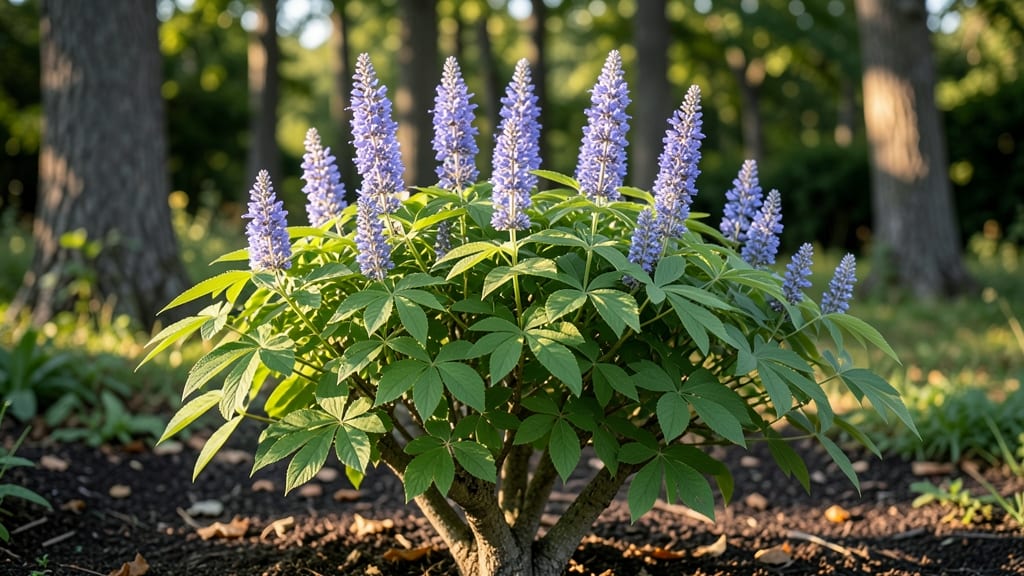
Your vitex tree thrives in zones 7 through 11, where it grows into a privacy powerhouse with glossy foliage and fragrant purple blooms. 🌿 I’ve grown vitex in zone 8 for years, and its ability to handle heat and humidity makes it a standout choice for fast-growing screens—especially when pruned right.
The key isn’t just cutting back; it’s shaping the tree to fill in quickly while keeping it healthy for decades.
Vitex loves full sun and well-draining soil, but it’s surprisingly adaptable. Plant it in spring or early fall for best root establishment, spacing shrubs 8–12 feet apart if using multiple plants for a hedge.
In containers, expect 2–3 feet of growth per year with proper care, though in-ground plants can reach 10+ feet with aggressive pruning. The secret? Prune late winter or early spring before new growth emerges—this keeps the tree dense and encourages lush, bushy regrowth.
By summer, your pruned vitex will burst with vibrant foliage, providing year-round privacy that outlasts many faster-growing but shorter-lived options. The flowers attract pollinators, and the glossy leaves stay vibrant even in drought conditions.
With the right cuts, you’ll avoid the leggy, sparse look that frustrates many gardeners. Think of it as sculpting a living wall—every snip shapes the future of your screen.
Works equally well in urban yards, rural landscapes, or even large containers on patios. Whether you’re masking a noisy street or adding structure to a garden, vitex delivers low-maintenance elegance once established. Let’s get those shears ready!
📚 In This Guide
- What you need
- Instructions
- Tips and common mistakes
- Wrapping up and next steps
What you need
- ● Pruning shears: Bypass pruners (for branches 1 pair (e.g., Felco F-2 or Corona)
- ● Loppers: For branches ½ to 1½ inches thick – 1 pair (e.g., Fiskars X27)
- ● Pruning saw: Curved-tooth saw for thick branches (1½+ inches) – 1 (e.g., Bahco Laplander)
- ● Gloves: Heavy-duty gardening gloves (cut-resistant, 1 pair)
- ● Disinfectant: 70% isopropyl alcohol or pruning sealant (to prevent disease) – small bottle
- ● Safety gear: Safety glasses and long sleeves (for protection)
- ● Ladder: Extendable ladder (16+ feet, if tree exceeds 10 feet) – 1
- ● Trash bags: Heavy-duty bags (20+ gallon) for debris – 2-3
- ○ Marking twine or flags: For tagging branches to remove (optional but helpful for complex cuts)
- ● Hose or bucket: For rinsing tools between cuts (keeps sap off blades)
- ● Pole pruner: For high branches (if ladder access is tricky)
- ● Pruning paint: To seal large cuts (prevents disease entry)
- ● Camera: Snap progress pics—because before-and-after is satisfying!
Instructions: pruning your vitex tree for three distinct growth zones
Mastering vitex pruning transforms it from a wild shrub into a structured privacy screen. Here’s how to shape it into three distinct zones for year-round beauty.
🌿 Step 1: Identify the Three Structural Zones
Vitex grows in three natural zones: the upper canopy (newest growth), the mid-height framework (last year’s wood), and the base layer (older, woody stems). Start by examining your tree—look for the top 1/3 of lush, green foliage, the middle 1/3 with sturdy branches, and the bottom 1/3 where branches thin out.
Use a sharp pruning saw or loppers to mark these zones with twine or flags if needed. The upper zone is where you’ll encourage air flow; the middle zone defines structure; and the base zone needs thinning to prevent disease. Real talk: if your base looks like a tangled mess, that’s where most pruning mistakes happen.
✂️ Step 2: Prune the Upper Canopy for Airflow and Light
In late winter or early spring, remove 20-30% of the upper canopy by cutting back the tallest, leggiest branches to just above a lateral bud or outward-facing branch. Avoid "heading cuts" (cutting back to stubs)—this triggers weak, bushy growth. Instead, make clean cuts at a 45-degree angle just above a leaf node facing outward.
Focus on branches thicker than 1/4 inch—these are the structural offenders that block sunlight. You’ll see new growth emerge from the sides within 4-6 weeks. Here’s the thing: if you leave too much dense foliage up top, your lower branches will stay sparse no matter how much you prune below.
🌱 Step 3: Shape the Mid-Height Framework
Next, prune the middle zone to create an open lattice. Remove crossing branches first—they rub together and create wounds. Then, thin out every other branch to allow light to penetrate. Aim for 6-8 inches of spacing between branches at this level. Use loppers for branches 1/2 inch to 1 inch thick, and a pruning saw for anything thicker.
Step back frequently to visualize the shape. Your goal is a pyramidal silhouette that widens slightly at the base. If you’re unsure, compare your tree to a mature vitex in a landscape photo—you’ll spot the natural taper immediately. This zone is where most privacy comes from, so don’t skimp on thinning.
🪴 Step 4: Revitalize the Base Layer
For the bottom 1/3, focus on rejuvenation cuts. Select 2-3 of the oldest, thickest stems (usually 2-3 inches in diameter) and cut them back to 12-18 inches from the ground. This shocking method forces new growth from the base. You’ll see pencil-thin shoots emerge within 3-4 weeks—these will become your future framework.
Remove any dead, diseased, or weak wood at the base immediately. These are the branches that look gray, brittle, or lack leaves. Disinfect your tools with 70% rubbing alcohol between cuts to prevent spreading fungal spores. This step is brutal but necessary—your tree’s longevity depends on it.
☀️ Step 5: Clean Up and Monitor Growth
After pruning, rake up all debris within a 10-foot radius of the tree. Vitex leaves and twigs harbor pests and diseases. Apply a 2-inch layer of mulch around the base (but not touching the trunk) to retain moisture and suppress weeds. Water deeply to help the tree recover—1-2 inches per week during dry spells.
Monitor your tree’s response over the next 6-8 weeks. Healthy new growth should be dark green, glossy, and upright. If you see yellowing leaves or stunted shoots, you may have over-pruned. Adjust next year by removing only 10-15% of the canopy instead. Here’s the payoff: a well-pruned vitex can grow 6-8 feet per year with proper care.
Tips & tricks for perfect vitex tree pruning
Transforming your vitex into a structured privacy screen starts with understanding these essential techniques that prevent common mistakes.
Visualize Before You Cut: Step back and examine your tree from multiple angles before making any cuts. The instructions mention identifying three zones, but here's what nobody tells you—use a string or garden flags to mark the height of each zone on the trunk. This creates a visual reference that prevents uneven pruning. I learned this the hard way after cutting too aggressively on one side and creating an uneven silhouette.
Tool Selection Matters: The instructions specify using a sharp pruning saw or loppers, but here's the key detail: your tools should be clean and sharp before you begin. Dull blades crush stems instead of making clean cuts, which increases damage and disease risk. I always disinfect my tools with 70% rubbing alcohol between cuts on different branches—this prevents spreading fungal spores that can weaken your tree.
Timing is Everything: Pruning in late winter or early spring gives your vitex the full growing season to recover, but here's the critical detail: avoid pruning during wet weather. Wet conditions increase the risk of fungal infections through open wounds. If you must prune during damp periods, do it on dry days and avoid cutting when leaves are wet. The 4-6 weeks for new growth to appear mentioned in Step 2 assumes ideal conditions—if your climate is cooler, you may need to extend this window.
Mulch Like a Pro: The instructions recommend a 2-inch layer of mulch, but here's the secret: apply it in a ring shape that extends 2-3 feet outward from the trunk. This creates a moisture-retaining barrier while preventing mulch from touching the trunk (which can cause rot). I use shredded hardwood mulch because it breaks down slowly and improves soil structure over time. After pruning, this mulch layer also helps suppress weeds that compete with your tree's recovery.
Pro Tips for Vitex Tree Zone
- Transforming your vitex into a structured privacy screen starts with understanding these essential techniques that prevent common mistakes.
- Visualize Before You Cut: Step back and examine your tree from multiple angles before making any cuts.
- Tool Selection Matters: The instructions specify using a sharp pruning saw or loppers, but here's the key detail: your tools should be clean and sharp before you begin.
Frequently asked questions
Got questions about growing and maintaining your Vitex tree for year-round privacy? Here are some of the most common concerns—plus quick answers to keep your hedge thriving in USDA Zones 7-10!
What’s the best time of year to prune a Vitex tree for privacy hedges?
Prune your Vitex in late winter or early spring (before new growth starts) to shape it for the season. A second light trim in summer (after flowering) keeps it dense. Avoid heavy pruning in fall—it can stress the tree before winter. Pro tip: Use sharp shears () for clean cuts!
How cold-hardy is Vitex, and will it survive winter in Zone 7?
Vitex (Vitex agnus-castus) thrives in Zones 7-10 but may suffer marginal damage in Zone 7 winters. Protect young trees with mulch (3-4 inches) and a burlap wrap if temps drop below 10°F. Mature trees often bounce back with minimal pruning in spring. Pro tip: Plant in sheltered spots away from wind!
Can I prune Vitex aggressively, or does it need gentle shaping?
Vitex is tough but not invincible—avoid shearing back more than 1/3 of the foliage at once. For privacy hedges, gradual shaping (2-3 times/year) works best. Over-pruning can lead to leggy growth or reduced flowering. Pro tip: Step back often to check symmetry!
What’s a good alternative to Vitex for faster privacy in hot climates?
If you need faster growth, consider:
- Texas Sage (Leucophyllum frutesens) – Drought-tolerant, blooms after rain.
- Wax Myrtle (Morella cerifera) – Evergreen, handles humidity well.
- Olive Tree (Olea europaea) – Slow but sturdy in Zones 8-10.
Why are my Vitex leaves turning yellow, and how do I fix it?
Yellow leaves often signal overwatering, pests (like spider mites), or nutrient deficiencies. Check soil moisture—Vitex hates soggy roots! Fix it:
- Adjust watering (deep but infrequent).
- Fertilize with balanced 10-10-10 in spring.
- Spray with neem oil if pests are present.
Wrapping up and next steps
Mastering the vitex tree zone pruning is your ticket to lush, year-round privacy! By dividing your yard into three strategic zones—top, middle, and lower—you’ll keep your vitex thriving while maintaining shape and health. Remember, consistency is key, and a little effort now means fewer surprises later.
Ready to transform your space? Grab your pruners and start shaping! 🌿✂️ For extra confidence, revisit the FAQs or sketch a quick pruning plan before diving in. Happy pruning—your future shaded oasis awaits!