
Trees
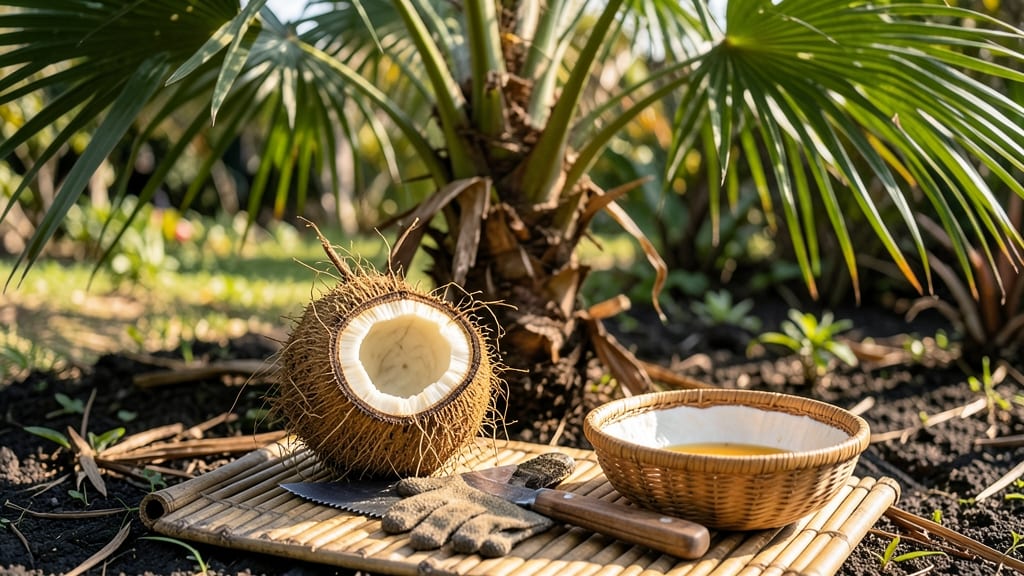
Your palm tree fruit isn't just for eating—it's the key to growing your own tropical tree. 🌿 The secret to faster sprouting lies in how you handle the seed inside, whether it's a coconut, date pit, or other palm fruit.
I've cracked the code after years of trial and error, and now you can skip the months-long wait for germination.
Start by identifying ripe fruit—coconuts should be heavy with a dull thud when tapped, while dates soften and darken. Once harvested, proper extraction is everything: soak coconut meat in water for 3-5 days to speed up germination, or pre-sprout date pits in damp paper towels.
The right moisture and temperature make all the difference.
Within 2-4 weeks, you'll see roots poking through, ready for planting. The payoff? A head start on growing your own palm tree that might take years from seed in the ground. No more waiting—just watch your tropical oasis grow from that tiny seed.
Works for coconuts, dates, and other palm varieties, though germination times vary. Here's how to turn that fruit inside into a thriving tree—no patience required.
Natural Triggers Behind Seed Growth
Understanding why palm tree fruit (like coconuts or dates) develops seeds inside—and why some germinate faster than others—boils down to a mix of biological instincts, environmental cues, and internal chemistry. Here’s why it happens, broken down by the key drivers:
Palm tree fruits are packed with seeds because evolution wired them to survive. Seeds inside these fruits are designed to: - Stay dormant until conditions are perfect – Many tropical palm seeds (e.g., coconut) only sprout when exposed to moisture, warmth, and light, mimicking their natural tropical habitat.
Without these triggers, the seed "holds back" growth to avoid wasting energy. - Resist early decay – The hard outer shell (like a coconut’s husk) protects the seed from pests, fungi, and dehydration, ensuring it lasts until the right moment.
Some seeds even release chemical inhibitors to delay germination until they’re far from the parent plant. - Prioritize genetic diversity – Cross-pollination (common in palms like the date palm) ensures seeds inherit traits from different parents, increasing survival odds.
This is why some fruits produce multiple seeds—nature’s way of hedging bets.
Pro Tip: 💡 If you’re impatient, mimic nature’s triggers! Soak coconut meat in water for 24–48 hours before planting—this breaks dormancy faster than waiting for rain.
Seeds inside palm fruits won’t sprout unless they experience the right stress signals. Here’s how climate plays a role:
| Factor | How It Works | What Happens If Missing? |
|---|---|---|
| Warmth (70–90°F) | Triggers enzymes that break down stored food (endosperm) into energy for the seedling. | Seed stays dormant or rots if too cold. |
| Moisture | Softens the seed coat, allowing oxygen and water to reach the embryo. | Seed dries out or develops fungal infections. |
| Light Exposure | Some seeds (like palmyra palm) need light to activate germination hormones. | Seed may sprout underground, leading to weak growth. |
Warning: ❄️ Freezing temperatures can kill palm seeds instantly. If you’re in a cooler climate, use a seedling heat mat (set to 80°F) to replicate tropical conditions.
Not all palm tree fruits are ready to sprout—they need internal chemical signals to kickstart growth.
Key players include: - Gibberellins – Hormones that tell the seed, "It’s time to grow!" They’re produced when the seed detects moisture and warmth. - Abscisic Acid – The "brake pedal" hormone that keeps seeds dormant until conditions are ideal.
In immature or damaged fruits, this hormone may linger too long. - Ethylene Gas – Released during fruit ripening, it can stimulate germination in some palms (like the sugar palm).
Actionable Fix: 🔥 *If your palm fruit isn’t sprouting, try scarifying the seed coat (lightly sanding or nicking it) to help gibberellins penetrate faster.
In the wild, palm tree seeds face constant threats—and some only germinate as a last-resort survival tactic:
- Fungal Attacks – If a seed senses mold or rot in its surroundings, it may speed up germination to escape.
- Insect Damage – Chewed husks or cracked shells can trigger emergency sprouting (even if conditions aren’t perfect).
- Competition – In dense palm groves, seeds may germinate earlier to outcompete neighbors for sunlight.
Prevention Tip: ✨ To avoid pests, store palm fruits in a dry, well-ventilated place before planting. If mold appears, discard the fruit—don’t risk infecting your soil.
Sometimes, physical stress is what wakes up a dormant seed:
- Cracked Husks – A broken coconut shell lets in more oxygen and moisture, accelerating germination.
- Animal Interaction – Birds or rodents may peck or carry seeds, exposing them to new conditions that trigger growth.
- Human Intervention – Scratching or soaking seeds (like date pits) mimics natural wear and tear, helping them break dormancy.
DIY Hack: 🔪 Use a knife to gently score the tough outer layer of a palm seed (like a coconut’s "eye"). This lets water in without damaging the embryo.*
Quick fixes for stubborn palm tree seeds
If your palm tree seeds are taking forever to sprout—or worse, staying stubbornly dormant—don’t panic! With the right approach, you can coax them into action. Below are practical, step-by-step solutions tailored to common germination roadblocks, plus prevention tips to keep future batches sprouting like a dream. 🌱✨
If your palm seed’s outer husk is too tough, moisture and oxygen can’t penetrate—leading to slow or no germination.
How to Fix It:
- 🔪 Scratch or Nick the Shell Use a sharp knife or sandpaper to gently score the seed’s hard outer layer (avoid cutting too deep). This creates tiny entry points for water without damaging the embryo inside. Pro Tip: Soak the seed in warm water for 10 minutes first—it’ll soften slightly and make scoring easier. 🌡️
- 🌊 Pre-Soak in Warm Water Submerge the seed in lukewarm water (not boiling) for 24–48 hours. Change the water every 12 hours to prevent mold. This mimics natural rain cycles and softens the husk. Warning: Never use hot water—it can kill the seed!
Prevent Future Issues:
- Store seeds in a cool, dry place until planting to avoid premature hardening.
- Harvest seeds when they’re firm but not rock-hard—overripe seeds lose viability.
Palm seeds thrive in humid, warm environments. If your germination setup feels too dry or cold, sprouting slows down or stops.
How to Fix It:
- 💧 Use a Humidity Dome Place your planted seed in a clear plastic bag or under a glass cloche to trap moisture. Poke a few holes for airflow to prevent mold. Mist the soil lightly every 2–3 days. Pro Tip: Add a damp paper towel around the seed for extra humidity—palms love it! 🌧️
- 🌡️ Warmth is Key Keep your germination container in a spot with consistent warmth (75–85°F). A heating mat (set to low) or a sunny windowsill works great. Avoid drafts or AC vents! Quick Test: Press your finger into the soil—it should feel like a damp sponge, not soggy or dry.
Prevent Future Issues:
- Plant seeds in well-draining, slightly acidic soil (pH 5.5–6.5) to mimic their natural habitat.
- Avoid overwatering—palms hate "wet feet." Let the top inch of soil dry out between waterings.
Some palm seeds take months to sprout. If you’re waiting too long, try these time-saving hacks.
How to Fix It:
- 🌱 Stratify for Stubborn Seeds If your seed isn’t sprouting in 4–6 weeks, try stratification:
- Mix the seed with moist perlite or sand.
- Place in a sealed bag and refrigerate for 4–6 weeks.
- Plant after the cold treatment—this breaks dormancy for many tropical seeds.
- 💡 Use a Root Stimulator Soak the seed in a diluted rooting hormone (like seaweed extract or hydrogen peroxide at 3%) for 1 hour before planting. This jumpstarts cellular activity. Caution: Never use undiluted solutions—it can burn the seed!
Prevent Future Issues:
- Test seed viability first by floating them: Healthy seeds sink; floaters are likely dead.
- Plant seeds fresh—older seeds (over 6 months) germinate poorly.
If your seed looks mushy, discolored, or has mold, pests or fungi might be sabotaging germination.
How to Fix It:
- 🐜 Check for Pests Inspect the seed and soil for weevils, fungus gnats, or mold. If you see:
- White cottony growth → Fungal infection. Discard the seed and sterilize your container with 10% bleach solution, then rinse.
- Tiny black bugs → Fungus gnats. Treat soil with neem oil or let it dry out completely for 2 days before replanting.
- 🌿 Repot in Sterile Soil If the seed is moldy, transfer it to fresh, sterile potting mix (add perlite for drainage). Avoid compost-heavy soil, which can harbor pathogens.
Prevent Future Issues:
- Sterilize tools and containers with rubbing alcohol before handling seeds.
- Store seeds in an airtight, dry container with a silica gel packet to prevent mold.
Small adjustments can make a huge difference in germination speed:
- 🌅 Light Exposure: Once the radical (first root) appears, move the seed to bright, indirect light to encourage shoot growth.
- 🔄 Rotate Daily: If the seedling starts leaning, gently rotate the container to ensure even light exposure.
- 💧 Bottom Watering: Place the pot in a tray of water for 10 minutes instead of top-watering—keeps moisture consistent without over-saturating.
- ⏳ Track Progress: Label seeds with the planting date and monitor for radicle (root) emergence—this is your first sign of life!
With these fixes, your palm tree seeds should be sprouting in weeks instead of months. Remember: patience and consistency are key—palm trees reward careful gardeners with stunning, long-lived rewards! 🌴💚
Frequently asked questions
How do I know when palm tree fruit is ripe enough to harvest?
For coconuts, tap the shell—it should sound dull (not hollow) when fully ripe. Dates soften and darken to deep brown/black, while palmyra palms develop a sweet smell. Harvest when the fruit separates easily from the tree. Overripe fruit may spoil quickly or produce weak seedlings.
Can I grow a palm tree from any fruit I find?
No—only certain palm fruits contain viable seeds. Coconuts, dates, and sugar palms are common edible options, but avoid fruits from ornamental palms (like Kentia palms)—their seeds often won’t germinate. Always check if the fruit is from an edible, seed-producing variety first.
Why won’t my coconut sprout even after soaking?
Coconut seeds need 3 key triggers: warmth (75–85°F), moisture, and oxygen. Try scoring the husk lightly with sandpaper, then plant in sterile potting mix (not compost). If mold appears, discard it—fungus can block germination entirely. Patience helps too: some take 2–3 months!
Do I need special tools to extract palm seeds?
Basic tools work! For coconuts, use a sharp knife to cut open the husk, then scrape out the seed. Date pits can be cleaned with warm water and a brush. Avoid power tools—palm seeds are delicate. Sterilize tools with rubbing alcohol between uses to prevent contamination.
How long can I store palm fruit before planting?
Freshness matters! Coconuts stay viable for 6–12 months if stored dry and cool, while date pits last 3–6 months. After that, germination rates drop sharply. For best results, plant within 1–2 months of harvest. Test viability by floating seeds—sinkers are good, floaters are likely dead.