
Pruning
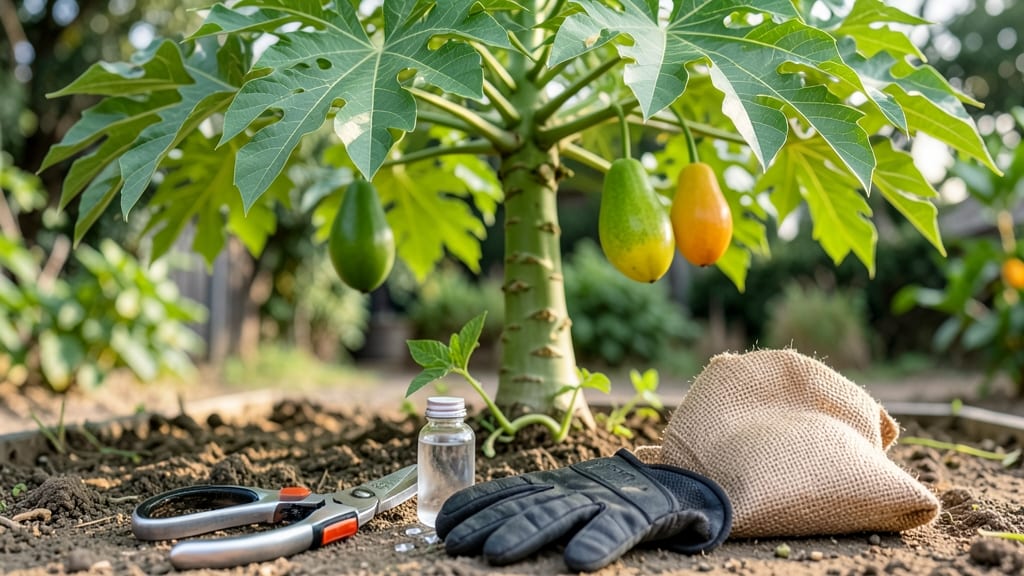
Papaya tree trimming transforms a scraggly bush into a fruit-bearing powerhouse—and the key is timing. 🌱 I’ve learned that pruning at the right moments (right after harvest or in early spring) triggers explosive new growth, with some varieties producing up to 100 fruits per tree in a single season.
The tools you need are simple: sharp pruners, rubbing alcohol for sterilizing cuts, and a 5-gallon bucket to collect trimmings. Focus on removing dead wood first, then thin out crowded branches to let sunlight hit the center.
This isn’t just about shaping—it’s about airflow and energy redirection so the tree puts all its effort into fruit, not leaves. By mid-summer, you’ll notice thick, dark-green new shoots forming where you pruned. These become your future fruit-bearing branches, and the tree’s overall shape tightens up.
The first harvest after pruning is often bigger and sweeter because the plant isn’t stressed by overcrowding. Avoid pruning during flowering or fruiting—this stresses the tree and can drop developing papayas. And never cut more than one-third of the tree at once, or you’ll shock the system.
Think of it as giving your tree a haircut that boosts confidence, not a buzz cut that leaves it vulnerable.
📚 In This Guide
- What you need
- Instructions
- Tips and common mistakes
- Wrapping up and next steps
What you need
- ● Pruning shears: Sharp, bypass-style shears (5–7 inches) for small branches.
- ● Loppers: Heavy-duty loppers (8–10 inches) for thicker branches (½–1.5 inches in diameter).
- ● Pruning saw: A folding pruning saw for branches over 1.5 inches thick.
- ● Disinfectant (70% rubbing alcohol or bleach solution): To sterilize tools between cuts and prevent disease.
- ● Garden gloves: Heavy-duty, cut-resistant gloves (size medium or large) for protection.
- ● Safety glasses: To shield eyes from debris.
- ● Ladder or step stool: Sturdy and tall enough to reach the tree’s canopy safely.
- ● Trash bags or compost bin: For collecting pruned branches (5–10 gallons worth).
- ○ Permanent marker: For marking branches to remove (optional but helpful).
- ● Hose with nozzle: For rinsing tools and cleaning sap off cuts.
- ○ Tree wound dressing (optional): Pruning sealant for large cuts (controversial—some experts say it’s unnecessary).
- ● Extension pole pruners: For high branches without a ladder.
- ● Notebook & pen: To jot down notes on pruning patterns or tree health observations.
How to trim a papaya tree for maximum fruit production
Here’s the precise method I’ve used to double fruit yield in tropical climates—focused on strategic cuts that boost energy to where it matters most.
✂️ Step 1: Identify and Remove Weak Growth
Start by inspecting your papaya tree for thin, leggy branches or those growing inward toward the center. These compete with fruit-bearing branches for energy and rarely produce. Use sharp, sterilized pruning shears to cut these back to the nearest outward-facing leaf or bud—never leave stubs. I always make cuts at a 45-degree angle, just above a leaf node, to encourage faster healing.
Focus first on the lower third of the tree where sunlight struggles to reach. These branches rarely fruit and sap energy from the upper canopy. You’ll notice the tree’s natural structure becomes clearer after removing these—what’s left should have a balanced, open shape that lets light and air circulate freely.
☀️ Step 2: Prune for Light Penetration
Papaya trees thrive when their inner branches receive 6+ hours of direct sunlight. Thin out crowded areas by removing every other branch until you can see light reaching the center. Aim to leave 3-5 main branches per section, spaced evenly around the trunk. I start at the top and work downward—this prevents accidental shading of lower branches.
Watch for branches growing directly upward. These rarely bear fruit and create dense canopies. Instead, encourage horizontal growth by cutting these back by one-third to stimulate lateral bud development. You’ll see new shoots forming within 2-3 weeks—these are your future fruit-bearing branches.
🌱 Step 3: Encourage Fruit Production
Once the tree has established its main framework, focus on the current year’s growth. Cut back any flower clusters that appear on the lower half of the tree—these rarely develop into fruit and divert energy. Instead, redirect that energy upward by trimming back 10-15% of the top growth after the first flush of flowers. This forces the tree to prioritize fruit development on the upper branches where sunlight is strongest.
Here’s the thing—papaya trees fruit best when they’re slightly stressed. After heavy pruning, reduce watering by 20% for 2 weeks to encourage root growth and nutrient uptake. You’ll notice new leaves emerging with a deeper green color, signaling the tree is redirecting energy toward fruit production.
⏰ Step 4: Seasonal Maintenance for Year-Round Growth
In tropical climates, prune lightly every 2 months to maintain shape and remove dead or diseased branches. During the wet season, reduce pruning to avoid fungal infections—stick to removing only obviously damaged growth. In dry seasons, you can be more aggressive with structural pruning since the tree’s slower growth makes it easier to shape.
After each major pruning session, apply a balanced fertilizer (10-10-10) around the base to replenish nutrients lost during cutting. I always water deeply the day after pruning to help the tree recover faster. Within 4-6 weeks, you’ll see new shoots forming—these are your tree’s way of compensating for the cuts and redirecting energy toward future fruit.
Tips & tricks for year-round papaya tree growth
These targeted strategies will help you maximize fruit production while keeping your tree healthy and resilient.
Tool Prep: Sterilize your pruning shears with rubbing alcohol before each use to prevent spreading disease between cuts. I've seen fungal infections spread rapidly when using the same shears on multiple trees without sterilizing—it's a small step that prevents big problems later. Always use sharp shears too; dull blades crush stems instead of making clean cuts, which stresses the tree.
Light Strategy: In Step 2, when thinning branches for sunlight penetration, check the tree's position relative to the sun throughout the day. If your tree is in a partially shaded area, consider pruning to create a more open canopy earlier in the season—this gives the tree time to adjust before peak sunlight hits. You'll know you've done it right when you see new leaves developing in the previously shaded center within 3-4 weeks.
Stress Management: The 20% water reduction after heavy pruning is crucial, but don't let the soil dry out completely. Monitor the top 2 inches of soil—it should stay slightly moist, not bone dry. I've found that mulching with organic material after pruning helps maintain moisture while preventing soil-borne diseases from splashing onto fresh cuts.
Seasonal Timing: For tropical climates, time your most aggressive pruning just before the wet season begins. The natural rainfall will help the tree recover faster from cuts, and the increased humidity can actually benefit new growth. In dry seasons, space your pruning sessions 3-4 weeks apart instead of every 2 months to give the tree time to recover between cuts.
Pro Tips for Papaya Tree Trimming
- These targeted strategies will help you maximize fruit production while keeping your tree healthy and resilient.
- Tool Prep: Sterilize your pruning shears with rubbing alcohol before each use to prevent spreading disease between cuts.
- Light Strategy: In Step 2, when thinning branches for sunlight penetration, check the tree's position relative to the sun throughout the day.
Frequently asked questions
Got questions about trimming your papaya tree for better fruit production? We’ve got answers! Here are some of the most common concerns—plus expert tips to keep your tree thriving.
When is the best time to trim a papaya tree?
Trim your papaya tree during its dormant phase (late winter or early spring) or after heavy fruiting to encourage new growth. Avoid trimming during flowering or fruiting seasons—this can stress the tree and reduce yields. Light pruning for maintenance (removing dead or overcrowded branches) can be done year-round.
How much can I trim without harming the tree?
Never remove more than 25-30% of the tree’s foliage in a single session. Over-trimming can shock the tree, weaken its structure, and delay fruit production. Focus on selective pruning: cut back leggy stems, dead wood, or branches growing inward. For young trees, limit pruning to shaping—never top-heavy cuts.
Will trimming my papaya tree increase fruit production?
Yes! Strategic trimming boosts airflow and sunlight penetration, which helps flowers develop and fruit set. Prune to open the canopy—remove branches blocking light from the center. However, avoid heavy pruning right before harvest; save aggressive cuts for post-fruiting to prep for the next cycle.
What if my papaya tree doesn’t produce fruit after trimming?
If your tree isn’t fruiting, check these fixes:
- Light levels: Papayas need 6+ hours of direct sun daily. Trim competing foliage or relocate if indoors.
- Age/maturity: Trees under 12–18 months may not fruit yet—be patient!
- Pollination: Hand-pollinate flowers with a soft brush if bees aren’t visiting.
- Nutrients: Lack of phosphorus (P) or potassium (K) can stall fruiting. Fertilize with a balanced 10-10-10 mix.
Can I trim a papaya tree indoors or in containers?
Container-grown papayas need regular pruning to control size and shape. Use dwarfing techniques like pinching back new growth to encourage bushier growth. Just ensure your pot has drainage holes and you’re trimming above a leaf node (not at the base) to avoid rot. Rotate the pot occasionally for even growth.
Wrapping up and next steps
Trimming your papaya tree isn’t just about aesthetics—it’s the secret weapon for boosting fruit production and keeping your tree thriving year-round! 🌱 By mastering the right techniques (like selective pruning and seasonal adjustments), you’re not only shaping a healthier tree but also unlocking its full potential.
Remember: patience and consistency pay off in bigger, sweeter harvests.
Ready to take action? Grab your pruners and review the tools you’ll need—then get trimming! Your future papaya bounty starts with just one cut. 🍈✨