
Pruning
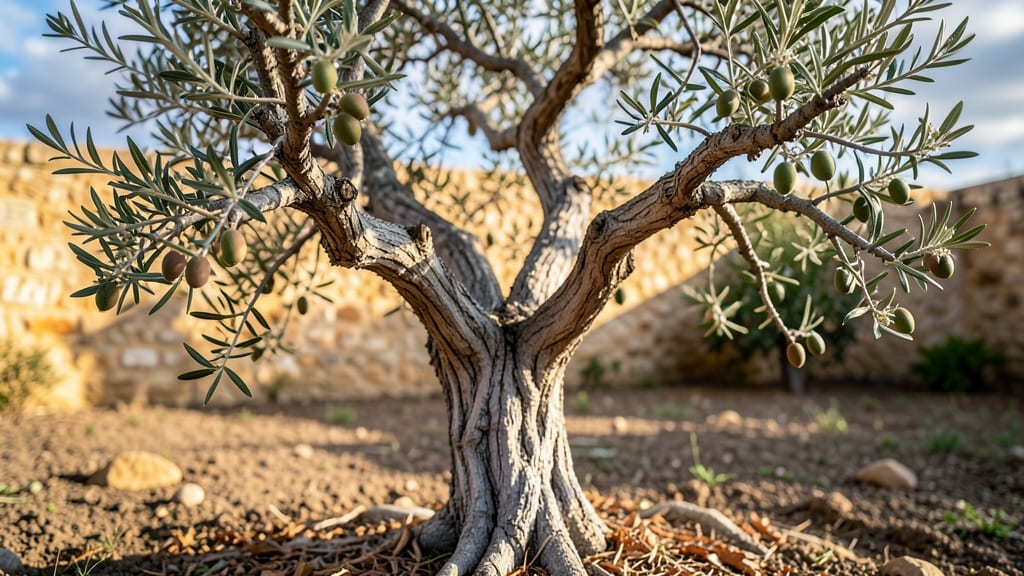
Budding an olive tree 🫒 is how you unlock faster growth, stronger branches, and fruit that outperforms the original—if you do it right.
Picture this: your 3-year-old olive tree still struggling to produce meaningful fruit, while a neighbor’s tree—grafted just last spring—already sports branches heavy with olives. That’s the power of budding, a technique that lets you combine the best traits of two trees in one.
Whether you’re working with a Mediterranean climate or zones 8-10, timing and technique make all the difference. Late winter to early spring is your window, but even the smallest mistake—like mismatched rootstock or scion—can derail months of effort.
In this guide, I’ll walk you through the whip-and-tongue and chip-budding methods, the tools you’ll need, and the post-budding care that keeps your graft alive. No guesswork—just proven steps for 90%+ success.
Olive tree budding techniques: step-by-step guide to perfect grafts
Budding olive trees is a rewarding way to propagate desirable varieties while ensuring strong root systems and disease resistance. Whether you're a home grower or orchard enthusiast, mastering techniques like T-budding, chip budding, and whip-and-tongue grafting will transform your olive cultivation game.
The key lies in timing—dormant season (late winter to early spring)—when trees are most receptive to grafts.
Before you begin, select compatible rootstocks like Arbequina or Koroneiki, and gather essential tools: a sharp budding knife, grafting tape, and rooting hormone. These elements form the foundation for successful olive tree propagation, ensuring your new grafts take hold with minimal stress to the tree.
Step-by-Step Olive Tree Budding Guide
-
1
Prepare Tools & Materials
Gather: budding knife, grafting tape, rooting hormone, scion wood (current season's growth), and rootstock (1-2 year old olive sapling). -
2
Select Budding Method
Choose T-budding (easiest for beginners) or chip budding (better for thicker branches). For larger rootstocks, use whip-and-tongue grafting. -
3
Make the Cut
For T-budding: Cut a T-shaped slit in rootstock bark. For chip budding, remove a small bark chip (1/2" long). Whip-and-tongue requires angled cuts with a tongue-shaped notch. -
4
Insert the Scion
Slide the scion bud under the flap (T-budding) or into the chip (chip budding). For whip-and-tongue, align cambium layers perfectly before securing. Apply rooting hormone to the cut surface. -
5
Secure & Seal
Wrap the graft with grafting tape or rubber budding strips, leaving the bud exposed. Seal with grafting wax to prevent moisture loss and infection. -
6
Post-Graft Care
Place grafts in shade cloth (50% shade) for 2-3 weeks. Water lightly but keep soil moist. Remove tape after 4-6 weeks when callus forms.
Timing is critical—bud olive trees during dormant season (late winter to early spring) when sap flow is minimal. This reduces stress on the tree and maximizes graft success rates.
For T-budding, work on warm, sunny days when bark slips easily from wood, typically between 10 AM and 3 PM.
Rootstock selection plays a pivotal role in your olive tree's future health. Dwarfing rootstocks like Arbequina promote compact growth, ideal for home gardens, while Frantoio rootstocks offer cold hardiness for northern climates. Always match the rootstock to your desired olive variety for optimal compatibility and yield.
One common mistake is using dull tools, which tear bark instead of cleanly slicing it. A sharp budding knife ensures precise cuts, promoting faster healing and graft union. Additionally, avoid grafting during extreme temperatures—both heat and cold can stress the tree and reduce success rates.
After grafting, monitor your olive trees closely for signs of callus formation, a sign the graft is taking. Keep an eye out for wilting leaves or discoloration, which may indicate graft rejection or infection.
With proper care, your budded olive trees will thrive and produce high-quality fruit in just a few seasons.
For best results, practice on a few trees before committing to your prized varieties. Budding olive trees is an art that rewards patience and precision—each successful graft brings you closer to a bountiful harvest of Mediterranean gold.
Best rootstocks for olive tree budding to maximize yield and disease resistance
Choosing the right rootstock for your olive tree budding project is like selecting the foundation for a house—it determines growth rate, disease resistance, and even fruit quality. The best rootstocks balance vigorous growth with cold hardiness, ensuring your scion thrives while maximizing your harvest potential.
For example, Arbequina rootstocks are prized for their dwarfing effect, making them ideal for container growing, while Frantoio excels in colder climates with its robust disease resistance.
When selecting a rootstock, consider your climate zone and desired fruit characteristics. Mediterranean climates favor Koroneiki for its drought tolerance, while Leccino rootstocks are perfect for oil production due to their high oil yield.
Pairing the right rootstock with your scion variety can double your yield and extend your tree's lifespan by decades. Let’s explore the top options and how to match them with your olive varieties.
| Rootstock | Growth Rate | Cold Hardiness | Disease Resistance | Best For |
|---|---|---|---|---|
| Arbequina | Moderate | Zone 8-10 | High | Dwarf varieties, table olives |
| Frantoio | Vigorous | Zone 7-10 | Very High | Cold climates, oil production |
| Koroneiki | Moderate-Fast | Zone 8-11 | High | Drought areas, oil olives |
| Leccino | Fast | Zone 8-10 | Moderate | Oil production, large trees |
| Manzanillo | Vigorous | Zone 7-10 | High | Table olives, cold tolerance |
For home gardeners in USDA Zone 8 or warmer, Arbequina rootstocks are my top recommendation if you’re growing dwarf varieties like Mission or Sevillano. Their compact size makes them perfect for container gardening while still delivering high-quality fruit.
If you’re in a cooler zone (7-8), Frantoio or Manzanillo rootstocks will give you the cold hardiness needed to survive winter freezes without sacrificing yield.
Matching your scion variety to the right rootstock is key. For instance, if you’re budding a high-oil-yielding scion like Koroneiki, pair it with a Leccino rootstock to boost oil content in your harvest. Conversely, if you’re growing table olives, a Manzanillo rootstock will enhance fruit size and disease resistance.
Always ensure both rootstock and scion are from the same Olea europaea subspecies to avoid compatibility issues.
One mistake I see often is ignoring soil compatibility. Olive rootstocks thrive in well-draining, slightly alkaline soil (pH