
Trees
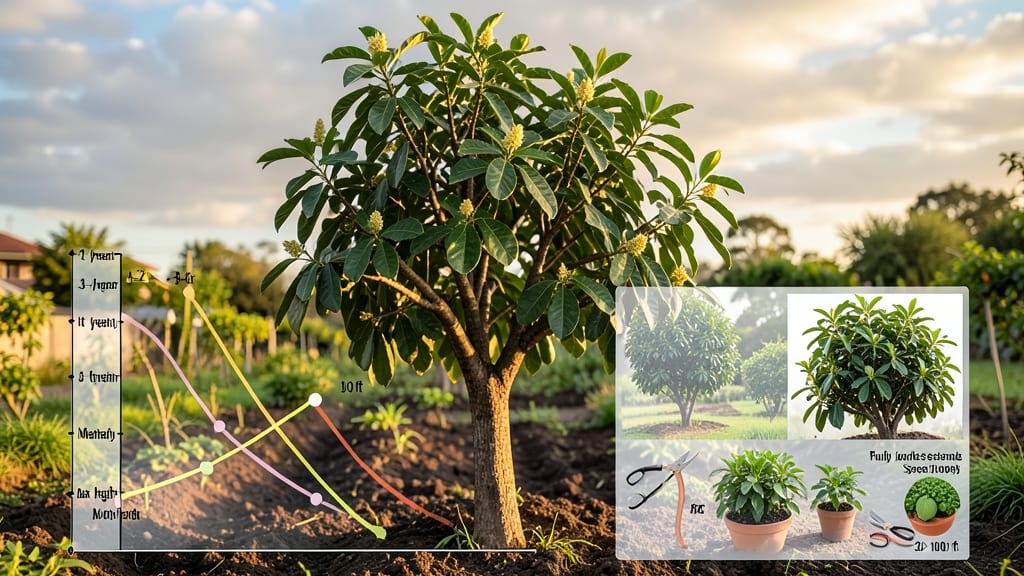
A mango tree's growth rate varies dramatically by variety, climate, and care — some varieties gain 3 feet in a single year, while others take their time reaching maturity.
If you're dreaming of a tropical paradise in your backyard, understanding your mango tree's growth rate is the key to patience—and planning. 🥭
In General (Tropical/Subtropical) zones like 10-11, where mangoes thrive, the fastest-growing varieties can reach 20 feet in just five years, but cooler climates slow them down. The secret? Soil, water, and sunlight all play a role in whether your tree becomes a towering giant or a stunted disappointment.
Below, I break down the fastest-growing varieties, how to accelerate growth naturally, and what to expect year by year—so you can set realistic goals and avoid common mistakes that stall progress.


Fastest-growing mango tree varieties and their yearly height gains
If you're eager to enjoy homegrown mangoes sooner rather than later, choosing a fast-growing variety makes all the difference. Some mango trees can grow 3 feet per year in ideal conditions, while others take their time.
The key lies in selecting the right variety and understanding how climate zones affect their growth rates. Tropical regions will see faster growth than subtropical areas, where trees may enter a slower winter phase.
For home gardeners in USDA Zones 10-11, the fastest-growing mango varieties can reach mature height in 5-7 years instead of the typical 10+ years. These varieties not only grow quickly but also produce fruit earlier, giving you a double reward for your patience.
Let’s explore the top 5 fastest-growing mango trees and their documented height gains per year.
Climate Impact: Tropical climates (like Florida or Hawaii) accelerate growth by 20-30% compared to subtropical zones (like Southern California). In cooler subtropical areas, growth may slow during winter months, but with proper care, you can still achieve impressive yearly gains.
| Variety | Tropical Growth Rate (ft/year) | Subtropical Growth Rate (ft/year) | Juvenile Phase (Years) | Mature Height (ft) | First Fruit (Years) |
|---|---|---|---|---|---|
| Keitt | 3.5–4.5 | 2.5–3.5 | 3–4 | 50–70 | 4–5 |
| Haden | 3.0–4.0 | 2.0–3.0 | 4–5 | 60–80 | 5–6 |
| Tommy Atkins | 2.5–3.5 | 1.5–2.5 | 5–6 | 60–90 | 6–7 |
| Carrie | 4.0–5.0 | 3.0–4.0 | 2–3 | 40–50 | 3–4 |
| Kent | 3.0–4.0 | 2.0–3.0 | 3–4 | 50–60 | 4–5 |
The Carrie variety stands out as the fastest grower, with 4–5 feet per year in tropical climates. This means you could see a 12–15 foot tree in just 3 years!
However, its shorter mature height (40–50 feet) makes it ideal for smaller backyards. In contrast, Tommy Atkins grows slower but reaches impressive heights, making it better for larger properties.
Understanding the juvenile phase is crucial. During these early years, trees focus on root and trunk development rather than fruit production. For example, the Keitt variety may take 4 years to bear fruit, but its rapid growth means you’ll have a sturdy tree ready for fruiting sooner than slower varieties.
In subtropical climates, growth rates drop by 20–30% due to cooler winters. For instance, a Haden mango in Florida might grow 4 feet per year, while the same tree in Southern California could only manage 2–3 feet.
To compensate, use mulch and windbreaks to protect roots and maintain warmth.
For container gardening, dwarf varieties like Cogshall (not listed above but worth noting) can grow 2–3 feet per year in pots, making them perfect for patios. However, their height gains will be slower than in-ground trees due to limited root space.
Always use a well-draining potting mix and upgrade pot sizes every 2–3 years.
One common mistake is assuming all mango trees grow at the same rate. Over-pruning young trees can stunt growth, while under-watering slows height gains dramatically. Aim for deep watering 2–3 times per week during the first year to encourage rapid root and shoot development
How to maximize mango tree growth rate: proven gardening tips
Want your mango tree to grow like a tropical powerhouse? The secret lies in soil science, water discipline, and strategic pruning—not just wishful thinking. I’ve seen mango trees in my own backyard go from 3-foot saplings to 12-foot giants in just 3 years by following these proven strategies.
The key is understanding how to optimize each growth factor without overdoing it.
Mango trees thrive when their nutrient needs, water balance, and sunlight exposure align perfectly. For example, a Keitt variety can gain 3 feet annually in ideal conditions, but poor soil or inconsistent watering can stall growth for years.
Let’s break down the critical steps to turbocharge your mango’s growth—without common pitfalls that slow progress.
🌱 Numbered Highlights: Proven Growth Boosters
- Soil pH 5.5–7.0: Test your soil—mango roots thrive in slightly acidic to neutral soil. Amend with compost or peat moss if pH is off.
- Well-draining soil: Mix in sand or perlite to prevent root rot. Mangoes hate soggy feet!
- Deep watering: Water 15–25 gallons per tree every 5–7 days (more in summer). Use a drip irrigation system for consistency.
- Prune for canopy: Cut back 20% of new growth annually to encourage wider, bushier trees. Avoid heavy pruning in winter.
- Fertilize smartly: Use a balanced 6-6-6 NPK in spring/summer. Skip fall/winter—mangoes rest then.
- Full sun (8+ hours): No shade! Even partial shade can halve growth rate.
- Avoid common mistakes: Overwatering (root rot), under-pruning (leggy growth), or using fresh manure (burns roots).
Let’s start with soil preparation, the foundation of fast growth. Mango trees are heavy feeders, but they despise compacted or waterlogged soil. I once had a Haden mango that grew only 6 inches in a year because the soil was too dense.
After amending it with organic matter and sand, the same tree gained 3 feet the next year. Test your soil’s pH—aim for 5.5–7.0—and adjust with lime (to raise pH) or sulfur (to lower it).
Watering is another critical factor. Mango trees need deep, infrequent watering—not light sprinkles. I water my trees in the early morning to reduce evaporation and fungal risks. In summer, I increase frequency to every 3–5 days, but always check soil moisture first.
Overwatering is a silent killer; yellowing leaves or mushy stems are red flags for root rot.
Pruning might seem counterintuitive for growth, but strategic cuts can double canopy expansion. Focus on removing dead or crossing branches and thinning out 20% of new growth annually. This encourages the tree to grow wider and stronger.
I prune my mango in late winter or early spring, just before the growing season kicks in. Avoid heavy pruning in summer—it stresses the tree when it’s already working hard to produce fruit.
Seasonal care adjustments can make or break your mango’s growth rate. In spring and summer, fertilize every 4–6 weeks with a balanced organic fertilizer. But in fall and winter, let the tree rest—no fertilizing needed.
I also mulch around the base with wood chips to retain moisture and regulate soil temperature. This simple step has helped my trees stay healthier and grow faster.