
Diseases
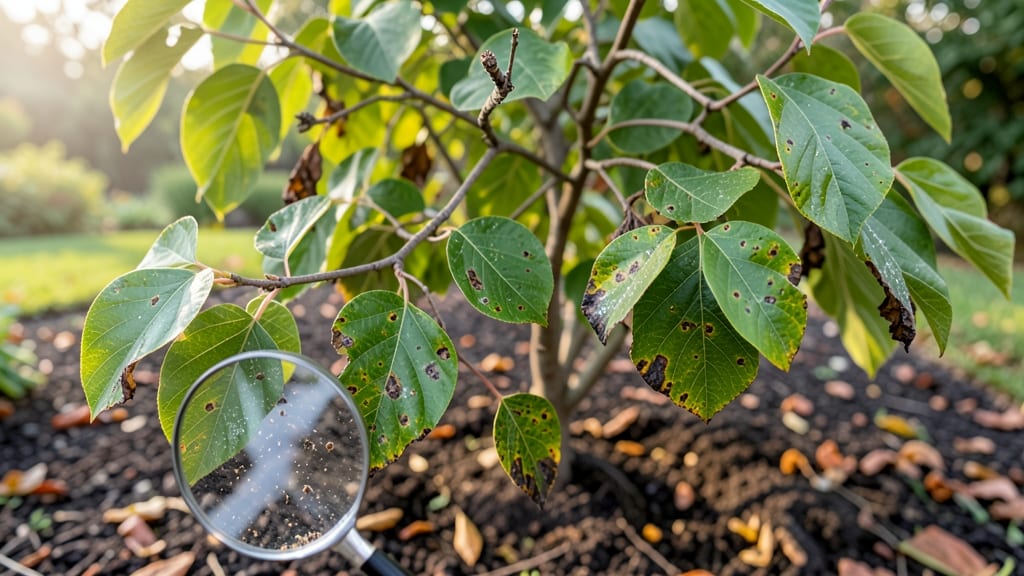
Your Oklahoma redbud tree’s vibrant pink blooms could vanish if you miss these early disease signs. 🌸 I’ve watched powdery mildew turn my neighbor’s redbud leaves white in weeks—before they even noticed.
The key to saving yours? Spotting symptoms fast and acting with organic fixes that match Oklahoma’s humid summers and dry spells.
Redbuds here battle powdery mildew (white dust on leaves), anthracnose (dark spots with yellow halos), and leaf spot (brown patches that multiply). The culprits? Too much shade, poor airflow, or last year’s infected leaves left on the ground.
I’ve cured mildew by spraying neem oil every 10 days during humid stretches—no chemicals needed.
Start with a cleanup: rake up fallen leaves and prune for airflow. For fungal spots, mix 1 tablespoon baking soda with a gallon of water and spray undersides weekly. Within 2-3 weeks, you’ll see fresh green leaves pushing through—no more sad, spotted canopies.
When blackened stems appear or the tree wilts despite care, call an arborist. But for 90% of cases, these organic steps work—even in Oklahoma’s unpredictable climate. Your redbud’s next spring bloom depends on acting now.
Root Causes Of Redbud Tree Stress
The vibrant Cercis canadensis—Oklahoma’s beloved redbud—can fall victim to diseases when environmental or biological stressors create the perfect storm for pathogens. Understanding these triggers helps you take proactive steps to protect your tree.
Below, we break down the key reasons why redbud trees in Oklahoma develop diseases, from fungal opportunists to environmental mismatches.
Redbud trees thrive in well-drained soil, but Oklahoma’s heavy clay or compacted ground can trap excess moisture around roots. When soil stays soggy for prolonged periods, it creates the ideal breeding ground for Phytophthora (root rot) and Fusarium fungi.
These pathogens attack weakened roots, blocking nutrient uptake and causing leaf yellowing, wilting, or sudden dieback.
- Why it happens: Waterlogged soil cuts off oxygen to roots, suffocating them and inviting fungal spores.
- Oklahoma-specific risk: Spring rains followed by summer droughts can leave soil unevenly moist, stressing trees.
- Actionable fix: Amend soil with compost or sand to improve drainage. Avoid overhead watering—use drip irrigation instead.
Redbud trees are susceptible to Anthracnose and Powdery Mildew when their bark or leaves are damaged. Pruning cuts, storm wounds, or even insect bites create entry points for spores floating in Oklahoma’s humid air. Once inside, fungi like Gloeosporium (Anthracnose) thrive, causing dark leaf spots, defoliation, and twig dieback.
- Why it happens: Fungal spores are everywhere—especially after rain. A fresh wound is like an open invitation.
- Oklahoma’s role: High humidity (especially in spring) extends the "spore season," giving fungi more time to infect.
- Actionable fix:
- ✂️ Prune only in dry weather (avoid spring rains).
- 🔥 Sterilize tools with 70% isopropyl alcohol between cuts.
- 🌿 Remove fallen leaves promptly to reduce spore buildup.
Sap-sucking pests like scale insects, aphids, or borers don’t just feed—they stress the tree. Their saliva disrupts nutrient flow, making redbuds more vulnerable to secondary infections like Sooty Mold (a black fungal growth on honeydew). Weakened trees also struggle to recover from environmental stress, creating a vicious cycle.
- Why it happens: Insects create "wound sites" and excrete honeydew, which attracts fungi. Think of it as a buffet for pathogens.
- Oklahoma’s pest hotspots: Warm winters and early springs accelerate insect lifecycles, leading to outbreaks.
- Actionable fix:
- 🔍 Inspect leaves weekly for sticky residue (honeydew) or tiny crawling insects.
- 💦 Blast pests off with a strong water spray (early morning works best).
- 🌿 Introduce beneficial predators like ladybugs or lacewings (available at local nurseries).
Oklahoma’s unpredictable weather—from freezing winter snaps to sudden summer heatwaves—can shock redbud trees into dormancy or overactivity. Cold damage weakens bark, while heat stress dehydrates leaves, both making trees susceptible to Canker Diseases (like Botryosphaeria) or Leaf Scorch.
- Why it happens: Rapid temperature swings disrupt the tree’s natural defenses, leaving it "off guard" for pathogens.
- Oklahoma’s double threat:
- ❄️ Late frosts (March–April) can damage new growth.
- ☀️ Early summer droughts (May–June) dry out leaves, inviting fungal spores.
- Actionable fix:
- 🌡️ Mulch heavily (3–4 inches) to regulate soil temp.
- 💧 Deep-water trees during droughts (1–2 inches per week).
- 🌿 Choose resistant cultivars like Cercis canadensis var. ‘Lavender Twist’ for better cold tolerance.
Redbud trees need balanced nutrients to fight off diseases. In Oklahoma’s alkaline soils (pH 7.5–8.5), essential micronutrients like iron, manganese, and zinc become unavailable, leading to chlorosis (yellowing leaves) and weakened immunity. Deficient trees are easier targets for Bacterial Leaf Spot or Rust Fungi.
- Why it happens: High pH locks out nutrients, while poor organic matter reduces microbial activity that helps roots absorb them.
- Oklahoma’s soil reality: Many areas lack natural organic matter, especially in urban landscapes with compacted soil.
- Actionable fix:
- 📊 Test soil pH (aim for 6.0–7.0). Use sulfur or peat moss to lower pH if needed.
- 🌱 Add compost (2–3 inches annually) to improve microbial activity.
- 💊 Use chelated iron or manganese sulfate sprays for quick fixes (follow label rates!).
Fixing Redbud Tree Ailments Naturally
Once you’ve identified the issue plaguing your Oklahoma redbud tree, it’s time to roll up your sleeves and restore its health—without harsh chemicals. Below are practical, organic solutions tailored to common diseases, along with preventive tips to keep your tree thriving for years.
Think of this as your redbud’s first-aid kit, minus the pharmacy trip.
Cause: Fungal spores thrive in humid Oklahoma summers, coating leaves with a white, powdery film. Fix:
- 🧼 Scrub the leaves with a mixture of 1 tablespoon baking soda + 1 quart water + a drop of dish soap (spray in the early morning to avoid leaf burn).
- 🌿 Prune infected branches (sterilize pruners with rubbing alcohol) to improve airflow.
- 🌱 Apply neem oil spray (1 tsp neem oil + 1 quart water + a few drops of soap) weekly until symptoms fade.
- 🌞 Prevent recurrence: Space trees 6–8 feet apart, water at the base (not overhead), and avoid nitrogen-heavy fertilizers.
Cause: Dark, irregular spots on leaves (often from Cercospora or Septoria fungi) spread via splashing water. Fix:
- 🗑️ Remove and destroy heavily spotted leaves (don’t compost them—bag and trash).
- 💦 Water at the soil level with a drip irrigation system or soaker hose to keep foliage dry.
- 🌿 Copper fungicide spray (organic option: 1 tbsp copper sulfate per gallon of water) applied every 10–14 days during wet spells.
- 🌱 Prevent future outbreaks: Mulch with 3–4 inches of wood chips to deter spore splash-back and improve drainage.
Cause: Dark, sunken lesions on leaves and stems, caused by Colletotrichum fungi—common in Oklahoma’s spring rains. Fix:
- ✂️ Prune infected stems back to healthy tissue (sterilize tools between cuts).
- 🌿 Strengthen the tree with a balanced organic fertilizer (like 5-5-5) in early spring to support recovery.
- 🌧️ Improve drainage by amending clay soil with compost or sand to reduce waterlogging.
- 🌱 Prevent spread: Rake and remove fallen leaves promptly, and avoid overhead watering.
Cause: Sticky honeydew (from aphids/scale) attracts sooty mold, weakening the tree. Fix:
- 💦 Blast pests off with a strong stream of water from a hose (repeat every 3–4 days).
- 🐞 Introduce ladybugs or lacewings (order online or find them at garden centers)—they love aphids!
- 🌿 Spray insecticidal soap (1.5 tbsp per quart of water) directly on infested areas.
- 🌱 Prevent infestations: Plant marigolds or garlic nearby as natural repellents, and avoid over-fertilizing (aphids adore soft new growth).
Cause: Xylella fastidiosa bacteria clog the tree’s water vessels, causing leaf edges to crisp and brown. Fix:
- 💧 Deep-water the tree 2–3 times per week during dry spells (Oklahoma’s heat worsens symptoms).
- ✂️ Prune infected branches (sterilize tools with 70% isopropyl alcohol between cuts).
- 🌿 Apply a seaweed-based fertilizer (like Maxsea) to improve vascular health.
- 🌱 Prevent spread: Avoid wounding the tree (use sharp, clean tools for pruning), and sterilize all gardening tools after use.
- 🌡️ Monitor moisture: Oklahoma’s erratic weather swings (droughts → sudden rains) stress trees—mulch to regulate soil temp. - 🌿 Test your soil: Use an at-home kit to check pH (redbuds prefer 6.0–7.0).
Adjust with sulfur (for alkaline soil) or lime (for acidic). - 🌱 Plant companions: Surround your redbud with drought-tolerant perennials (like coneflowers) to reduce competition for water. - 🔄 Rotate treatments: If a disease persists, alternate between neem oil, copper spray, and baking soda solutions to prevent resistance.
Remember: Patience is key—some fungal issues take 4–6 weeks to fully resolve. With consistent care, your Oklahoma redbud will bounce back, blooming brighter than ever! 🌸
Frequently asked questions
Why do my redbud leaves turn yellow in Oklahoma’s heat?
Yellowing leaves often signal nutrient deficiency or root stress from Oklahoma’s alkaline soil (pH 7.5–8.5). The high pH locks out iron and manganese, causing chlorosis. Test your soil and amend with chelated iron or compost to restore balance. Mulch heavily (3–4 inches) to regulate soil temperature and retain moisture during heatwaves.
How do I tell if my redbud has powdery mildew vs. leaf spot?
Powdery mildew appears as a white, powdery coating on leaf surfaces, while leaf spot shows as brown or black patches with yellow halos. Mildew thrives in humid Oklahoma summers, while leaf spot spreads via water splashes. Check leaf undersides—mildew loves them! Prune infected areas immediately and improve airflow by spacing trees 6–8 feet apart.
Can I save my redbud if the trunk shows dark cankers?
Cankers (sunken, dark lesions) from Botryosphaeria or Valsa fungi are serious but treatable. Prune infected branches 1 inch below the canker using sterilized tools. Apply copper fungicide (organic option: 1 tbsp copper sulfate per gallon) and improve drainage by amending clay soil with compost. Monitor for 2–3 months
Why does my redbud get aphids every spring in Oklahoma?
Aphids love Oklahoma’s warm springs—they multiply fast on tender new growth. Blast them off with a strong water spray (early morning works best) and introduce ladybugs or lacewings (available at nurseries). Avoid over-fertilizing (aphids adore soft growth) and plant marigolds or garlic nearby as natural repellents. Repeat treatments every 3–4 days until pests vanish.
Is it too late to treat my redbud in late summer?
Not at all! Focus on preventive care now: rake up fallen leaves (fungal spores love them), prune for airflow, and apply a neem oil spray (1 tsp per quart of water) to protect against fall infections. Mulch with wood chips to regulate soil temperature and water deeply but infrequently. By late summer, your tree can recover and enter winter stronger—just avoid heavy pruning or fertilizing now.