
Pruning
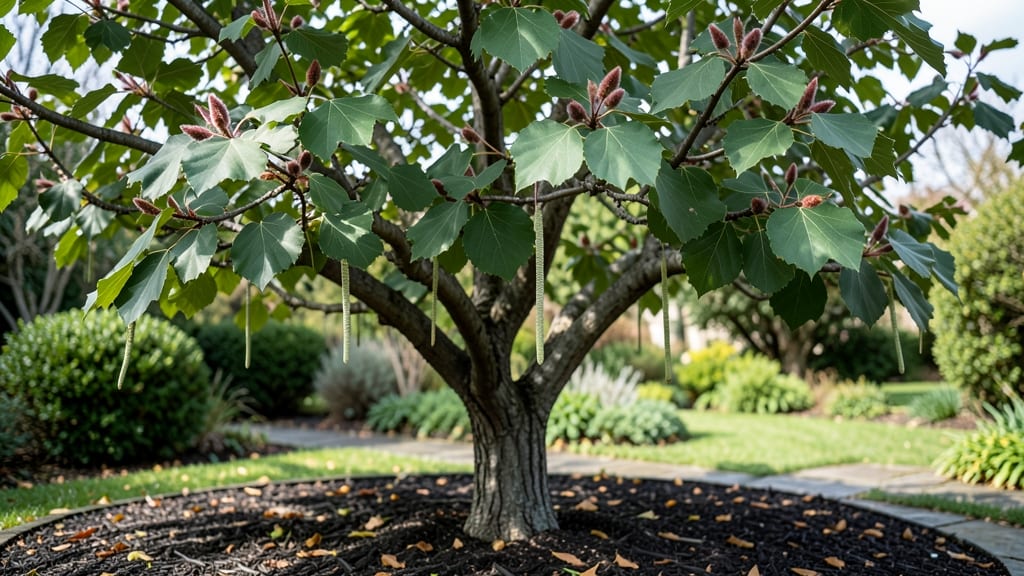
Mulberry trees in spring burst into small, greenish-white flowers between late March and April, signaling the start of fruit development. Prune these trees in late winter or early spring—before new growth appears—to shape the tree and boost berry production.
Spring is when mulberry trees really come alive, with their delicate flowers attracting pollinators like bees and butterflies. 🌸 These blooms are your first clue that fruit will follow in summer, so timing matters—warmer climates may see flowers appear earlier, while colder regions might experience a delayed bloom.
I always recommend pruning just before buds swell, as this encourages stronger branches that support heavier berry loads later on.
When shaping your mulberry tree, focus on removing any dead or crossing branches first—this improves airflow and sunlight exposure. Use sharp pruning shears to make clean cuts at a 45-degree angle, about ¼ inch above a bud or branch junction.
Avoid heavy pruning, as mulberry trees respond best to gradual shaping over multiple seasons.
💡 In This Article
- When and Why Mulberry Trees Bloom in Spring
- Step-by-Step Guide to Pruning Mulberry Trees for Fruit
When and why mulberry trees bloom in spring
Mulberry trees typically bloom between late March and early April, though this timing varies dramatically by climate. In warmer regions like Southern California or Florida, you might spot those delicate greenish-white flowers as early as February, while colder zones in the Midwest or Northeast may see blooms delayed until May.
The flowers themselves are small—about ¼ inch wide—and grow in dense clusters, creating a soft, fuzzy appearance that attracts bees and butterflies within days.
The blooming process is closely tied to temperature cues. Mulberry trees require at least 100-150 chill hours (temperatures between 32-45°F) during winter dormancy to trigger spring flowering.
Without sufficient chill hours, the tree may produce fewer flowers or even skip blooming entirely—a common issue in urban areas with heat islands. Once flowers appear, they last only 5-7 days before dropping, but this brief window is critical for pollination, which directly impacts fruit development.
Sunlight exposure plays a surprising role too. Trees planted in full sun (at least 6-8 hours daily) tend to bloom more vigorously than those in shade, thanks to increased photosynthesis during winter.
The energy stored in the roots fuels flower production. 🌿 For example, a mulberry tree in a sunny backyard might produce 30-50% more flowers than one growing under partial shade, leading to a significantly heavier berry crop later in the season.
What many gardeners don't realize is that mulberry flowers are actually perfectly self-fertile, meaning a single tree can produce fruit without cross-pollination. However, bees still play a role in improving fruit set by increasing the number of pollinated flowers.
The fruits that develop from these blooms start as tiny green berries, gradually turning purple or black by summer—a process that takes about 120-150 days depending on the variety.
Regional variations extend beyond timing. For instance, white mulberry trees (Morus alba) often bloom slightly earlier than their black mulberry cousins (Morus nigra), which may wait until late April.
This difference affects when you should expect fruit ripening—white mulberries typically ripen in early summer, while black mulberries may not reach peak flavor until late summer or early fall.
If you're growing mulberries for fruit, pay attention to last year's harvest. Trees that produced heavy crops in the previous season may delay blooming slightly as they recover energy. This natural cycle is why experienced growers recommend light pruning in alternate years—it helps maintain consistent flowering and fruit production.