
Diseases
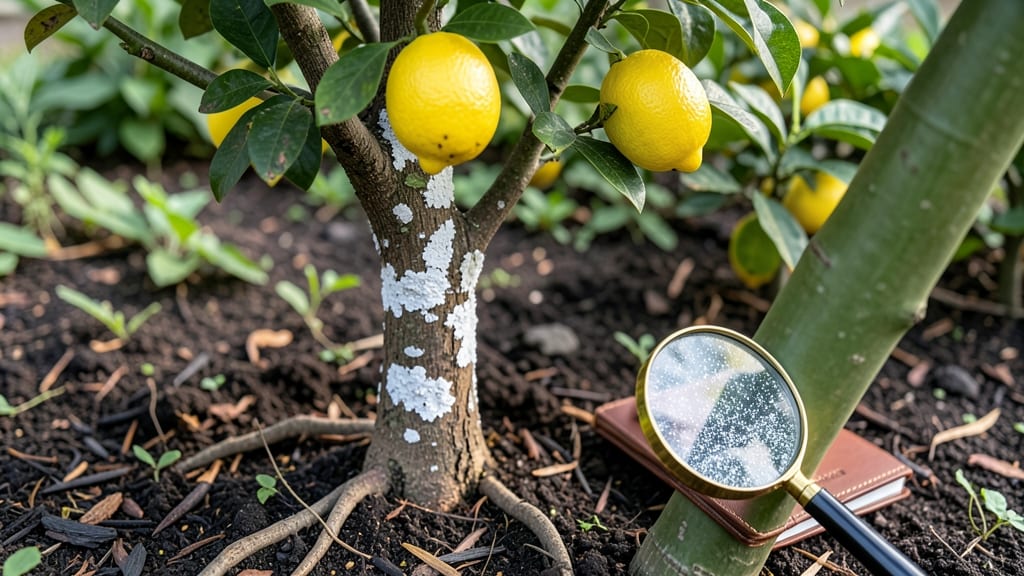
White spots creeping up your lemon tree trunk? That powdery residue isn’t just unsightly—it’s a fungal warning sign that could weaken your tree if ignored. ✨ I’ve battled this exact issue with my Meyer lemon, and what started as a few spots turned into a full-blown crisis before I acted.
The good news? You can stop it in its tracks with simple, natural remedies that work faster than you’d expect.
Most of these white spots are caused by powdery mildew or sooty mold, both of which thrive in warm, humid conditions. Scale insects can also leave behind a sticky residue that attracts mold, creating the same chalky appearance.
The key to fixing it is identifying whether your spots are fuzzy (mildew), crusty (scale), or waxy (sooty mold)—each needs a slightly different approach. I’ll walk you through the telltale signs and the fastest fixes, so you can restore your tree’s health without harsh chemicals.
By the time you’re done, your lemon tree’s trunk will look clean and your branches will be free of that telltale powder. The best part? These remedies—like neem oil sprays and homemade baking soda solutions—are safe for fruit-bearing trees and won’t harm pollinators.
You’ll also learn how to adjust your watering and airflow habits to prevent this from happening again, because sometimes the simplest changes make the biggest difference.
If the spots keep spreading despite your efforts, it might be time to call in a professional—especially if your tree is young or already stressed. But in most cases, a little elbow grease and the right mix of treatments will have your lemon tree thriving in just a few weeks.
Let’s get that trunk looking healthy again!
Understanding The Root Causes
White spots appearing on your lemon tree trunk can be alarming, but understanding the underlying causes is the first step to restoring your tree’s health. These spots are rarely random—they’re usually a sign of biological stress, environmental factors, or pest activity.
Below, we break down the most common reasons your lemon tree’s bark is developing these unsightly marks, along with the science behind them.
Fungi are the most frequent culprits behind white spots on tree trunks, thriving in damp, humid conditions. The most likely offenders include:
- Powdery Mildew (Oidium spp.) This fungus creates a white, powdery coating on the bark, resembling flour dust. It spreads via airborne spores and thrives in shady, poorly ventilated areas with high humidity (above 75%).
Unlike other fungi, powdery mildew doesn’t penetrate the bark deeply but weakens the tree’s defenses over time, making it susceptible to secondary infections.
- Sooty Mold (Capnodium spp.) While not directly causing white spots, sooty mold often appears after sap-sucking pests (like aphids or scale insects) leave behind sticky honeydew. The mold feeds on this residue, creating a black or dark gray film that can look like white spots from a distance.
However, if the underlying issue is fungal (like white rot or bark canker), the spots may appear fuzzy or cottony rather than smooth.
- Bark Canker (Botryosphaeria spp. or Phomopsis spp.) More severe than mildew, canker fungi create sunken, white-to-grayish lesions with a fuzzy or powdery texture. These spots often have dark margins and may ooze gum-like sap.
Canker spreads through wounds (pruning cuts, storms, or insect bites), so infected branches should be removed immediately to prevent spread.
💡 Pro Tip: Fungal spores love moisture—water your tree at the base (not overhead) and ensure 6–8 hours of sunlight daily to discourage fungal growth.
Not all white spots are fungal. Some are a direct result of pests feeding on the bark or phloem layer, leaving behind telltale signs:
- Scale Insects (Diaspididae family) These tiny, armored pests attach themselves to the bark, sucking sap and excreting honeydew. Their white, waxy shells can resemble spots, especially on younger trees. Heavy infestations cause stunted growth and yellowing leaves as the tree struggles to transport nutrients.
- Mealybugs (Pseudococcidae family) These pests leave behind white, cottony masses that resemble fungal growth but are actually their protective egg sacs. Unlike fungi, mealybugs move when disturbed—gently scrape a suspected spot to check for live insects.
- Bark Beetles (Scolytinae subfamily) While less common, some beetles burrow into the bark, creating white, sawdust-like frass (boring dust) around their entry points. Infested bark may also develop pitch tubes (sap oozing) as the tree tries to expel invaders.
🔥 Quick Fix: If pests are the issue, neem oil spray (1 tsp per quart of water) or insecticidal soap can disrupt their life cycle without harming the tree.
Sometimes, white spots aren’t caused by pathogens or pests at all—they’re a symptom of environmental damage:
- Sun Scorch Lemon trees need bright, indirect light, but direct afternoon sun can cause the bark to bleach or develop white, sun-bleached patches.
This is common on south-facing trunks where UV exposure is intense. Unlike fungal spots, sun scorch is dry and flaky rather than moist or fuzzy.
- Chemical Burn (Over-Fertilization or Herbicide Drift) Excessive nitrogen or salt buildup from fertilizers can cause white, crusty deposits on the bark. Similarly, herbicide drift (especially from glyphosate) can lead to bleached or necrotic patches. Always water deeply after fertilizing and avoid spraying herbicides near your tree.
- Physical Injury (Hail, Wind, or Tool Marks) Scrapes or bruises on the bark can create white, calloused areas as the tree heals. Unlike fungal spots, these are raised and rough rather than soft or powdery. Prune carefully with sterilized tools to prevent further damage.
🌡️ Climate Check: If your area has sudden temperature swings (e.g., hot days followed by cold nights), your lemon tree may develop stress-related white patches on exposed bark.
While less common, mineral imbalances can sometimes lead to white, crusty deposits or bark discoloration:
- Excess Calcium or Magnesium Hard water or over-fertilization with lime or Epsom salt can cause white, chalky residues to form on the bark. This is harmless but unsightly—rinse the trunk with water to remove buildup.
- Zinc or Iron Deficiency In severe cases, nutrient starvation can cause bark necrosis (dead, white patches). If the rest of the tree shows yellowing leaves with green veins, a chelated iron or zinc supplement may be needed.
🎯 Soil Test First: Before treating, test your soil’s pH and nutrient levels—lemons prefer slightly acidic soil (pH 6.0–7.0) with balanced micronutrients.
Fixing White Spots Naturally
Now that you’ve identified the cause of those pesky white spots on your lemon tree trunk—whether it’s powdery mildew, sooty mold, lichen, or even sun scald—it’s time to take action! The good news?
Most of these issues can be resolved with simple, natural remedies that won’t harm your tree or the environment. Below, we’ll break down the best fixes for each cause, plus prevention tips to keep your lemon tree thriving.
If your white spots are fluffy, powdery patches (likely powdery mildew), act fast—this fungus spreads quickly in humid conditions.
Step-by-Step Fix:
🔥 Remove Infected Areas
- Use a soft brush or cloth dipped in soapy water (1 tsp mild dish soap + 1 quart water) to gently scrub the spots off the trunk.
- Avoid harsh tools that can damage the bark.
🍳 Apply a Fungicide Spray
- Mix 1 tbsp baking soda + 1 tsp horticultural oil + 1 quart water in a spray bottle.
- Spray thoroughly on the trunk, leaves, and surrounding soil (fungus loves damp leaves!).
- Reapply every 7–10 days until the spots disappear.
👨🍳 Boost Airflow & Light
- Prune nearby branches to improve airflow around the trunk.
- Move the tree (if possible) to a sunnier spot—powdery mildew thrives in shade.
💡 Prevention Tip: ✨ Neem oil spray (1 tsp neem oil + 1 tsp soap + 1 quart water) once a month during humid seasons keeps mildew at bay.
If the white spots are black or grayish with a greasy film (sooty mold), the real issue is sap-sucking pests (like aphids or scale insects) feeding on your tree.
Step-by-Step Fix:
🔪 Kill the Pests First
- Spray the tree with insecticidal soap (1 tbsp castile soap + 1 quart water) to drown aphids and scale.
- For stubborn infestations, use a hose to blast off pests (early morning works best).
🌡️ Clean the Trunk & Leaves
- Wipe the trunk with a damp cloth to remove sooty mold buildup.
- Hose down leaves to wash away the film (use a gentle spray to avoid damaging foliage).
🎯 Prevent Future Outbreaks
- Encourage natural predators like ladybugs by planting marigolds or dill nearby.
- Apply diatomaceous earth (food-grade) around the base to deter pests.
💡 Prevention Tip: ✨ Regularly inspect leaves for sticky residue (honeydew)—this is a red flag for sap-suckers!
If your white spots are crusty, crust-like, or mossy (lichen or moss), your tree is likely too shady and damp.
Step-by-Step Fix:
🔥 Remove Gently (No Harsh Tools!)
- Use a soft-bristle brush or damp cloth to wipe away lichen/moss—never scrape, as it can harm the bark.
- For stubborn patches, soak a cloth in white vinegar (1:1 with water) and dab lightly.
🌞 Increase Sun & Airflow
- Trim overhanging branches to let more sunlight reach the trunk.
- If possible, relocate the tree to a sunnier spot (citrus trees need 6+ hours of sun).
💡 Prevention Tip: ✨ Apply a copper-based fungicide (like copper soap) once a year to prevent regrowth in damp climates.
If the white spots are peeling, cracked, or sun-bleached (sun scald), your tree is getting too much direct afternoon sun.
Step-by-Step Fix:
🌿 Shade the Trunk (Temporarily)
- Wrap the lower trunk with burlap or shade cloth during peak sun hours (11 AM–3 PM).
- Use white tree paint (not black!) to reflect sunlight—never paint the entire trunk, just the sun-exposed areas.
💧 Water Deeply & Consistently
- Water at the base (not the leaves) deeply 2–3 times per week to prevent stress.
- Mulch around the base (2–3 inches of wood chips or straw) to retain moisture.
💡 Prevention Tip: ✨ Avoid pruning in late summer—new growth is more susceptible to sun scald.
No matter the issue, these proactive steps will keep your lemon tree healthy: ✅ Inspect monthly for early signs of spots, pests, or damage. ✅ Avoid overhead watering—water at the base to keep foliage dry. ✅ Prune for airflow—thin out dense branches to reduce humidity near the trunk. ✅ Fertilize properly—too much nitrogen can weaken the tree, making it prone to pests/disease.
Final Thought: Most white spots on a lemon tree trunk are fixable with patience and natural care—no harsh chemicals needed! Start with identification, then treat the root cause, and prevent recurrence with better growing conditions.
Your lemon tree will be spot-free and thriving in no time! 🌱🍋
Frequently asked questions
Are white spots on my lemon tree trunk always a sign of disease?
Not necessarily! While fungal infections like powdery mildew are common, white spots can also come from pests (scale insects or mealybugs), lichen/moss buildup, or even sun scald on exposed bark. Always check for texture—powdery spots suggest mildew, while waxy shells indicate pests. A quick scrape test (gently scrape a spot) can reveal moving insects if it's pest-related.
Can I use store-bought fungicides on my lemon tree?
Yes, but opt for organic options like neem oil, copper fungicide, or sulfur-based sprays to avoid harming beneficial insects or your fruit. For severe cases, horticultural oil (1% concentration) works well when mixed with water. Always test a small area first and avoid spraying when bees are active. Chemical fungicides may leave residues on edible fruit.
How often should I check my lemon tree for white spots?
Inspect your tree monthly, especially after rain or during humid seasons when fungal growth peaks. Pay extra attention to the trunk, branch junctions, and undersides of leaves—these are prime spots for mildew and pests. Early detection makes treatment much easier, so a quick 5-minute check every 4 weeks keeps issues from spreading.
Will removing white spots harm my lemon tree?
Not if done gently! Use a soft brush or damp cloth—never scrape or use sharp tools that can damage the bark. For stubborn spots, a baking soda solution (1 tbsp per quart of water) is safe and effective. Just avoid removing healthy bark, as this can create entry points for infections. Think of it like giving your tree a gentle facial!
Can I still harvest fruit from my lemon tree if there are white spots?
It depends on the cause! If the spots are from fungal infections (like powdery mildew), the fruit itself is usually safe to eat—just wash thoroughly. However, if pests (like scale) are present, their honeydew can attract sooty mold, which may contaminate the fruit. When in doubt, harvest fruit from unaffected branches first and monitor the tree's overall health before consuming.