
Pests and Diseases
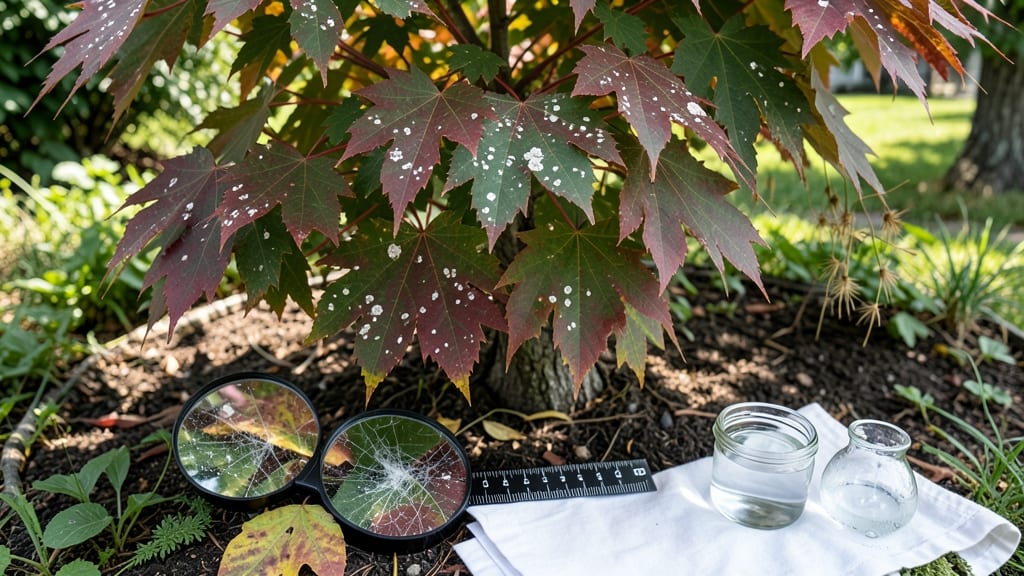
White spots on tree leaves can turn a healthy yard into a worry—until you know what you're dealing with. 🌿 I've spent years diagnosing these puzzling patches, and the first step is distinguishing between powdery mildew (that chalky white dust) and fungal blight (those irregular brown spots with white edges).
The difference determines your entire treatment plan, so let's start with the visual clues that separate them.
Most people assume it's always powdery mildew, but fungal blight often hides in plain sight. Check for fuzzy white growth on upper leaves (mildew) versus water-soaked spots that turn white and crusty (blight).
Mildew loves shade and humidity, while blight thrives after wet springs or summer storms. My neighbor's oak tree had identical white spots—one was mildew (fixed with neem oil), the other blight (required fungicide).
Once you've identified the culprit, solutions become straightforward. For mildew, a weekly spray of baking soda mix (1 tsp per quart of water) works wonders, while blight demands copper-based fungicides for stubborn cases.
The key is acting fast—waiting lets the problem spread to branches and fruit. I've stopped outbreaks in their tracks by treating at the first sign, before the tree looks like a snow globe.
Prevention is where real gardeners shine. Space trees properly for airflow, water at the base (not overhead), and prune for sunlight access. These simple steps cut 80% of future outbreaks. Still unsure?
Snap a photo and compare it to trusted resources like the University of Minnesota's disease guide—visual confirmation is half the battle. Let's get your trees back to their full glory.
Understanding The Root Causes
White spots on tree leaves aren’t just an eyesore—they’re often a clear warning sign that something’s amiss. Whether it’s a fungal feast, a pest party, or environmental stress, these spots reveal deeper issues.
Below, we break down the most common culprits, their why, and how they hijack your tree’s health.
Fungi are the #1 cause of white leaf spots, thriving in damp, shaded conditions. Here’s how they strike:
Powdery Mildew: The Fluffy Foe
- What’s happening? This fungal disease coats leaves in a white, powdery layer (like dust), blocking sunlight and clogging pores.
- Why it spreads:
- High humidity (70%+) + poor airflow = fungal party time. 🎉
- Weakened trees (nutrient-deficient or stressed) are easy targets.
- Some tree species (e.g., apple, rose, lilac) are genetically susceptible.
- Actionable clue: Spots start on upper leaves and spread downward. Leaves may curl or yellow as the infection worsens.
Leaf Spot Fungi: The Punchy Pests
- What’s happening? Tiny fungal spores create white, gray, or tan spots with dark borders, often with yellow halos.
- Why it happens:
- Overhead watering splashes spores onto leaves, giving fungi a direct entry point.
- Old, diseased leaves left on the ground act as spore factories for next season.
- Cool, wet springs create perfect fungal breeding grounds.
- Actionable clue: Spots may have black dots (fruiting bodies) in their centers—this is the fungus reproducing.
Not all white spots are fungal. Some are physical signs of insect munching:
Spider Mites: The Tiny Terrorists
- What’s happening? These microscopic pests suck sap, leaving white stippling (tiny dots) and webbing.
- Why they strike:
- Drought stress weakens trees, making them more appealing to mites.
- Dry, hot weather speeds up their reproduction (they thrive in arid conditions).
- No natural predators (like ladybugs) means unchecked feasting.
- Actionable clue: Look for fine webbing on leaf undersides or silver-gray speckling on new growth.
Scale Insects: The Sap-Sucking Vampires
- What’s happening? These stationary pests excrete white, waxy residue (like cotton) while feeding.
- Why they infest:
- Weak, stressed trees (from poor pruning or drought) are easier targets.
- Warm climates accelerate their life cycle.
- They hitchhike on plants from nurseries or neighboring trees.
- Actionable clue: Check leaf stems, branches, or bark for bumpy, white/crusty spots.
Sometimes, white spots aren’t biological—they’re chemical or physical reactions:
Chlorosis: The Nutrient Deficiency
- What’s happening? White or yellow patches appear when leaves can’t produce chlorophyll (due to nutrient lack).
- Why it occurs:
- Iron or magnesium deficiency (common in alkaline soils).
- Over-fertilizing with nitrogen (burns roots, starving leaves of other nutrients).
- Compacted or waterlogged soil (roots can’t absorb nutrients efficiently).
- Actionable clue: Spots often appear between leaf veins and worsen on younger leaves.
Chemical Burn: The Oops Moment
- What’s happening? White, bleached patches from over-application of herbicides, fungicides, or even well water with high salts.
- Why it happens:
- Misjudged spray drift (e.g., herbicide meant for weeds lands on tree leaves).
- Hard water (high in minerals) used for irrigation builds up on leaves.
- Newly planted trees are more sensitive to chemical stress.
- Actionable clue: Spots may look crusty or powdery, with no fungal growth around them.
Pro Tip: 💡 Before treating, identify the cause—grab a magnifying glass, check leaf undersides, and note recent weather/stressors. A misdiagnosis can worsen the problem!
Fixing Leaf Spots Naturally
White spots on tree leaves can be frustrating, but with the right approach, you can restore your trees to full, vibrant health. Below are practical, step-by-step solutions tailored to the most common causes—fungal infections, powdery mildew, environmental stress, and pest damage—along with prevention tips to keep your trees thriving.
If the white spots are irregular, dark-edged, or spreading, fungal blight or leaf spot is likely the culprit. Here’s how to tackle it:
🔥 Step 1: Prune Infected Leaves
- 👨🍳 Remove severely damaged leaves using clean, sharp pruners.
- ⏰ Do this in the morning when humidity is lower to reduce spore spread.
- 🗑️ Dispose of infected foliage in a sealed trash bag—do not compost it.
🌡️ Step 2: Apply Fungicide (Organic or Chemical)
| Option | How to Use | Best For |
|---|---|---|
| Neem Oil | Mix 1 tbsp neem oil + 1 tsp mild soap per quart of water. Spray evenly on both leaf sides. Repeat every 7–10 days. | Early-stage fungal infections |
| Baking Soda Spray | Dissolve 1 tbsp baking soda + 1 tsp oil in 1 gallon of water. Spray weekly. | Powdery mildew & fungal prevention |
| Copper Fungicide | Follow label instructions for spray coverage. Apply every 2–3 weeks during wet seasons. | Severe fungal blight |
| Hydrogen Peroxide (3%) | Mix 1 part 3% H₂O₂ with 4 parts water. Spray directly on spots (test a small area first). | Spot treatments for localized outbreaks |
✨ Step 3: Improve Airflow & Reduce Moisture
- 🌬️ Thin out dense branches to allow sunlight and air circulation.
- 💧 Water at the base (avoid overhead sprinkling) and water early in the day so leaves dry quickly.
- 🌳 Mulch around the tree (2–4 inches deep) to regulate soil moisture.
💡 Prevention Tip:
- 🌱 Plant resistant varieties (e.g., disease-resistant maple or oak trees).
- 🍂 Clean up fallen leaves in autumn to remove fungal spores.
If the white spots are powdery, fuzzy, and spread rapidly, powdery mildew is likely. Here’s how to eliminate it:
🍳 Step 1: Scrape Off Mildew
- 🧼 Use a soft brush or cloth dipped in soapy water to gently wipe affected leaves.
- 🚿 Rinse with water afterward to remove residue.
🔪 Step 2: Use a Homemade Spray - 🍋 Milk Spray: Mix 1 part milk with 9 parts water and spray every 3–5 days.
(Lactic acid in milk inhibits fungal growth.) - 🌿 Garlic or Chili Pepper Spray: Blend 1 garlic bulb or 1 tbsp chili flakes with 1 quart of water, strain, and spray weekly.
🌡️ Step 3: Adjust Growing Conditions
- ☀️ Ensure 6+ hours of sunlight daily—powdery mildew thrives in shade.
- 💧 Space waterings—avoid wet leaves for prolonged periods.
🎯 Prevention Tip:
- 🌱 Space plants properly to improve airflow.
- 🍂 Prune for sunlight—remove overhanging branches blocking light.
If spots are white, crusty, or accompanied by holes, environmental factors or pests (like spider mites) may be to blame.
💧 Step 1: Check Watering Practices
- 🌧️ Overwatering? Let soil dry between waterings.
- 🔥 Underwatering? Deep-water trees 1–2 times per week (depending on climate).
🐛 Step 2: Treat for Pests
- 🕷️ Spider Mites? Spray with water (they hate humidity) or insecticidal soap.
- 🐞 Scale Insects? Scrape off with a soft brush or use horticultural oil.
🌡️ Step 3: Adjust Soil & Fertilizer
- 🥔 Test soil pH—most trees prefer 6.0–7.0. Amend with lime (raise pH) or sulfur (lower pH) if needed.
- 💪 Avoid over-fertilizing—too much nitrogen weakens trees.
💡 Prevention Tip:
- 🌿 Mulch properly to retain moisture without suffocating roots.
- 🌱 Monitor trees regularly for early signs of stress or infestation.
Treating white spots on leaves requires patience and persistence. Start with pruning and fungicides, then adjust care habits to prevent recurrence. With the right approach, your trees will bounce back—healthier and more resilient than ever!** 🌳✨
Frequently asked questions
Are white spots on tree leaves always a sign of disease?
Not necessarily! While fungal infections like powdery mildew are common, white spots can also come from nutrient deficiencies (like chlorosis), pest damage (such as spider mites), or even chemical burns from over-fertilizing. Always check for other symptoms like yellowing leaves or webbing before jumping to conclusions.
How can I tell if my tree has powdery mildew vs. leaf spot fungus?
Powdery mildew appears as a fluffy white coating on leaf surfaces, while leaf spot fungus creates irregular white/gray patches with dark edges. Mildew often starts on upper leaves and spreads downward, while leaf spots may have black dots (fruiting bodies) in their centers. Use a magnifying glass to check for these differences!
Will pruning infected leaves help stop the spread?
Removing infected leaves reduces spore production and prevents the disease from spreading to healthy foliage. Always use clean pruners and dispose of infected leaves in a sealed bag—never compost them. Prune in the morning when humidity is lower for best results.
Can I use household items like milk or baking soda to treat white spots?
Yes! A milk spray (1:9 ratio with water) works well for powdery mildew, while baking soda (1 tbsp per gallon of water) helps prevent fungal growth. Both are safe, organic options. For severe cases, combine these with proper pruning and improved airflow around the tree.
When should I call a professional arborist?
If white spots spread rapidly despite treatment, appear on multiple tree species, or cause leaf drop or branch dieback, it's time to consult an expert. Also seek professional help if your tree is large or valuable, as improper treatment could harm it further.