
Pruning
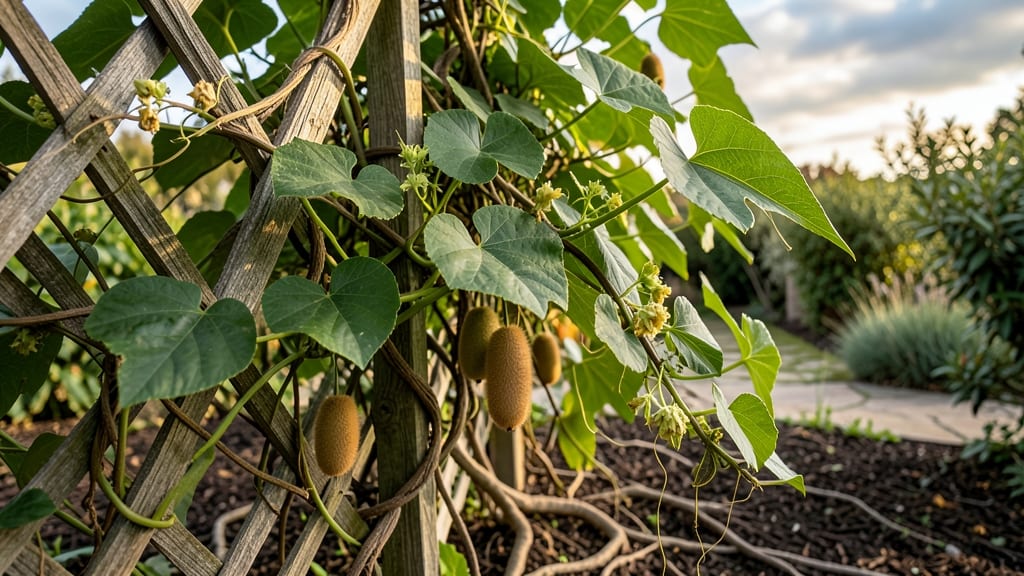
Is kiwi a tree or vine? It's neither—a hardy woody vine (Actinidia deliciosa) that climbs like a vine but develops a thick, tree-like trunk over time, requiring sturdy trellises or fences for support and pruning to maintain fruit production.
Kiwi plants are actually deciduous vines that belong to the same family as grapes and gooseberries. 🌿 The confusion comes from their ability to grow thick, woody trunks over time—some reaching 15-20 feet in height—while still clinging to supports like traditional vines.
Unlike true trees, kiwi vines need horizontal trellises or fences to spread properly, as their growth habit is sprawling rather than upright.
This unique structure isn't just about aesthetics—it's essential for fruit production.
The vines' climbing nature allows them to maximize sunlight exposure, which directly impacts the size and sweetness of the kiwi fruit. Pruning becomes critical here, as it helps direct the plant's energy toward fruit-bearing branches rather than excessive leaf growth.
💡 In This Article
- Kiwi Vine vs. Tree: Botanical Classification and Growth Differences
- Pruning Kiwi Vines for Optimal Fruit Production and Health
Kiwi vine vs. tree: botanical classification and growth differences
Kiwi plants (Actinidia deliciosa) belong to the Actinidiaceae family, which includes other climbing plants like passionfruit and kaki. What makes them unique is their hybrid growth structure: they start as flexible vines but develop lignotubers—thick, woody bases—that resemble tree trunks.
These lignotubers can grow 3-6 inches in diameter over time, giving them a tree-like appearance while retaining vine-like climbing habits.
The climbing mechanism involves tendrils that coil around supports like trellises or fences, allowing vines to reach 20-30 feet horizontally.
This sprawling growth maximizes sunlight exposure for leaves and fruit, unlike true trees that grow vertically. 🌿 The woody trunk isn't just for show—it stores nutrients and water, similar to how tree trunks function, but the plant's botanical classification remains a vine due to its climbing nature and lack of true wood formation in the trunk.
Comparing kiwi to true trees reveals key differences: trees have a single central trunk with branches, while kiwi vines produce multiple stems from the base. True vines (like grapes) lack woody trunks entirely, relying solely on flexible stems.
Kiwi's hybrid structure explains why it needs horizontal trellises—its growth habit is more vine-like than tree-like, despite the thick trunk.
The deciduous nature adds another layer: kiwi vines shed leaves annually in winter, like trees, but their climbing growth pattern remains vine-like. This duality affects pruning needs—kiwi vines require both structural support (like trees) and regular vine pruning to control sprawl.
The fruit-bearing canes develop from new growth each season, making proper pruning essential for yield.
Consider this analogy: kiwi plants are like bamboo—they grow rapidly, develop woody stems, but remain botanically classified as grasses (or in kiwi's case, vines). The thick trunk is an adaptation for stability in their climbing lifestyle, not a true tree structure.
This explains why they need sturdy supports**—their weight and growth pattern would collapse without proper scaffolding.
What most gardeners overlook is how the vine's climbing habit directly impacts fruit quality. Vines trained horizontally produce larger, sweeter kiwis because they receive even sunlight exposure. Without proper support, the vines sprawl, leading to smaller fruit and increased disease risk from poor airflow. 🌱