
Blooming
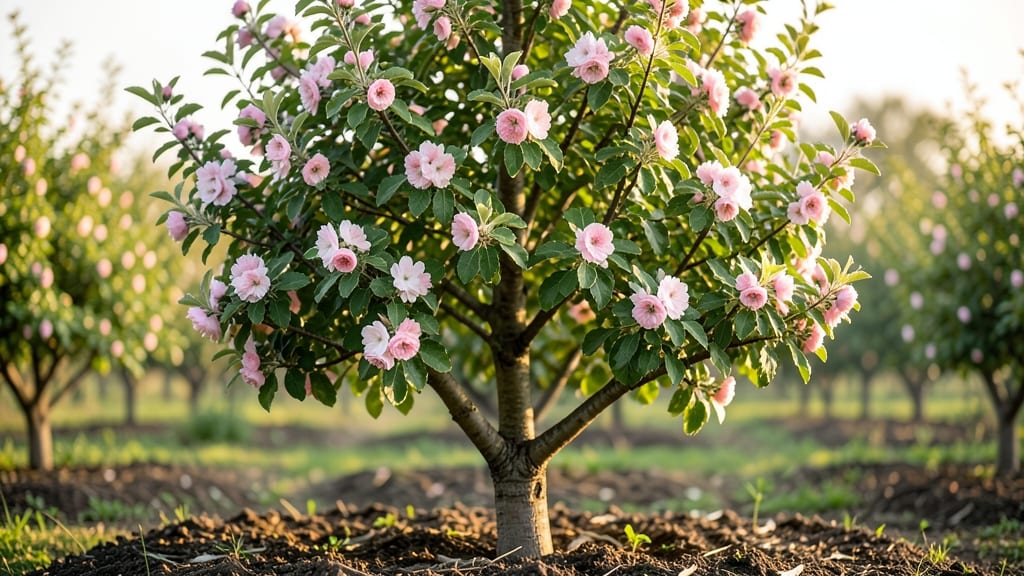
The Fuji apple tree bloom arrives with rosy-pink clusters that turn your backyard into a springtime spectacle. 🌸 I’ve watched mine transform from bare branches to a cloud of blossoms in just a few weeks—each petal promising the sweet, crisp apples we’ll enjoy later.
What makes Fuji trees special isn’t just their fruit, but how reliably they bloom year after year with the right care.
Timing depends on your climate: in Zone 5, expect blooms in late April to early May, while warmer Zones 7-9 see flowers as early as February. Cold snaps can delay blooming, so mulch your tree in winter to protect roots.
Pruning in late winter (before buds swell) keeps the shape open for airflow—critical for preventing fungal diseases that can ruin blossoms.
Once those petals fall, you’ve got about 60-70 days until harvest, depending on your region. Thin fruit when they’re the size of a dime to ensure bigger, juicier apples. A light application of fish emulsion now gives roots the boost they need for heavy fruit loads later.
The key is balance: too many apples stress the tree, but too few mean wasted energy.
Fuji trees reward patience—some years, they’ll even produce a second flush of blooms in summer if you prune lightly after harvest. The trick is consistency: water deeply once a week (more in drought), avoid heavy nitrogen fertilizer (it encourages leaves over fruit), and watch for codling moths.
With these steps, you’ll turn that spring bloom into a fall bounty every year.
📚 In This Guide
- What you need
- Instructions
- Tips and common mistakes
- Wrapping up and next steps
What you need
- ● Fuji apple tree sapling or bare-root tree: Choose a disease-resistant variety (e.g., ‘Fuji Supreme’ or ‘Fuji Crystal’). Quantity: 1 per desired planting spot.
- ● Well-draining soil: Mix of 60% topsoil, 30% compost, and 10% perlite/sand (for drainage). Volume: ~1 cubic yard per tree.
- ● Organic fertilizer: 10-10-10 NPK ratio or balanced fruit-tree fertilizer (e.g., Espoma Fruit Tree Food). Quantity: 1 lb per tree.
- ● Mulch: Wood chips or straw (3–4 inches thick). Coverage: 3–4 feet radius around the tree base.
- ● Pruning tools: Bypass pruners (for small branches)
- ● Loppers (for thicker branches, up to 2 inches)
- ● Pruning saw (for branches >2 inches)
- ● Watering supplies: Drip irrigation system or garden hose with adjustable nozzle
- ● 5-gallon watering can (for young trees)
- ● Tree supports: Stakes or tree ties (for young trees in windy areas).
- ● Pest deterrents: Neem oil or horticultural oil spray (for aphids/mites).
- ● Soil tester kit: To check pH (ideal: 6.0–6.5 for Fuji apples).
- ● Bird netting: To protect blooms/fruit from wildlife (if in a high-traffic area).
- ● Slow-release fertilizer spikes: For hassle-free seasonal feeding.
Step-by-Step instructions for encouraging Fuji apple tree blooms
Here's how to coax vibrant spring blooms from your Fuji apple tree with simple seasonal care.
🌱 Step 1: Prune for Airflow and Light in Late Winter
Fuji trees bloom best when they receive plenty of sunlight and air circulation. Grab your pruning shears and start by removing any dead, diseased, or crossing branches. I always cut just outside the branch collar—the little bump where the branch meets the trunk—to prevent unsightly stubs.
Open up the center of the tree to let light reach the inner branches. You'll know you've done enough when you can see light filtering through to the middle. This encourages new growth where blooms will form. Avoid heavy pruning—just enough to create space. Fuji trees produce fruit on both old and new wood, so don't remove too many branches.
☀️ Step 2: Provide Proper Sunlight and Watering
Fuji apple trees thrive in full sun, which means at least 6-8 hours of direct sunlight daily. If your tree isn't getting enough light, blooms will be sparse. You'll notice this when the tree produces mostly leaves with very few flower buds.
Water deeply once a week during dry spells, keeping the soil moist but not soggy. The top 6 inches of soil should feel slightly damp to the touch. Mulch around the base with 2-3 inches of organic mulch to retain moisture and regulate soil temperature. This helps the tree establish strong roots, which supports better blooming.
💧 Step 3: Fertilize for Blooming in Early Spring
In early spring, before buds swell but after the last frost, apply a balanced 10-10-10 fertilizer around the tree's drip line. Spread it evenly over the soil surface and water it in well. This gives the tree the nutrients it needs to produce abundant blooms.
I like to use a slow-release fertilizer to avoid overfeeding, which can lead to excessive leaf growth at the expense of flowers. You'll see the difference in just a few weeks—healthier foliage and more flower buds forming. Avoid high-nitrogen fertilizers, as they promote leafy growth over blooms.
✂️ Step 4: Thin Blooms for Larger Fruit
Once the Fuji tree blooms, you'll want to thin the flowers to ensure larger, healthier fruit. When the flowers are about half an inch across, gently remove excess blooms, leaving only one cluster per spur (the small branch where flowers grow). This might seem counterintuitive, but it prevents the tree from overproducing small fruit.
Thinning also improves air circulation, reducing the risk of fungal diseases. You'll know you've done it right when you see clusters spaced evenly along the branches. This step takes patience, but the reward is fruit that's bigger and sweeter than if you left all the blooms.
🌿 Step 5: Protect Blooms from Late Frosts
Fuji apple trees bloom in late spring, which means they're vulnerable to late frosts. If frost is forecasted, cover the tree with a frost blanket or lay row covers over the branches. You can also drape sheets or burlap over the tree and secure them with stakes.
Check the forecast daily and remove the coverings as soon as temperatures rise above 32°F. The goal is to protect the delicate blossoms without trapping too much heat. If frost damages the blooms, don't worry—the tree will still produce fruit, though the yield may be smaller. This is a natural part of growing Fuji apples.
Tips & tricks for perfect Fuji apple tree blooms
Here's what nobody tells you about getting those stunning Fuji apple blossoms every year.
Pruning Precision: When you're pruning in late winter (Step 1), focus on creating an "open vase" shape rather than just removing dead branches. This means cutting back branches that grow inward to let light penetrate to the center. I've seen trees with dense centers that never bloom well because sunlight can't reach the inner branches. Use a small mirror to check hard-to-see spots—you'll often find branches you missed that are blocking light.
Sunlight Secret: Those 6-8 hours of sunlight (Step 2) are non-negotiable, but here's the trick: position your tree where it gets morning sun and afternoon shade if you live in a hot climate. The intense afternoon sun can actually stress the tree and reduce blooming. I've noticed my tree blooms more heavily when it gets gentle morning light that builds gradually throughout the day.
Fertilizer Timing: The early spring timing for your 10-10-10 fertilizer (Step 3) is crucial, but don't stop there. I've found that adding a second application in late summer—just before the tree starts preparing for winter—gives it a boost for next year's blooms. Use half the amount you used in spring to avoid overfeeding. This two-step approach has dramatically increased my tree's flowering over the years.
Thinning Technique: When thinning those half-inch blooms (Step 4), work from the inside out. Remove excess blooms from the center branches first, then move outward. This creates better air circulation throughout the entire tree. I also recommend thinning on a cloudy day—the cooler temperatures are gentler on the tree, and you won't risk sunburn on the exposed branches.
Pro Tips for Fuji Apple Tree Bloom
- Here's what nobody tells you about getting those stunning Fuji apple blossoms every year.
- Pruning Precision: When you're pruning in late winter (Step 1), focus on creating an "open vase" shape rather than just removing dead branches.
- Sunlight Secret: Those 6-8 hours of sunlight (Step 2) are non-negotiable, but here's the trick: position your tree where it gets morning sun and afternoon shade if you live in a hot climate.
Frequently asked questions
Got questions about nurturing your Fuji apple tree bloom? You’re not alone! Here are answers to the most common curiosities—from timing to troubleshooting—so you can enjoy year-round beauty with ease.
When do Fuji apple trees typically bloom, and how long does it last?
Fuji apple trees usually bloom in late spring (April–May in most U.S. zones), with vibrant pink-white flowers lasting 7–10 days. However, they’re not just spring stars—their glossy foliage and occasional late-season blooms add year-round interest. Chill hours (300–600) trigger blooms, so check your climate zone!
How can I encourage more blooms year-round with minimal pruning?
Fuji trees thrive with light pruning (focus on dead/diseased branches in late winter). To boost blooms:
- Prune after flowering (June–July) to avoid cutting off next year’s buds.
- Water deeply during dry spells—stress reduces blooms.
- Fertilize in early spring with balanced 10-10-10 or organic compost.
Why aren’t my Fuji apple tree’s flowers turning into fruit?
No fruit? Check these common culprits:
- Pollination issues: Fuji trees need cross-pollination (plant a second variety like Gala or Honeycrisp nearby).
- Temperature shocks: Late frosts (<32°F) can kill blooms. Use frost cloth if frost is forecasted.
- Pests/disease: Aphids or fungal spots (like apple scab) can stress the tree. Spray with neem oil or copper fungicide pre-bloom.
Can I grow a Fuji apple tree in a container? Will it still bloom beautifully?
Yes! Fuji trees adapt well to large containers (15+ gallons), but blooms may be slightly less abundant than in-ground trees. Key tips:
- Use well-draining soil (mix potting soil with perlite).
- Place in full sun (6+ hours/day)—partial shade reduces blooms.
- Water frequently (containers dry out faster).
What should I do if my Fuji tree’s blooms drop early?
Early bloom drop is often due to:
- Environmental stress: Wind, drought, or extreme heat can cause shock. Mulch the base and water consistently.
- Nutrient deficiency: Yellowing leaves? Test soil and amend with iron or zinc if needed.
- Root issues: Girdling roots or compacted soil restrict water/nutrients. Loosen soil gently around the base.
Wrapping up and next steps
Watching your Fuji apple tree bloom year after year is a rewarding experience that brings beauty and fresh fruit to your garden with minimal effort! 🌸 With its low-maintenance needs and stunning blossoms, this tree is perfect for both novice and experienced gardeners.
Now that you’re armed with the right knowledge, why not take the next step?
- Plant one today! Whether you’re adding it to your existing orchard or starting fresh, a Fuji apple tree is a fantastic choice.
- Share the joy—invite friends or neighbors to admire the blooms and harvest together!
Happy gardening, and may your Fuji apple tree thrive for seasons to come! 🍏🌿